Tourism English is not about long words. Hotel staff and guides in Uzbekistan need three things: polite service phrases (Could I see your passport, please? Let me check that for you.), calm problem-solving language (I'm sorry about that. Here's what I can do.), and a simple way to explain a place so that visitors remember it. This page gives you all three, with two full dialogues, a five-part formula for heritage sites and model talks for Khiva and Bukhara.
Quick win: learn "Let me check that for you". It's polite, buys you time, and works for almost any question you can't answer immediately.
At the front desk: phrases by moment
| Moment | Phrase |
|---|---|
| Welcome | Good evening, welcome to the Hotel Registan. How can I help you? |
| Booking | Do you have a reservation? Could I have the name, please? |
| Documents | Could I see your passport, please? We need a copy for registration. |
| Payment | Would you like to pay by card or in cash? |
| Room details | You're in room 214, on the second floor. Breakfast is from seven to ten. |
| Wi-Fi | The Wi-Fi password is on your key card. |
| Offering help | Would you like me to book a taxi for you? |
| Not sure | Let me check that for you. One moment, please. |
| Can't do it | I'm afraid that's not possible, but I can… |
| Check-out | How was your stay? Did you take anything from the minibar? |
Polite English at a desk uses could, would, may and please, never bare commands. Give passport is how a phrasebook reads; Could I see your passport, please? is how a receptionist speaks.
Dialogue 1: check-in with a question about the next city
A: Good evening, welcome. Do you have a reservation?
B: Yes, under Miller. Two nights.
A: Thank you, Mr Miller. Could I see your passport, please? We need to register all foreign guests.
B: Sure, here you are.
A: Thank you. You're in room 305, on the third floor. The lift is on your right. Breakfast is served from seven to ten on the ground floor.
B: Great. We want to go to Samarkand on Friday. What's the best way?
A: Most visitors take the train. It's comfortable and faster than driving. Would you like me to check the timetable and help you book tickets?
B: That would be great, thanks.
A: No problem. I'll have the options ready for you tomorrow morning. Is there anything else I can help you with tonight?
B: No, that's everything. Thank you.
A: Enjoy your stay, Mr Miller.
Dialogue 2: a complaint handled well
A: Excuse me, my room is really noisy. There's music from the restaurant downstairs.
B: I'm very sorry about that. It must be frustrating after a long day. May I ask your room number?
A: 112.
B: Thank you. The restaurant closes at eleven tonight. But I can move you to a quieter room on the fourth floor, facing the courtyard. Would that suit you?
A: Yes, please. Can I move now?
B: Of course. I'll send someone to help with your bags in five minutes. And please accept a free breakfast tomorrow as an apology.
A: That's very kind. Thank you.
B: You're welcome. If there's anything else, just call reception on 0.
Notice the order: listen, apologise and show you understand, offer a solution with a choice, confirm the next step. Guests remember how a problem was handled more than the problem itself.
For guides: running the group
| Situation | Phrase |
|---|---|
| Start | Good morning, everyone! My name's Aziz, and I'll be your guide today in Bukhara. |
| Plan | First we'll visit the Ark, then we'll walk to Poi Kalon. The tour takes about three hours. |
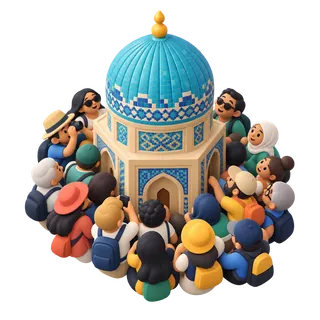
| Gathering | Could everyone come a bit closer so you can hear me? |
| Time | You have twenty minutes for photos. Let's meet here, by the gate, at 11:15. |
| Respect | This is an active mosque, so please speak quietly and follow the signs at the entrance. |
| Safety | Please watch your step, the stairs are uneven. |
| Heat | It's very hot today, so please drink plenty of water. |
| Questions | Does anyone have any questions before we move on? |
| Finish | That's the end of our tour. Thank you for being such a great group! |
When you don't know an answer, say so. "That's a great question. I'm not sure, and I don't want to guess. I'll check and tell you at lunch." Visitors trust a guide who admits limits far more than one who invents a date.
Explaining a heritage site: the five-part formula
- What it is, in one sentence: This is a madrasa, a religious school.
- When and who: It was built in the 15th century by Ulugh Beg, the grandson of Amir Temur.
- What to look at: Look at the tiles above the entrance: blue, turquoise and white.
- A story: Ulugh Beg was also an astronomer…
- A link to today: Students still study here? No, but craftsmen work in the old rooms, so you can buy things made on site.
Keep each part to one or two sentences. Stop and point. Ask a question. A two-minute talk with a story beats a ten-minute list of dates.


Model talk 1: Itchan Kala, Khiva
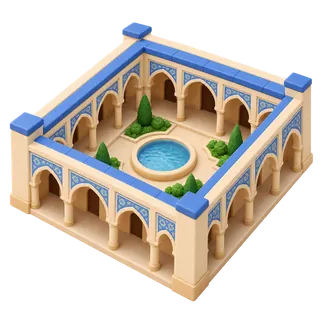
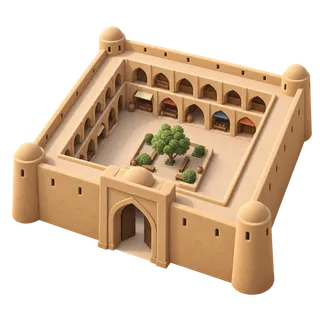
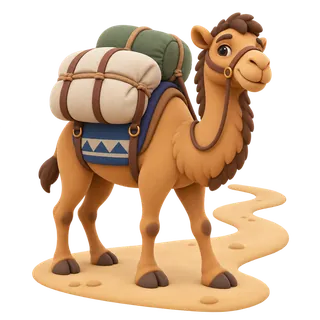
"We're now standing inside Itchan Kala, the inner town of Khiva. Everything you see is surrounded by brick walls, up to ten metres high. For centuries, this oasis was the last stop for caravans before they crossed the desert to Iran, so imagine camels, merchants and noise right here. Most of the buildings you'll see today, the madrasas, mosques and palaces, are from the last few centuries; two of the palaces were built at the beginning of the 19th century. In 1990, Itchan Kala became the first site in Uzbekistan on the UNESCO World Heritage List. Now, if you look along this street, you'll see how the whole town is built as a long rectangle. Shall we walk to the Juma Mosque?"
Model talk 2: Bukhara, the Samanid Mausoleum and Poi Kalon
"This small brick building is the mausoleum of Ismail Samani, from the 10th century. UNESCO describes it as one of the finest surviving examples of architecture from that time in the Muslim world. Look closely: there are no tiles, no paint. All the patterns are made from brick alone, and they change as the sun moves. Bukhara itself is more than two thousand years old, and it sat on the Silk Road, which is why merchants from China, India and Persia passed through. Later we'll see Poi Kalon and its great minaret from the Karakhanid period. There's a popular legend that Genghis Khan was so impressed by the minaret that he ordered his army not to destroy it. Whether it's true or not, the minaret is still standing."
For a full Registan talk with 42 building and history words in Uzbek, see gid bo‘lish ingliz tili. For more facts about the country that visitors ask about, describe Uzbekistan in English has model answers.
Weak → strong: tourism English
| Weak | Strong |
|---|---|
| Passport give. | Could I see your passport, please? |
| No rooms. | I'm afraid we're fully booked tonight, but I can call a hotel nearby for you. |
| This building very old, 600 years. | This building is about six hundred years old. |
| Here is madrasa. Madrasa is school. | This is a madrasa, a school where students studied religion and science. |
| Quickly, quickly! | Could we move on, please? We have another site before lunch. |
| I don't know. | Good question. Let me check and come back to you. |
| Don't touch! | Please don't touch the tiles; they're very old. |
Food questions come up on every tour. The page on Uzbek food in English helps you explain plov, somsa and lagman without awkward translations.
Exercise: fix the tourism sentence
Make each sentence polite and correct.
- Give me your name.
- Breakfast is from 7 until 10 o'clock in morning.
- You can't to take photos inside.
- This minaret built in 12 century.
- We meet here after 20 minute.
- Sorry, is impossible.
- What you want to visit tomorrow?
- This is very famous place in all world.
Answers
- Could I have your name, please? A request, not an order.
- Breakfast is from 7 to 10 in the morning. In the morning needs the.
- I'm afraid you can't take photos inside. No to after can, and I'm afraid softens the rule.
- This minaret was built in the 12th century. Passive (was built), the + ordinal.
- Let's meet here in 20 minutes. In for time from now, plural minutes.
- I'm sorry, but that's not possible. It needs a subject; offer an alternative if you can.
- What would you like to visit tomorrow? Question word order and the polite would like.
- This is one of the most famous places in the world. Article, one of the, and in the world.
Practising the job before the season
Service English improves fastest when you rehearse full conversations. In BandMate, you can role-play a hotel check-in, a guest complaint or a guided tour with Bandi, then get feedback on grammar, pronunciation and tone, with explanations in Uzbek, Russian or English. If you work at a front desk, the Uzbek vocabulary guide turizm uchun ingliz tili adds 42 words for rooms, bookings and transfers.
Sources
- UNESCO World Heritage Centre: Itchan Kala
- UNESCO World Heritage Centre: Historic Centre of Bukhara
- UNESCO World Heritage Centre: Samarkand – Crossroad of Cultures