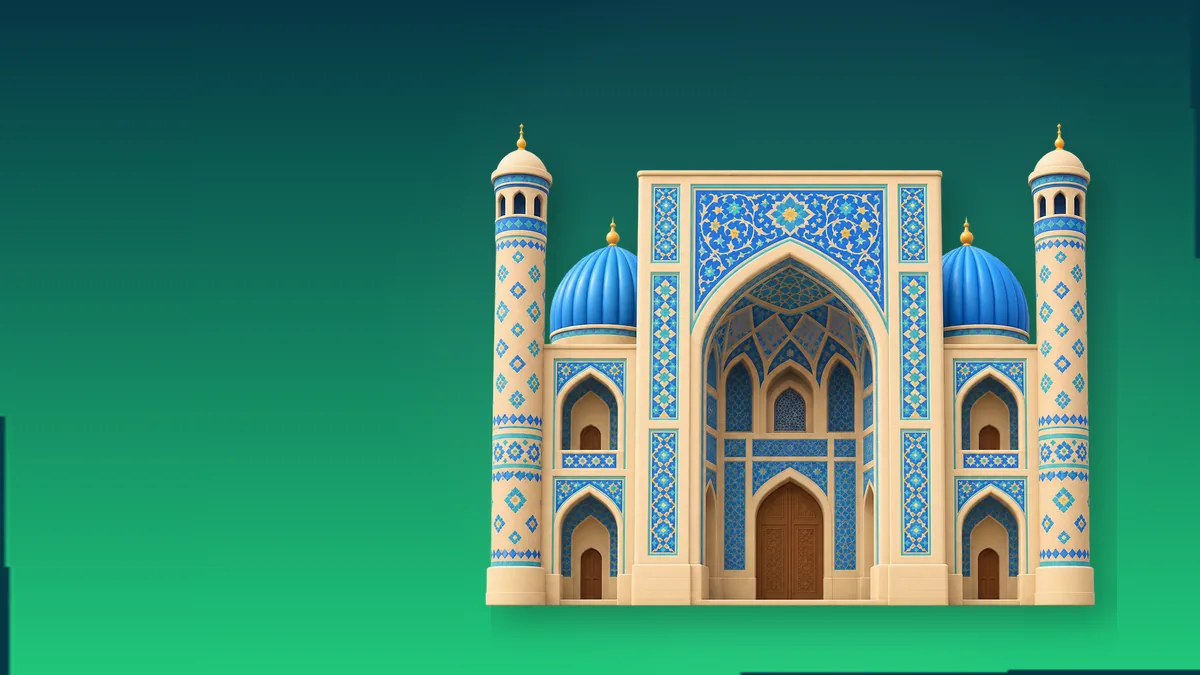
Yaxshi gid obida oldida ma’ruza o‘qimaydi. Har bir to‘xtashni besh qismda quradi: qayerda turganimizni ko‘rsatish, bitta asosiy fakt, qisqa hikoya, ko‘z bilan ko‘rsa bo‘ladigan tafsilot va keyingi qadam va vaqt. Ingliz tilida bu 2–3 daqiqa, taxminan 250–350 so‘z. Qolgan vaqtni savollar va suratga olishga qoldiring.
Quyida shu formula bo‘yicha Registan uchun tayyor matn, 42 ta me’moriy va tarixiy so‘z, savollarga javob berish va guruhni boshqarish iboralari bor. Mehmonxonadagi ish uchun iboralar alohida turizm uchun ingliz tili sahifasida.
To‘xtash formulasi: 5 qism va tayyor iboralar
| Qism | Maqsad | Ibora |
|---|---|---|
| 1. Orient | guruhni joylashtirish | Let’s stand here in the shade. In front of you is… |
| 2. Fact | bitta muhim ma’lumot | It was built in the fifteenth century by… |
| 3. Story | esda qoladigan hikoya | There’s a famous story about… / According to legend,… |
| 4. Look | ko‘zni tafsilotga yo‘naltirish | Look at the top of the portal. Can you see…? |
| 5. Link | vaqt va keyingi joy | You have ten minutes for photos. We’ll meet here at 10:40. |
Sanalarni aniq bilmasangiz, yaxlitlang: in the early fifteenth century, about six hundred years ago. Afsonani esa fakt deb aytmang: according to legend yoki people say degan so‘zlar sizni himoya qiladi.
Namuna matn: Registan, 2 daqiqa
Bu matn o‘quv maqsadida yozilgan. Ekskursiyadan oldin sanalar va tafsilotlarni muzey yoki rasmiy manbalar bilan tekshiring.
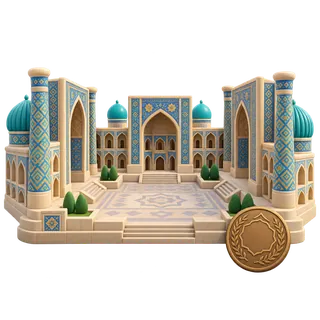
Welcome to the Registan, the heart of old Samarkand. The name is usually translated as "sandy place". For centuries this square was the city’s main public space: people came here for markets, announcements and celebrations.
In front of you are three madrasas, or religious schools. The one on your left is the oldest. It was built in the early fifteenth century by Ulugh Beg, the grandson of Amir Timur. Ulugh Beg was a ruler, but he is remembered mostly as a scientist. He built an observatory here in Samarkand, and his star tables were famous far beyond Central Asia. So it’s not surprising that astronomy and mathematics were taught in this madrasa.
The madrasa on your right, Sher-Dor, is about two hundred years younger. It dates from the seventeenth century. Now look at the top of its main portal. Can you see two big striped cats chasing deer, and a sun with a human face behind them? Images of animals and faces are very unusual on religious buildings in this region, and that’s why this portal appears on so many photos and postcards.
The building in the middle is Tilya-Kori, also from the seventeenth century. Tilya-Kori means "decorated with gold". It was a madrasa and also the city’s main mosque. Inside, you’ll see walls and a ceiling covered with gold decoration.
Together, these buildings are part of the UNESCO World Heritage site "Samarkand – Crossroad of Cultures".
We’ll go inside Tilya-Kori first. You have twenty-five minutes on the square. Let’s meet back here, next to this sign, at a quarter past eleven.
Nega ishlaydi: har abzasda bitta g‘oya; sanalar yaxlitlangan; tinglovchiga buyruq bor (look at, can you see); oxirida aniq vaqt va joy. Taxminan 290 so‘z, oddiy tezlikda 2–2,5 daqiqa.
Binolar: 14 so‘z
| Inglizcha | O‘zbekcha | Misol |
|---|---|---|
| madrasa | madrasa | The madrasa had rooms for about a hundred students. |
| mosque | masjid | Please cover your shoulders inside the mosque. |
| minaret | minora | The minaret was also used as a landmark by travellers. |
| mausoleum | maqbara | Amir Timur’s mausoleum is called Gur-e-Amir. |
| dome | gumbaz | The blue dome is visible from far away. |
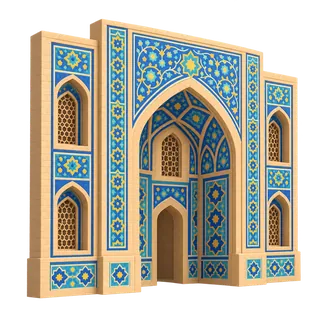
| portal | peshtoq | The portal is the tallest part of the facade. |
| arch | ravoq | Walk through the arch into the courtyard. |
| courtyard | hovli | Students studied and lived around the courtyard. |
| student cell | hujra | Each cell housed one or two students. |
| facade | old tomon (fasad) | The facade faces the square. |
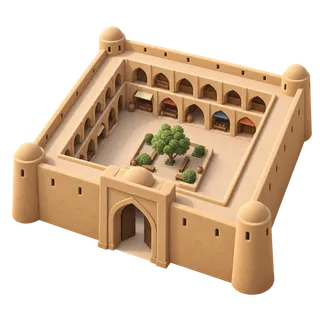
| caravanserai | karvonsaroy | Merchants rested at the caravanserai with their camels. |
| trading dome | savdo gumbazi (toqi) | Bukhara’s trading domes are still used as shops. |
| citadel / fortress | ark, qal’a | The citadel was the residence of the rulers. |
| city walls | shahar devorlari | Parts of the old city walls survive. |
Bezak va me’morchilik: 14 so‘z
| Inglizcha | O‘zbekcha | Misol |
|---|---|---|
| glazed tiles | sirlangan koshinlar | The glazed tiles reflect the sunlight. |
| mosaic | mozaika | This mosaic is made of thousands of small pieces. |
| brickwork | g‘isht terimi | Look at the patterns in the brickwork. |
| geometric pattern | geometrik naqsh | Geometric patterns repeat without end. |
| floral pattern | o‘simliksimon naqsh | The floral patterns show vines and flowers. |
| calligraphy | xattotlik | The calligraphy around the arch is a quotation. |
| inscription | bitik, yozuv | The inscription gives the name of the builder. |
| symmetry | simmetriya | The square is famous for its symmetry. |
| gilding / gold leaf | zarhal | The gold leaf has been carefully restored. |
| carved wood | o‘ymakor yog‘och | The carved wooden doors are very old. |
| column | ustun | The columns are made from a single tree. |
| restoration | ta’mirlash, restavratsiya | Restoration work continued for many years. |
| earthquake | zilzila | An earthquake damaged the minaret. |
| lean / tilt | og‘moq | The minaret leans slightly to one side. |
Tarix va hikoya: 14 so‘z
| Inglizcha | O‘zbekcha | Misol |
|---|---|---|
| century | asr | It was built in the fifteenth century. |
| ruler | hukmdor | The ruler invited scholars to his court. |
| dynasty | sulola | The Timurid dynasty ruled after Amir Timur. |
| empire | imperiya, saltanat | His empire stretched far to the west. |
| capital | poytaxt | Samarkand was the capital of Timur’s empire. |
| scholar | olim | Many scholars taught at the madrasa. |
| astronomer | astronom, munajjim | Ulugh Beg was a famous astronomer. |
| observatory | rasadxona | The observatory is a short drive from here. |
| merchant | savdogar | Merchants brought silk, paper and spices. |
| caravan | karvon | A caravan could have hundreds of camels. |
| trade route | savdo yo‘li | Samarkand was an important stop on the trade route. |
| the Silk Road | Buyuk ipak yo‘li | The Silk Road connected China and the Mediterranean. |
| legend | afsona | According to legend, the builder fell in love. |
| heritage site | meros obyekti | It’s a UNESCO World Heritage site. |

Savol-javob: bilmagan savolga halol javob
Sayyohlar kutilmagan savollar beradi. Ixtiyoriy sana yoki raqamni o‘ylab topmang.
- That’s a great question. I’m not sure of the exact year. I’ll check and tell you at the next stop.
- Historians don’t fully agree on that. One version says…, another says…
- I don’t know, but our museum guide inside will know. Let’s ask her.
- Good point. I’ll come back to it in a minute, once everyone is here.
Qisqa savol-javob misoli:
A: Is the minaret leaning? It looks a bit crooked.
B: Yes, you’ve got a good eye. It leans a little. Earthquakes over the centuries are one reason. It was restored and made safe in the twentieth century.
A: Can we climb it?
B: I’m afraid it’s usually closed to visitors. But from the viewing area on the left you can take a great photo of all three buildings.
A: And who paid for these buildings?
B: Usually the ruler or rich officials. It was a way to show power and support learning.
Guruh va vaqtni boshqarish
| Vaziyat | Ibora |
|---|---|
| Guruhni yig‘ish | Could everyone come a bit closer, please? |
| Boshlash | Can everyone hear me at the back? |
| Xavfsizlik | Watch your step, the stairs are uneven. |
| Qoida | Photos are allowed, but no flash inside, please. |
| Erkin vaqt | You have fifteen minutes on your own. |
| Uchrashuv joyi | Let’s meet at the fountain at half past two. |
| Kechikish | We’re running a bit late, so we’ll skip the shop and go straight to lunch. |
| Yakun | That’s the end of our tour. Thank you for your great questions! |


Gidlar ko‘p qiladigan xatolar
| Noto‘g‘ri | To‘g‘ri | Sabab |
|---|---|---|
| It was builded in 15 century. | It was built in the fifteenth century. | build–built–built; the + tartib son |
| It was built in 1417 year. | It was built in 1417. | year so‘zi kerak emas |
| Here is very beautiful. | It’s very beautiful here. | Ingliz gapida ega kerak |
| Look to the left side. | Look to your left. / On your left… | Tabiiy shakl |
| This is the most oldest building. | This is the oldest building. | most + -est birga emas |
| Ulug Beg was grandson of Temur. | Ulugh Beg was the grandson of Amir Timur. | Artikl; ingliz manbalarida odatiy yozilish |
Talaffuzga e’tibor bering: madrasa /məˈdræsə/, mausoleum /ˌmɔːsəˈliːəm/, caravanserai /ˌkærəˈvænsəraɪ/, century /ˈsentʃəri/. Minaret so‘zida urg‘u oxirida: mi-na-RET.
Mashq: gid gaplarini tuzating va to‘ldiring
- 1. It was ______ (build) in the seventeenth century.
- 2. ______ legend, the architect was in love with the queen.
- 3. Could everyone come a bit ______, please?
- 4. Merchants stayed at the ______ with their camels.
- 5. You have twenty minutes. Let’s ______ back here at 12:10.
- 6. Tuzating: Here is very hot today.
- 7. Tuzating: This mosque was built in 15 century.
- 8. Look at the top of the ______: can you see the two tigers?
- 9. I’m not sure of the exact date. I’ll ______ and tell you later.
- 10. Watch your ______, the floor is slippery.
Javoblar
1 — built; 2 — According to; 3 — closer; 4 — caravanserai; 5 — meet; 6 — It’s very hot here today; 7 — This mosque was built in the fifteenth century; 8 — portal; 9 — check; 10 — step.
Keyingi qadam: matningizni ovoz chiqarib aytib ko‘ring
O‘z shahringiz haqida matn tayyorlashda Uzbekistan in English sahifasidagi tavsiflardan foydalaning. Ovoz, pauza va savol-javob bo‘yicha umumiy iboralar English presentation phrases sahifasida.
BandMate ilovasida to‘xtash matningizni Bandiga aytib berishingiz mumkin: u sayyoh bo‘lib savol beradi, siz javob berasiz, ilova esa talaffuz va aniqlik bo‘yicha fikr bildiradi. Registan matnini bir kunda uch marta ovoz chiqarib aytib ko‘ring va har safar vaqtni o‘lchang.