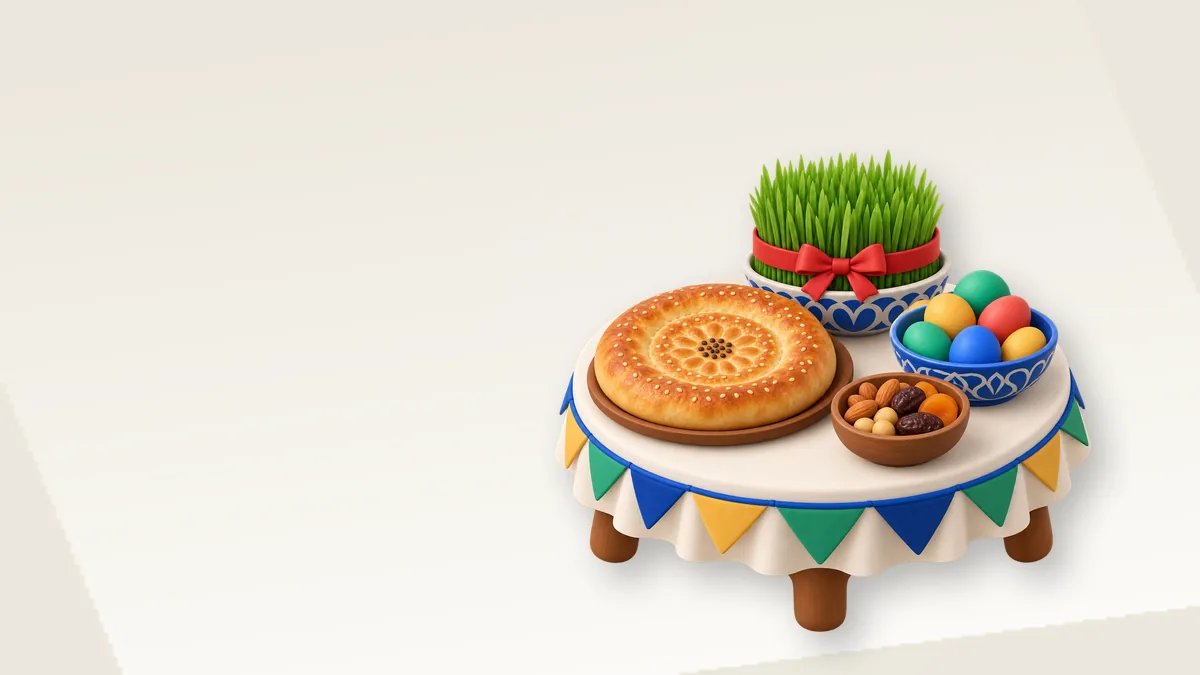
Keep the Uzbek name and add a short English explanation: plov is "rice cooked with meat, carrots and onions in a big pot", somsa is "a baked pastry filled with minced meat and onion", lagman is "hand-pulled noodles with a meat and vegetable sauce", and sumalak is "a sweet, dark paste made from sprouted wheat". Don't try to find an English "equivalent". Nobody in London calls plov "risotto", and they shouldn't.
This page is for two readers. If you are an Uzbek learner, you get ready-made sentences for guests, menus and speaking exams. If you are a visitor or a teacher, you get the names you will see on menus in Tashkent, Samarkand or Bukhara and what they actually mean.
The formula: name + category + key ingredients + one detail
A good food explanation has four parts. Say the local name, give a category the listener knows (rice dish, soup, pastry, dumplings, noodles), list two or three ingredients, then add one detail that makes it memorable.
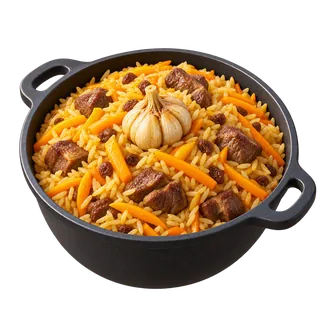
Plov is a rice dish cooked with lamb, yellow carrots and onions. It's made in a huge cast-iron pot called a kazan, and men often cook it for weddings.
Try it now with your favourite dish. Four parts, one or two sentences, under 15 seconds. That is enough for a waiter, a colleague or an IELTS examiner.
The main dishes in one sentence each
| Dish | Say it like | One-line explanation |
|---|---|---|
| plov / osh | "plov" (rhymes with stove or of; both are understood) | Rice cooked with meat, carrots and onions, often with chickpeas, raisins or a whole head of garlic. |
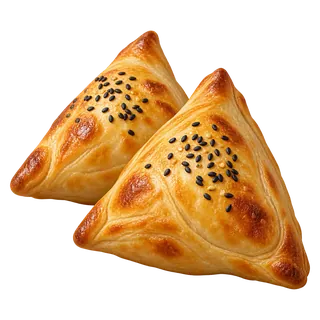
| somsa (menus also write samsa) | "SOM-sa" | A triangular pastry filled with minced meat and onion, baked on the wall of a clay oven. |
| lagman (lag‘mon) | "lag-MAN" | Long hand-pulled noodles served with a sauce of meat, peppers, tomatoes and other vegetables. |
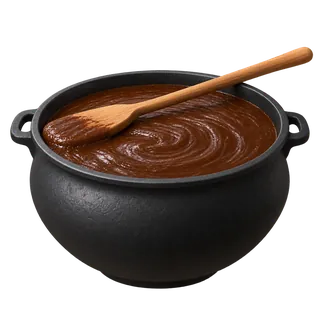
| sumalak | "su-ma-LAK" | A sweet brown paste made from sprouted wheat and flour, cooked for many hours; eaten at Navruz. |
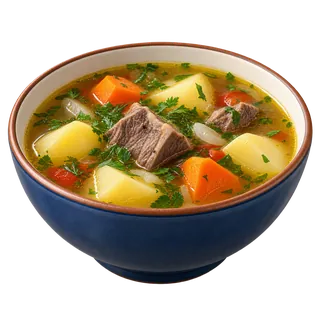
| shurpa (sho‘rva) | "SHOOR-pa" | A clear meat soup with large pieces of potato, carrot and onion. |
| mastava | "mas-ta-VA" | A thick rice soup with meat and vegetables, usually served with sour yogurt. |
| manti | "MAN-ti" | Large steamed dumplings filled with meat and onion, sometimes with pumpkin. |
| chuchvara | "chuch-va-RA" | Small boiled dumplings, served in broth or with yogurt. |
| dimlama | "dim-la-MA" | A slow-cooked stew of meat, potatoes, cabbage and other vegetables in their own juices. |
| norin | "no-RIN" | Cold, finely cut noodles mixed with boiled horse meat. |
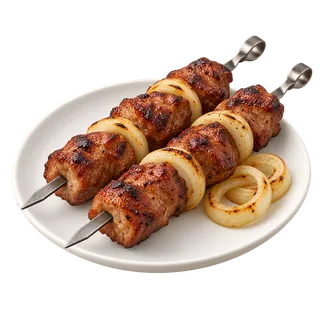
| shashlik | "SHASH-lik" | Pieces of meat grilled on skewers over charcoal. |
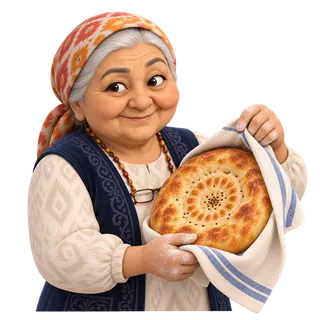
| non | "non" | Round flatbread with a stamped pattern in the middle, baked in a tandoor. |
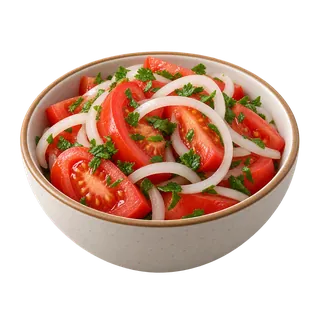
| achichuk | "a-chi-CHUK" | A simple salad of sliced tomatoes and onions, the usual partner for plov. |
Two notes for Uzbek speakers. First, dumplings is the best general word for manti and chuchvara; "pelmeni" means nothing to most English speakers. Second, don't translate osh as "food". In English, osh on its own is confusing, so say plov and add "we also call it osh".

Words you need to explain Uzbek food
| English | Pronunciation note | Uzbek | Example |
|---|---|---|---|
| pastry | /ˈpeɪstri/, "PAY-stree" | xamirli pishiriq | Somsa is a pastry, not a pie. |
| dough | /dəʊ/, the gh is silent | xamir | The dough is stretched by hand. |
| minced meat | /mɪnst/, one syllable | qiyma | It's filled with minced lamb. |
| mutton / lamb | lamb /læm/, silent b | qo‘y go‘shti | Plov is usually made with lamb or beef. |
| cumin | /ˈkjuːmɪn/ | zira | Cumin gives plov its smell. |
| chickpeas | /ˈtʃɪkpiːz/ | no‘xat | Some people add chickpeas. |
| broth | /brɒθ/, tongue between teeth | sho‘rva suvi | The dumplings are served in broth. |
| skewer | /ˈskjuːə/ | six | Four skewers of lamb, please. |
| sprouted wheat | /ˈspraʊtɪd wiːt/ | undirilgan bug‘doy | Sumalak is made from sprouted wheat. |
| clay oven | /kleɪ ˈʌvn/, oven sounds like "UV-n" | tandir | Non is baked in a clay oven. |
| cauldron | /ˈkɔːldrən/ | katta qozon | The kazan is a heavy cauldron. |
| stir | /stɜː/ | aralashtirmoq | You have to stir sumalak all night. |
How to talk about taste and texture
Uzbek achchiq covers two English words. Chilli heat is spicy or hot; the taste of strong tea or medicine is bitter. Plov is rich and filling, sometimes oily; somsa is crispy or flaky outside and juicy inside; sumalak is sweet even though no sugar is added, because the sweetness comes from the sprouted wheat. For a dish that has little taste, the word is bland, and it is not a compliment.
Menu English: what to write and what to avoid
Restaurants in Uzbekistan often translate menus word by word. Here are fixes for the most common lines.
| Seen on menus | Better |
|---|---|
| Plov national | Plov (rice with lamb, carrots and chickpeas) |
| Meat on stick | Lamb shashlik (grilled skewers) |
| Somsa with meat in tandyr | Tandoor somsa with minced lamb |
| Soup-shurpa | Shurpa: clear lamb soup with vegetables |
| Salad "Achichuk" | Achichuk: tomato and onion salad |
| Lagman fried | Fried lagman (stir-fried noodles with beef) |
| Bread national | Non (Uzbek flatbread) |
| Tea green in teapot | Green tea (a pot) |
The rule for menus: Uzbek name first, English description in brackets, no "national". A guest who reads "Plov (rice with lamb and carrots)" can order confidently; "Plov national" tells them nothing.
Phrases for the table
Ordering (visitor):
- Could I have the lagman, please?
- What's the difference between manti and chuchvara?
- Is the shurpa spicy?
- Could we have a pot of green tea and some non?
- Is a half portion possible?
Explaining (host or waiter):
- This is plov, our most famous dish. It's rice cooked with lamb and carrots.
- You eat it with the salad, it cuts the oil.
- Try the somsa while it's hot, it's straight from the tandoor.
- Tear the bread with your hands; we never cut non with a knife.
A short exchange in a choyxona:
Guest: Everything smells amazing. What would you recommend?
Host: If it's your first day in Tashkent, start with plov. It's rice with lamb, carrots and chickpeas.
Guest: Is it heavy?
Host: Quite heavy, yes. That's why we drink green tea with it and eat the tomato salad.
Guest: And those triangles?
Host: That's somsa. It's a pastry with minced meat inside, baked in a clay oven. Be careful, the inside is very hot.
For full restaurant and hotel dialogues, see ordering food in a restaurant. If you prefer word lists with Uzbek explanations, the Uzbek-language page on Uzbek dishes in English covers the same dishes for beginners, and food vocabulary has fruit, vegetables and cooking verbs.
Model paragraphs at two levels
B1 (about 80 words):
My favourite Uzbek dish is plov. It is rice cooked with meat, carrots and onions in a big pot called a kazan. My father cooks it every Friday, and my mother makes a tomato and onion salad. We eat it together with green tea. Plov is quite oily, but it is very tasty. Every region has its own plov. In Samarkand, for example, the rice and carrots are not mixed. I think every visitor should try it.
B2 (about 100 words):
If I had to choose one dish that represents Uzbekistan, it would be plov. On the surface it's simply rice with lamb, yellow carrots and onions, but the way it's cooked matters as much as the ingredients. The meat is fried first in hot oil, the carrots are added in long strips, and only then does the rice go in, so it absorbs all the flavour. Plov is also social: it's cooked for weddings, for guests and, in many Tashkent families, on Thursdays. In 2016 UNESCO added the culture of plov to its list of intangible heritage, which says a lot.
Notice what makes the B2 version stronger: a conditional opener, sequence words (first, then, only then), a passive (is cooked, are added) and one fact that is checkable.
Speaking practice with model answers
These are practice questions in the style of IELTS Speaking Part 1, not official questions. Answer each one aloud in 20–30 seconds, then compare.
1. What kind of food is popular in your country? Rice and meat dishes, mostly. Plov is the obvious one, but people also eat a lot of soups like shurpa and mastava, and fresh bread with almost every meal.
2. Is there a dish you would recommend to a visitor? I'd say somsa. It's a pastry with minced meat, baked in a clay oven, so it's crispy outside and juicy inside. It's cheap and you can eat it on the street.
3. Do you prefer home cooking or eating out? Home cooking, honestly. Restaurant plov is good, but my grandmother's lagman, with noodles she pulls by hand, is something you can't order anywhere.
More questions and answers of this type are on the IELTS Speaking food questions page. The big spring dish, sumalak, has its own story in Navruz in English.
Quiz
A. Match the dish to its description.
- 1. manti
- 2. norin
- 3. mastava
- 4. achichuk
a) cold noodles with horse meat; b) tomato and onion salad; c) large steamed dumplings; d) thick rice soup
B. Choose the better word.
- 5. The lagman is too (bitter / spicy) for me; there's a lot of chilli.
- 6. Somsa is baked in a clay (oven / stove).
- 7. Sumalak is made from (sprouted / grown) wheat.
- 8. Which is the better menu line: "Meat on stick" or "Lamb shashlik (grilled skewers)"?
**C. Explain dimlama in one sentence using the four-part formula.**
Answers
1 — c; 2 — a; 3 — d; 4 — b; 5 — spicy; 6 — oven; 7 — sprouted; 8 — "Lamb shashlik (grilled skewers)". C, model answer: Dimlama is a stew of meat, potatoes and cabbage that cooks slowly in its own juices, so you don't add any water.
Practise saying it out loud
Reading a description is easy; saying it smoothly to a guest is the hard part. In BandMate you can describe your favourite dish to Bandi by voice, answer food questions in an IELTS Speaking mock and get feedback on words like pastry, dough and cumin. The feedback is practice, not an official score, but it gets you talking.