Muzey va tarix haqidagi Part 1 savollarida ko‘p o‘quvchi bitta joyda qotib qoladi: muzey qachon ochilgan, unda nechta eksponat bor, bino qaysi asrda qurilgan. IELTS tarix bilimingizni emas, tilingizni baholaydi. Aniq sanani eslay olmasangiz, jim qolmang va raqam to‘qimang: taxminni ochiq aytuvchi iboralardan birini ishlating (I think it opened in the sixties, if I remember rightly, something like). Bu ham ravon, ham halol, ham grammatik jihatdan boy javob beradi.
Rasmiy Speaking formati bo‘yicha Part 1 da imtihonchi siz va tanish mavzular haqida savol beradi. Pastdagi savollar tahririyatning mashq savollari, real imtihondan olinmagan.
Taxminiy fakt uchun sakkizta ibora
| Ibora | Qachon ishlatiladi | Misol |
|---|---|---|
| I think… | umumiy ishonchsizlik | I think it was built in the fifteenth century. |
| If I remember rightly,… | eslab turibsiz, lekin kafolat yo‘q | If I remember rightly, it opened in the sixties. |
| something like / roughly | raqam taxminiy | It has something like ten halls. |
| apparently | boshqalardan eshitgansiz | Apparently, it’s the second-largest collection of its kind. |
| it’s supposed to be | mashhur fikr, o‘zingiz tekshirmagansiz | It’s supposed to be the oldest building in the city. |
| I’m not a hundred per cent sure, but… | ochiq tan olish | I’m not a hundred per cent sure, but I think it’s free for students. |
| I can’t remember the exact date, but… | sanani bilmaysiz, davrni bilasiz | I can’t remember the exact date, but it was before independence. |
| I might be wrong, but… | yumshoq taxmin | I might be wrong, but I think Savitsky was a painter himself. |
Ikki xatodan qoching. Birinchisi, uzun jimlik: sanani eslash uchun besh soniya jim turish ravonlikni buzadi. Ikkinchisi, aniq ko‘rinishli uydirma raqam: It has exactly 92,347 items degan gap tekshirib bo‘lmaydigan yolg‘on, hatto tasodifan to‘g‘ri chiqsa ham tabiiy eshitilmaydi.
Bitta joyni tasvirlash: Savitskiy muzeyi misolida
Nukusdagi Savitskiy muzeyi (Qoraqalpog‘iston davlat san’at muzeyi) rus avangard rassomlari to‘plami bilan dunyoga tanilgan. Uni tasvirlashda aniq biladigan narsani to‘g‘ridan-to‘g‘ri, bilmaganini taxmin iborasi bilan ayting:
The museum I’d pick is the Savitsky museum in Nukus. It’s named after Igor Savitsky, who, if I remember rightly, opened the museum in the sixties. What makes it special is the Russian avant-garde paintings, many of which were banned in Soviet times, and apparently he collected them when nobody else dared. There’s also a lot of Karakalpak jewellery and textiles. I can’t remember the exact number of pieces, but it’s enormous; they can only show a small part at a time.
Bu paragrafda uchta taxmin iborasi bor, lekin gap bir marta ham to‘xtamagan. Imtihonchi uchun which were banned, when nobody else dared, can only show a small part kabi tuzilmalar sanadan muhimroq. Bunday joyni Part 2 da ikki daqiqa gapirish uchun describe a historical place sahifasida reja bor.
8 ta mashq savoli va ikki darajadagi javob
Belgilar (“band 6 atrofida”, “band 7+ uslubida”) tahririyatning taqqoslash mo‘ljali, rasmiy ball emas.
1. Do you like visiting museums?
Band 6 atrofida. Yes, I like museums, because I can learn many things about history.
Band 7+ uslubida. It depends on the museum, to be honest. I can spend hours in one with real objects, like old tools or clothes, but I lose interest quickly if it’s just rows of glass cases with long labels.
2. When did you last go to a museum?
Band 6 atrofida. Two years ago I went to the Amir Temur museum in Tashkent with my class.
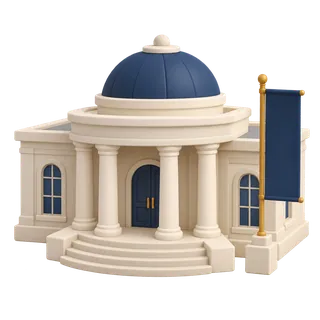
Band 7+ uslubida. Last spring, I think. My cousins from Andijan were staying with us, so I took them to the Amir Temur museum. It’s the building with the blue dome right in the centre, and I’m fairly sure it opened in the nineties.
Taxmin: I think, I’m fairly sure. Sana aniq bo‘lmasa ham, joy aniq tasvirlangan.
3. Did you go to museums on school trips?
Band 6 atrofida. Yes, sometimes. Our teacher took us to museums, but it was boring for me then.
Band 7+ uslubida. Once or twice a year. I remember a trip to the history museum where the guide talked non-stop for an hour, and all thirty of us were just waiting for the bus back.
4. What kind of museum do you find most interesting?
Band 6 atrofida. I like history museums the most, because history is very important for every nation.
Band 7+ uslubida. Anything to do with everyday life in the past. In Samarkand there’s a small museum at Afrosiyob with fragments of ancient wall paintings, and seeing how people dressed something like thirteen hundred years ago was far more gripping than any battle.
Taxmin: something like. Band 6 dagi history is very important for every nation Part 3 ga o‘xshash umumiy gap.
5. Were you interested in history at school?
Band 6 atrofida. Not really. There were too many dates and I could not remember them.
Band 7+ uslubida. Not at first. It felt like memorising dates for the sake of it, but in the ninth grade we had a teacher who brought in old coins and photos, and suddenly it clicked.
6. Do you prefer museums or historical sites outdoors?
Band 6 atrofida. I prefer historical sites, like Registan, because there is fresh air.
Band 7+ uslubida. Outdoor sites, on the whole. Walking round the old town in Khiva, you get a sense of scale that no display case can give you, though I’d still pop into a museum afterwards to understand what I’d just seen.
7. Is there a museum you would recommend to a visitor?
Band 6 atrofida. Yes, the Savitsky museum in Nukus. It is very famous and has many pictures.
Band 7+ uslubida. The Savitsky museum in Nukus, without a doubt. It’s a long way from Tashkent, but it’s supposed to have one of the biggest collections of Russian avant-garde art anywhere, and it genuinely feels like a secret most tourists miss.
Taxmin: it’s supposed to have. Muzey haqidagi baho (one of the biggest) boshqalardan eshitilgan fikr sifatida berilgan.
8. Would you rather look around a museum on your own or with a guide?
Band 6 atrofida. With a guide, because he can explain everything and answer questions.
Band 7+ uslubida. On my own, mostly, because I like to go at my own pace. That said, the one time I had a really good guide, I learnt more in forty minutes than I would have in a whole day by myself.
Muzey so‘zlari: rasmlar va jadval
| So‘z | Tarjimasi | Misol |
|---|---|---|
| an exhibition | ko‘rgazma | There’s a new photo exhibition on the first floor. |
| a display case | vitrina | The coins were in a display case. |
| a guided tour | ekskursiya | We booked a guided tour in English. |
| a collection | to‘plam, kolleksiya | The museum has a huge collection of textiles. |
| historic | tarixiy ahamiyatga ega | Khiva has a historic old town. |
| historical | tarixga oid | I like historical films. |
| ancient | qadimiy | They found ancient wall paintings there. |
| be named after | …ning nomi bilan atalgan | The museum is named after Igor Savitsky. |
| go at my own pace | o‘z sur’atimda yurish | I like to go round museums at my own pace. |
| it clicked | birdan tushunib qoldim | After that lesson, history finally clicked. |
Pronunciation ustuni: qiyin nomlarni tekshirish
Rasmiy Speaking band descriptors ning to‘rtinchi ustuni talaffuz haqida. Band 6 qatorida talaffuz vositalari ishlatiladi, lekin nazorat o‘zgaruvchan: nutq odatda to‘g‘ri bo‘laklarga bo‘linadi, ammo tez gapirish ritmga xalaqit berishi mumkin; alohida so‘z yoki tovush noto‘g‘ri aytilishi ba’zan aniqlikni kamaytiradi, lekin umuman nutq ortiqcha kuchsiz tushuniladi. Band 7 band 6 ning barcha ijobiy belgilarini va band 8 ning bir qismini o‘z ichiga oladi.
Bu mavzuda urg‘u tuzoqlari ko‘p:
| So‘z | Talaffuz | Tuzoq |
|---|---|---|
| museum | /mjuːˈziːəm/ | urg‘u ikkinchi bo‘g‘inda: mu-ZEE-um |
| history | /ˈhɪstri/ | ko‘pincha ikki bo‘g‘in: HIS-tree |
| historical | /hɪˈstɒrɪkl/ | urg‘u ko‘chadi: his-TOR-ical |
| exhibition | /ˌeksɪˈbɪʃn/ | h eshitilmaydi: ek-si-BI-shn |
| ancient | /ˈeɪnʃənt/ | “ansient” emas: AYN-shnt |
| archaeology | /ˌɑːkiˈɒlədʒi/ | ch = /k/ |
- 7-savolga javob yozing. 30 soniya, telefonga.
- Nomlarni ajrating. Yozuvdagi har bir nom va atamani (Savitsky, Nukus, avant-garde, museum) alohida tinglang. Bu so‘zni birinchi marta eshitgan odam tushunadimi?
- Sekinlashtiring. Notanish nomdan oldin qisqa pauza qiling va nomni aniq ayting: in… Nukus, in Karakalpakstan. Band 6 ta’rifidagi “rapid speech rate” muammosi aynan nomlarda sezilarli.
- Urg‘u jadvalini ovoz chiqarib o‘qing. Har so‘zni gap ichida ayting: It’s a historical museum with an exhibition of ancient coins.
- Qayta yozing va solishtiring. Shahar va joy nomlarini ingliz tilida qanday aytish haqida batafsil: davlat va shahar nomlari talaffuzi.
“We went to excursion”: muzey mavzusidagi xatolar
- “We went to an excursion to the museum.” Rus tilidagi “экскурсия” ta’siri. Tabiiyrog‘i: We went on a school trip to the museum yoki We had a guided tour.
- “There was an interesting exposition.” → There was an interesting exhibition.
- “I visited to the museum.” Visit predlogsiz: I visited the museum.
- “It was built in 15 century.” → It was built in the fifteenth century.
- “It was founded in 1966 year.” → It was founded in 1966.
- “It is a very historical place.” Ahamiyatli joy uchun historic: It’s a historic place.
Mashq: taxmin iborasini qo‘ying
So‘zlar: remember, something, supposed, exact, sure, apparently, might, named
- If I ___ rightly, the museum is closed on Mondays.
- It has ___ like twenty halls.
- It’s ___ to be the oldest mosque in the city.
- I can’t remember the ___ date, but it was in the nineties.
- I’m not a hundred per cent ___, but I think entry is free for children.
- ___, the building used to be a bank.
- I ___ be wrong, but I think Savitsky was also a painter.
- The museum is ___ after the man who started the collection.
Javoblar
- 1. remember
- 2. something
- 3. supposed
- 4. exact
- 5. sure
- 6. Apparently
- 7. might
- 8. named
San’at va rasm haqidagi yaqin savollar art savollari sahifasida. Muzeyga qilgan safaringizni zamonlar bilan aytishni travel savollari sahifasida mashq qiling.
Bandi bilan sevimli muzeyingizni tasvirlab ko‘ring
BandMate ilovasidagi ovozli suhbatda Bandi Part 1 uslubida muzeylar va tarix haqida savol beradi va javobingizga qarab davom ettiradi. Sanani eslay olmagan joyda taxmin iborasini ishlatib, gapni to‘xtatmaslikni shu yerda mashq qiling. Talaffuz bo‘yicha fikr va IELTS Speaking mock testi ham bor; ular rasmiy IELTS bahosi emas.