Qo‘shnilar mavzusi o‘zbek nomzodlari uchun eng qulay Part 1 mavzularidan biri: mahalla, hashar, Navro‘zda sumalak, to‘yda yordam, devor osha uzatilgan bir tovoq ovqat. Qiyinchilik faqat bitta: bu so‘zlarni ingliz tilida bir ibora bilan tushuntirish. Band 7+ javob o‘zbekcha so‘zni aytadi, darhol qisqa izoh beradi va aniq voqea bilan davom etadi. Pastda madaniy so‘zlarni tushuntirish jadvali, 8 ta mashq savoli, har biriga ikki darajadagi javob, iboralar va javobli mashq bor.
Mahalla, hashar, sumalak: bir jumlada tushuntiring
Imtihonchi bu so‘zlarni bilmasligi mumkin. So‘zni tarjima qilmang, uni aytib, vergul qo‘yib, izohlang:
| O‘zbekcha so‘z | Inglizcha izoh (bir jumlada) |
|---|---|
| mahalla | a mahalla, which is a close-knit neighbourhood community |
| hashar | a hashar, when neighbours volunteer to help with a big job |
| sumalak | sumalak, a sweet wheat paste cooked overnight for Navruz |
| tandir | a tandir, a clay oven for baking bread |
| oqsoqol | the oqsoqol, the respected elder of the neighbourhood |
| choyxona | a choyxona, a traditional tea house |
Qolip oddiy: o‘zbekcha so‘z + which is / when / a… + qisqa izoh. Izoh uzun bo‘lmasin, aks holda javob lug‘at maqolasiga aylanadi.
8 ta mashq savoli: oddiy javob va yaxshilangan variant
Savollarni tahririyat mashq uchun yozgan, ular real imtihondan olinmagan. Rasmiy formatga ko‘ra Part 1 to‘rt-besh daqiqa davom etadi va tanish mavzulardagi savollardan iborat. Har savol ostida avval band 6 atrofidagi oddiy javob, keyin band 7+ uslubidagi variant berilgan. Bu belgilar rasmiy baho emas.
1. Do you know your neighbours well?
Band 6 atrofida: Yes, I know my neighbours well. We live in a mahalla, so everybody knows each other.
Yaxshilangan variant (band 7+ uslubida): Better than I’d like, sometimes! We live in a mahalla, which is a close-knit neighbourhood community, so the woman next door usually hears about my exam results before some of my relatives do.
Nima qo‘shildi: madaniy so‘zga izoh va hazil bilan aniq misol.
2. How often do you see your neighbours?
Band 6 atrofida: I see them almost every day, when I go to university or come back home.
Yaxshilangan variant (band 7+ uslubida): Pretty much every day, whether I like it or not. There’s a bench by our gate where the older neighbours sit in the evenings, and you can’t walk past without stopping for at least a quick chat.
3. Do you get on well with your neighbours?
Band 6 atrofida: Yes, we have good relationship with them. We never argue.
Yaxshilangan variant (band 7+ uslubida): On the whole, yes. The only tension we’ve ever had was over parking, because two families on our street have three cars each and the street is narrow, but it got sorted out over a pot of tea.
Nima qo‘shildi: on the whole “ha, lekin” degan halol javobni boshlaydi. Band 6 javobdagi good relationship ga artikl kerak: a good relationship.
4. Have your neighbours ever helped you?
Band 6 atrofida: Yes, many times. When my father was in hospital, our neighbours helped us a lot.
Yaxshilangan variant (band 7+ uslubida): Countless times. When we were redoing our roof, half the street turned up for a hashar, which is when neighbours volunteer to help each other with a big job, and we finished in two days instead of two weeks.
5. What do neighbours do together in your area?
Band 6 atrofida: We celebrate holidays together. On Navruz neighbours cook sumalak together.
Yaxshilangan variant (band 7+ uslubida): The big event is Navruz, when the women of the mahalla take turns stirring a huge pot of sumalak through the night. And whenever a family has a wedding, the neighbours are the first to show up and help with the cooking.
Nima qo‘shildi: take turns va through the night voqeani ko‘z oldiga keltiradi. Ikkinchi jumla boshqa vaziyatga o‘tib, javobni kengaytiradi.
6. Is it important to have good neighbours?
Band 6 atrofida: Yes, it is very important, because they can help you in difficult situations.
Yaxshilangan variant (band 7+ uslubida): I’d say so, especially here, where people tend to rely on each other rather than on paid services. If a pipe bursts at midnight, it’s the neighbour with the toolbox you call, not a plumber.
7. Are neighbours in cities different from neighbours in villages?
Band 6 atrofida: Yes, in villages people are more friendly. In the city people don’t know their neighbours.
Yaxshilangan variant (band 7+ uslubida): I think so. In my grandparents’ village you can’t walk down the street without being invited in for tea, whereas in some of the new apartment blocks in Tashkent people barely know who lives on their floor.
Nima qo‘shildi: whereas bilan ikki joy aniq solishtirildi. Band 6 javobdagi more friendly ham ishlatiladi, lekin friendlier tabiiyroq.
8. What makes someone a bad neighbour?
Band 6 atrofida: A bad neighbour is noisy and doesn’t clean the entrance.
Yaxshilangan variant (band 7+ uslubida): Mostly noise and a lack of consideration. We once had a man upstairs who did his DIY at eleven at night, and nothing ruins goodwill faster than a drill right above your bed.
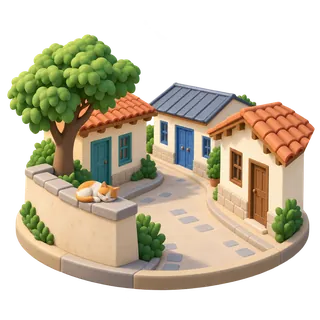
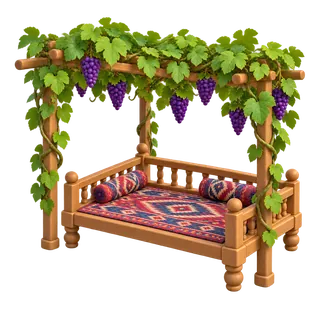
Qo‘shnilar rasmda






Qo‘shnichilik iboralari
| Ibora | Tarjimasi | Misol |
|---|---|---|
| get on well with | yaxshi chiqishmoq | We get on well with the family opposite. |
| be on good terms | yaxshi munosabatda bo‘lish | We’re on good terms with everyone in our block. |
| a close-knit community | ahil jamoa | Our mahalla is a close-knit community. |
| pop round / drop in | kirib o‘tmoq | Our neighbour pops round most evenings for tea. |
| keep an eye on | ko‘z-quloq bo‘lib turish | They keep an eye on our house when we travel. |
| lend a hand | yordam qo‘lini cho‘zish | Everyone lent a hand when we moved in. |
| borrow / lend | qarzga olmoq / bermoq | Could I borrow some salt? Could you lend me a ladder? |
| keep themselves to themselves | odamovi bo‘lmoq | The new family keeps themselves to themselves. |
| a nosy neighbour | hamma narsaga burnini suqadigan qo‘shni | Every street has at least one nosy neighbour. |
| fall out with | urishib qolmoq | My uncle fell out with his neighbour over a tree. |
Neighbour yoki neighbourhood? Qo‘shnilar haqidagi xatolar
- “My neighbourhood is very kind.” Neighbourhood hudud, mahalla. Odam uchun neighbour: My neighbours are very kind.
- “We have good relationship.” Artikl kerak: We have a good relationship. Yoki tabiiyroq: We get on well.
- “Can you borrow me a chair?” Borrow olish, lend berish: Can you lend me a chair? yoki Can I borrow a chair?
- “He is living here since 2010.” Hozirgacha davom etayotgan holat uchun present perfect: He has lived here since 2010.
- “Close neighbours.” Yonma-yon yashaydigan qo‘shni next-door neighbours. Close ko‘proq munosabat yaqinligi haqida.
- Imlo. Britaniyacha neighbour, amerikacha neighbor. Speakingda farqi eshitilmaydi, lekin yozganda bittasini tanlang.
- Talaffuz. Neighbour /ˈneɪbə/: “gh” umuman o‘qilmaydi, “neyg-bor” emas. Neighbourhood /ˈneɪbəhʊd/ da urg‘u yana birinchi bo‘g‘inda.
Bitta savol, uchta yozuv
Bu safar ko‘p savol emas, bitta savolni uch marta yaxshilaymiz.
- 1-savolni oling: Do you know your neighbours well? Namunaga qaramasdan 20–30 soniya javob bering va yozib oling.
- Ikkinchi yozuvda javobingizga yuqoridagi jadvaldan bitta madaniy so‘zni izoh bilan qo‘shing (a mahalla, which is…).
- Uchinchi yozuvda bitta aniq voqea qo‘shing: kim, qachon, nima bo‘ldi.
- Uch yozuvni ketma-ket tinglang va rasmiy Speaking band descriptors dagi talaffuz ustunini oching. Band 6 qatorida alohida so‘z yoki tovush ba’zan noto‘g‘ri aytilishi mumkin, lekin bu faqat vaqti-vaqti bilan tushunishni qiyinlashtirishi yozilgan. Neighbour so‘zini uch yozuvda ham aniq aytdingizmi?
- Ertaga shu ishni 4- yoki 5-savol bilan takrorlang.
Bo‘shliqni to‘ldiring: qo‘shnilar bilan
So‘zlar: get on, lend, borrow, keep an eye, pops round, neighbourhood, has lived, close-knit
- Our street is a very ___ community; everyone knows everyone.
- Could you ___ me your ladder for an hour?
- Can I ___ a couple of eggs? The shop is closed.
- Our neighbour ___ almost every evening with something she has baked.
- I ___ really well with the family next door.
- Our neighbours always ___ on our flat when we go to the village.
- Mr Karimov ___ on our street for over thirty years.
- It’s a quiet ___ with lots of trees and a small park.
Javoblar
- 1. close-knit
- 2. lend (siz berasiz)
- 3. borrow (siz olasiz)
- 4. pops round
- 5. get on
- 6. keep an eye
- 7. has lived (hozirgacha davom etmoqda)
- 8. neighbourhood (hudud)
2- va 3-gaplarda borrow va lend ni almashtirib qo‘ygan bo‘lsangiz, har biri bilan ikkitadan o‘z gapingizni ovoz chiqarib ayting.
Qo‘shnilardan uy va shaharga
Neighbours savollari ko‘pincha uy yoki tug‘ilgan joy mavzusidan keyin keladi. Shuning uchun home va accommodation savollari hamda hometown savollari sahifalaridagi javoblaringiz bilan bu yerdagilarni bog‘lab qo‘ying. Qo‘shni bilan kundalik inglizcha suhbat iboralari esa qo‘shnilar bilan inglizcha sahifasida.
Bandi bilan mahallangiz haqida gaplashing
BandMate ilovasida Bandi siz bilan ovozli suhbatda neighbours kabi Part 1 mavzularini mashq qiladi: savol beradi, javobingizni tinglab davom savoli qo‘yadi va talaffuz hamda iboralar bo‘yicha fikr bildiradi. Mahalla yoki hashar kabi so‘zlarni inglizcha izohlashni shu suhbatda sinab ko‘ring. IELTS Speaking mock testi ham bor. Ilova fikri rasmiy IELTS bahosi emas.