Gifts savollarida band 6 va band 7+ javobni ko‘pincha so‘z boyligi ajratadi. “I gave her a nice present, she was very happy” tushunarli, lekin a thoughtful present, I splashed out on, it’s the thought that counts kabi birikmalar javobni tabiiy qiladi. Ikkinchi ustunlik: o‘zbek sovg‘a madaniyati. To‘yona, mehmonga quruq qo‘l bilan bormaslik, Rishton lagani yoki do‘ppi kabi misollar inglizcha ikki gapda tushuntirilsa, javob darhol shaxsiy va esda qolarli bo‘ladi.
Savollar BandMate tahririyati tomonidan mashq uchun yozilgan, ular imtihondan olingan savollar emas. Rasmiy Speaking formati bo‘yicha Part 1 4–5 daqiqa va tanish mavzulardagi umumiy savollardan iborat.
Sovg‘a odatlari: inglizcha qanday tushuntiriladi
Imtihonchi o‘zbek so‘zini bilmaydi. So‘zni ayting, keyin darhol inglizcha izohlang:
| O‘zbekcha tushuncha | Inglizcha izoh | Javobda qanday ishlatish mumkin |
|---|---|---|
| to‘yona | money guests give at a wedding, usually in an envelope | At weddings people give to‘yona, which is basically cash in an envelope. |
| quruq qo‘l bilan bormaslik | never visiting someone empty-handed | You never go to someone’s home empty-handed; you take sweets or fruit at least. |
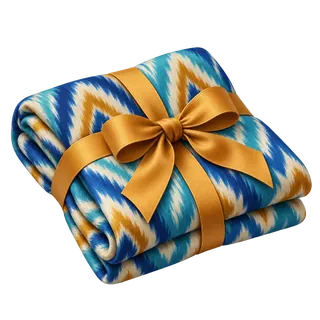
| sarpo | clothes and fabric exchanged between families before a wedding | Before a wedding the families exchange sarpo, mostly clothes and fabric. |
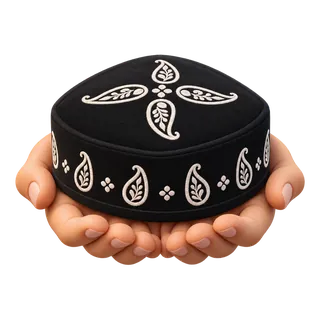
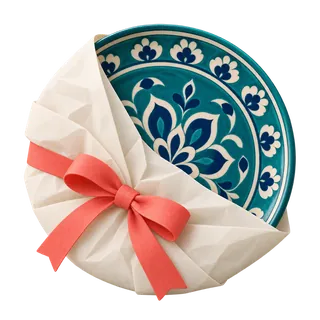
| suvenir (Rishton lagani, do‘ppi) | a souvenir, a traditional handmade item | For foreign guests we often choose a hand-painted plate from Rishtan. |
| bayramlik | a small holiday treat or money for children | At Hayit, children go from house to house and get sweets or a little money. |
Bu jadvalni yod olish shart emas. Maqsad: o‘zingiz biladigan bitta odatni ingliz tilida 15 soniyada tushuntira olish.
9 ta mashq savoli va ikki darajadagi javob
“Band 6 atrofida” va “band 7+ uslubida” belgilari rasmiy ball emas, taqqoslash uchun qo‘yilgan. Har javobdan keyin undagi lug‘at birliklari ajratib ko‘rsatilgan.
1. Do you often give people gifts?
Band 6 atrofida: Yes, quite often, for birthdays and holidays. I like to make people happy.
Band 7+ uslubida: Fairly often, though they’re usually small things. I’d rather give something little but personal, like a book I think someone would enjoy, than something expensive that doesn’t really mean anything.
Lug‘at: personal, I’d rather… than…, doesn’t really mean anything.
2. What was the last gift you gave someone?
Band 6 atrofida: I gave my mother a scarf for 8 March. She liked it very much.
Band 7+ uslubida: A silk ikat scarf for my mum on Women’s Day. I picked it out at Chorsu bazaar, had it wrapped, and she’s worn it almost every week since, which is the best sign a present was a success.
Lug‘at: pick out (tanlab olish), have it wrapped (o‘ratib olish), a success.
3. Do you prefer giving or receiving gifts?
Band 6 atrofida: I prefer giving, because I feel good when people are happy.
Band 7+ uslubida: Giving, without a doubt. Receiving makes me a bit self-conscious; I never know what face to make when I open a present in front of people.
Lug‘at: self-conscious (o‘zini noqulay his qilish), what face to make.
4. What do people take when they visit someone’s home in Uzbekistan?
Band 6 atrofida: Usually people take sweets, fruits or bread. It is our tradition.
Band 7+ uslubida: You’d never turn up empty-handed. Most people bring a box of sweets or some fruit, and if it’s an important visit, like meeting a bride’s family, it becomes a whole tray of bread and sweets carried in with some ceremony.
Lug‘at: turn up empty-handed, with some ceremony. Band 6 dagi fruits ko‘pincha fruit bo‘ladi.
5. Have you ever received a gift you didn’t like?
Band 6 atrofida: Yes, once my aunt gave me a sweater that was too big. I didn’t wear it.
Band 7+ uslubida: Plenty of times, but the classic was a bright orange sweater from my aunt, three sizes too big. I thanked her warmly, of course; it’s the thought that counts. It’s still in the wardrobe, and I bring it out whenever she visits.
Lug‘at: thank somebody warmly, it’s the thought that counts (e’tibor muhim, narsaning o‘zi emas).
6. Do you prefer to buy gifts or make them yourself?
Band 6 atrofida: I buy gifts, because I am not good at making things.
Band 7+ uslubida: Buy, mostly, because I’m hopeless with my hands. The one exception is food: I bake a honey cake for close friends, and people seem to value that more than anything I could get from a shop.
7. Is it easy for you to choose gifts?
Band 6 atrofida: No, it is difficult. I spend a lot of time in shops and I can’t choose.
Band 7+ uslubida: Not for everyone. For my sister it’s easy, she drops hints for weeks. For my dad it’s a nightmare, because he insists he doesn’t need anything, so I usually end up getting him something practical, like a thermos for fishing trips.
Lug‘at: drop hints (ishora qilish), end up + -ing, something practical.
8. Do you think money is a good gift?
Band 6 atrofida: Yes, it is useful because people can buy what they want.
Band 7+ uslubida: For weddings, yes, because that’s simply the custom here and young couples need help setting up a home. For friends, though, it feels a bit impersonal, so I’d go for a gift card if I really can’t think of anything.
Lug‘at: impersonal, set up a home, go for.
9. What would you give a foreign friend as a souvenir from Uzbekistan?
Band 6 atrofida: I would give a doppi or a plate from Rishtan, because they are traditional.
Band 7+ uslubida: Something handmade and easy to pack, probably a small hand-painted plate from Rishtan or a doppi. They’re genuinely local, unlike the fridge magnets you can find anywhere, and they tell a bit of our history.
Sovg‘alar: rasmlar va 12 ibora

| Ibora | Tarjimasi | Misol |
|---|---|---|
| a thoughtful gift | o‘ylab tanlangan sovg‘a | A handwritten card is a really thoughtful gift. |
| pick out | tanlab olish | Can you help me pick out something for my dad? |
| wrap a present | sovg‘ani o‘rash | I’m terrible at wrapping presents. |
| splash out on | ko‘p pul sarflash | I splashed out on headphones for my brother. |
| a gift card / voucher | sovg‘a sertifikati | A gift card is easy, but a bit impersonal. |
| regift | olingan sovg‘ani boshqaga berish | I’ve never regifted anything, honestly. |
| drop hints | ishora qilish | She’d been dropping hints about that book for weeks. |
| it’s the thought that counts | e’tibor muhim | It wasn’t perfect, but it’s the thought that counts. |
| go empty-handed | quruq qo‘l bilan borish | We never visit relatives empty-handed. |
| a keepsake | esdalik buyum | I kept her letter as a keepsake. |
| come in handy | asqotmoq | The thermos really came in handy on our trip. |
| be over the moon | juda xursand bo‘lish | My grandmother was over the moon with the photo album. |
Sovg‘a nomlari (idishlar, kiyim, bezaklar) bo‘yicha rasmli lug‘at kerak bo‘lsa, sovg‘alar inglizcha sahifasini oching. Xarid qilish haqidagi Part 1 savollari shopping savollari sahifasida.
“I presented her a gift”: sovg‘a mavzusidagi so‘z tanlash xatolari
- “I presented my mother a scarf.” Present fe’li rasmiy marosimlar uchun (presented with an award). Kundalik nutqda: I gave my mum a scarf.
- “I gave to her a gift.” Ikki xil tartib bor: I gave her a gift yoki I gave a gift to her. Aralashtirmang.
- “He made me a surprise.” Ruscha “сделал сюрприз” qolipi. To‘g‘risi: He surprised me yoki He planned a surprise for me.
- “Gift for my birthday I got a watch.” O‘zbekcha so‘z tartibi. Inglizcha: For my birthday I got a watch.
- “It was a very expensive and beautiful gift.” Xato emas, lekin ikkita umumiy sifat. Bittasini aniqlashtiring: It was a hand-painted plate, clearly not cheap.
- “I received a gift from my aunt, and I received flowers.” Bir fe’lni takrorlash o‘rniga: got, was given, my aunt gave me.
Lexical resource ustuni: yozuvdagi so‘zlarni saralash
Rasmiy Speaking band descriptors jadvalidagi lug‘at ustunida band 6 va band 7 farqi shunday: band 6 da so‘zlar mavzuni uzoq muhokama qilishga yetadi va ma’no aniq, garchi ba’zi so‘z noo‘rin tanlangan bo‘lsa ham. Band 7 da esa kamroq ishlatiladigan va idiomatik birliklar paydo bo‘ladi, so‘z birikmalari va uslubga e’tibor seziladi, xatolar bo‘lsa ham.
- Uchta javob yozing. 2-, 4- va 7-savollarni tanlang, har biriga yarim daqiqa. Telefonda yozing.
- So‘zlarni uch qutiga ajrating. Qog‘ozni uch ustunga bo‘ling: oddiy (nice, good, happy, beautiful), aniq (practical, hand-painted, impersonal), idiomatik (drop hints, the thought that counts). Yozuvdagi har sifat va iborani tegishli ustunga yozing.
- Oddiy ustunni qisqartiring. Nice yoki beautiful ikki martadan ko‘p chiqqan bo‘lsa, har birini aniqroq so‘z bilan almashtiring.
- Birikmani tekshiring. Idiomatik ustundagi har ibora uchun lug‘atdan misol gap toping. Masalan, splash out dan keyin on keladi.
- Qayta yozing va uch ustunni yangidan to‘ldiring. Idiomatik ustunda bitta-ikkita ibora yetarli: ko‘p bo‘lsa, javob yodlanganga o‘xshaydi.
Band 7 uchun ishlaydigan boshqa iboralar kuchli iboralar va so‘zlar sahifasida jamlangan.
Mashq: bo‘shliqni to‘ldiring
So‘zlar: empty-handed, picked out, splashed out, thoughtful, hints, counts, handy, keepsake
- We never go to my grandmother’s house ___; we always take bread and sweets.
- My brother ___ on a new phone for our dad’s fiftieth birthday.
- It was a very ___ present: she remembered I’d mentioned that book months ago.
- The present was a bit odd, but it’s the thought that ___.
- My sister kept dropping ___ about a new watch.
- I ___ a small Rishtan plate for my English teacher.
- That little torch you gave me came in ___ during the power cut.
- I still have my grandfather’s pen as a ___.
Javoblar
- 1. empty-handed
- 2. splashed out (splash out on)
- 3. thoughtful
- 4. counts
- 5. hints (drop hints)
- 6. picked out
- 7. handy (come in handy)
- 8. keepsake
Part 2 da “describe a gift” kartochkasi kelsa, 2- va 5-savollardagi voqealar tayyor asos bo‘ladi: bunday kartochkani describe a gift sahifasida mashq qiling. Tug‘ilgan kun bilan bog‘liq savollar alohida: birthdays savollari.
Bandi bilan sovg‘a haqidagi hikoyangizni ayting
BandMate ilovasida Bandi ovozli suhbatda gifts kabi Part 1 mavzularida savol beradi va javobingizdan kelib chiqib davom savolini qo‘yadi. Jadvaldagi iboralarni jonli suhbatda ishlatib ko‘rish uchun qulay. Ilova talaffuz va javob bo‘yicha fikr beradi, IELTS Speaking mock testi ham bor. Bu fikr mashq uchun; rasmiy band faqat IELTS imtihonida qo‘yiladi.