Uyqu haqidagi Part 1 savollari deyarli hammasi odat haqida: qancha uxlaysiz, qachon yotasiz, bolalikda qanday edi, hozir nimaga o‘rgangansiz. Shuning uchun bu mavzuda grammatika ko‘rinib qoladi. Band 6 va band 7+ javob o‘rtasidagi farq ko‘pincha bitta narsada: kuchli javob odatni turli qoliplar bilan aytadi (I tend to, I used to, I’m used to, I hardly ever) va ularni xatosiz ishlatadi.
Pastda avval beshta odat qolipi, keyin 9 ta mashq savoli va har biriga ikki darajadagi javob, uyqu iboralari, xatolar, rasmiy mezon bilan tekshirish tartibi va javobli mashq.
Odat haqida gapirishning beshta qolipi
| Qolip | Ma’nosi | Misol |
|---|---|---|
| Present simple + chastota ravishi | hozirgi odat | I usually go to bed around midnight. |
| tend to + fe’l | “odatda shunday bo‘ladi” (yumshoqroq) | I tend to sleep less before exams. |
| used to / would + fe’l | o‘tmishdagi, hozir yo‘q odat | I used to sleep after lunch. We would sleep outside on the tapchan. |
| be used to + -ing | biror narsaga o‘rganib qolgan bo‘lish | I’m used to getting up at six. |
| get used to + -ing | o‘rganib borish | I’m still getting used to waking up early. |
Chastota ravishining joyi alohida qoida: oddiy fe’ldan oldin (I usually sleep), lekin be dan keyin (I’m usually tired). O‘zbek tilida “odatda” gap boshida ham, o‘rtasida ham turaveradi, shuning uchun I usually am tired kabi xato ko‘p uchraydi. Chastota ravishlarini to‘liq takrorlash uchun always, usually, never sahifasi bor; used to va be used to farqi esa used to, would, be used to sahifasida batafsil.
Yana bir farq: sleep holatni bildiradi, go to bed yotoqqa yotishni, fall asleep uxlab qolishni, wake up uyg‘onishni, get up o‘rindan turishni. “12 da uxlayman” inglizchada I go to bed at twelve bo‘ladi, I sleep at twelve emas.
9 ta mashq savoli va ikki darajadagi javob
Savollarni tahririyat mashq uchun tuzgan, ular real imtihondan olinmagan. Rasmiy IELTS formatiga ko‘ra Part 1 4–5 daqiqa davom etadi va kundalik mavzulardagi savollardan iborat. “Band 6 atrofida” va “band 7+ uslubida” belgilari taqqoslash uchun, ular rasmiy ball emas. Har javobdan keyin undagi odat qolipi ko‘rsatilgan.
1. How many hours do you usually sleep?
Band 6 atrofida. Usually I sleep seven hours. Sometimes less, when I have a lot of homework.
Band 7+ uslubida. On a good night about seven hours, but it tends to drop to five or six before deadlines. I try to make up for it at the weekend, though I know that doesn’t really work.
Qolip: tends to drop, make up for it. Band 6 da usually gap boshida: xato emas, lekin I usually sleep about seven hours tabiiyroq.
2. Are you a night owl or an early bird?
Band 6 atrofida. I am a night owl. I go to bed very late, at one or two o’clock.
Band 7+ uslubida. Definitely a night owl. My brain only seems to wake up after ten at night, which is great for studying and terrible for my eight o’clock lectures.
Qolip: seems to wake up hozirgi odatni “menimcha” ohangida beradi.
3. Do you ever have a nap during the day?
Band 6 atrofida. Yes, sometimes in summer I sleep after lunch because it is very hot.
Band 7+ uslubida. Only in summer, really. When it’s over forty degrees in Tashkent, there’s not much you can do between two and four, so I have a short nap with the curtains closed and the air conditioner on.
4. Did you sleep more when you were a child?
Band 6 atrofida. Yes, when I was a child I slept a lot. My mother always sent me to bed at nine.
Band 7+ uslubida. Much more. My mum was strict about bedtime, lights out at nine. In summer at my grandparents’ house we would sleep outside on the tapchan under the stars, which I still think was the best sleep of my life.
Qolip: would sleep o‘tmishdagi takroriy odat. Band 6 javob ham to‘g‘ri, lekin faqat past simple bilan.
5. What do you do if you can’t fall asleep?
Band 6 atrofida. I read a book or listen to music. Sometimes I use my phone, but it is not good.
Band 7+ uslubida. I used to scroll through my phone, which only made it worse. These days I get up, make a cup of herbal tea and read something boring until my eyes start closing.
Qolip: used to (eski odat) va these days (yangi odat) qarama-qarshiligi.
6. Do you find it easy to wake up in the morning?
Band 6 atrofida. No, it is difficult for me. I need three alarms to wake up.
Band 7+ uslubida. Not at all. I set three alarms and still hit the snooze button every time. Once I’m up and have had tea, I’m fine, but the first ten minutes are a real struggle.
7. Has your sleep changed since you started university?
Band 6 atrofida. Yes, now I sleep less than before, because I study and work.
Band 7+ uslubida. Quite a lot. At school I had a fixed routine, but since I started university and a part-time job, I’ve had to get used to sleeping about six hours. I’m used to it now, but I wouldn’t say it’s healthy.
Qolip: have had to get used to (o‘rganishga majbur bo‘ldim) va I’m used to it now (endi o‘rganib qoldim) bir javobda. Savoldagi present perfect (has changed) ga present perfect bilan javob berilgan.
8. Do you ever stay up all night?
Band 6 atrofida. Rarely. Only before important exams or when there is a wedding in our family.
Band 7+ uslubida. Hardly ever now. The last time was during Ramadan, when the whole family got up before dawn for the pre-dawn meal, and I just didn’t go back to bed. I regretted it by lunchtime.
9. Would you like to sleep more?
Band 6 atrofida. Yes, of course. If I have more time, I will sleep nine hours.
Band 7+ uslubida. I’d love to. If I didn’t have classes at eight, I’d happily sleep until nine every day, but realistically that won’t happen until the summer holidays.
Qolip: gipotetik savolga ikkinchi tur shart gap (If I didn’t have…, I’d…). Band 6 dagi If I have…, I will birinchi tur: u real imkoniyat haqida, bu yerda esa orzu so‘ralgan.
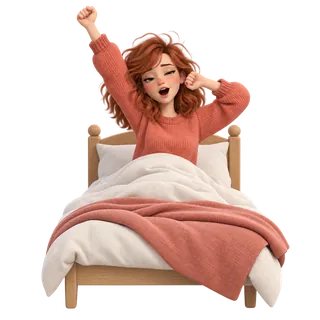
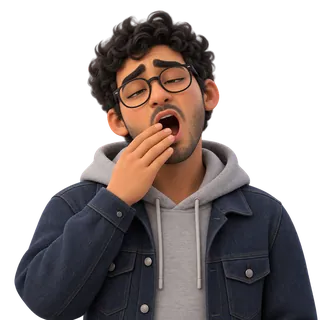
Uyqu iboralari: rasm va jadval





| Ibora | Tarjimasi | Misol |
|---|---|---|
| a night owl | kechasi faol odam | My whole family are night owls. |
| an early bird | erta turuvchi | My dad is an early bird; he’s up at five. |
| have a lie-in | ertalab uzoqroq yotish | I have a lie-in every Sunday. |
| doze off | mudrab qolish | I dozed off on the bus and missed my stop. |
| a light sleeper | sal tovushdan uyg‘onadigan | I’m a light sleeper, so the neighbours’ dog wakes me up. |
| sleep like a log | qotib uxlash | After the wedding I slept like a log. |
| toss and turn | to‘lg‘anib uxlay olmaslik | I tossed and turned all night before my exam. |
| oversleep | uxlab qolib kechikish | I overslept and missed the first lesson. |
| hit the snooze button | budilnikni keyinga surish | I hit the snooze button at least twice. |
| catch up on sleep | uyqusizlikni to‘ldirish | I catch up on sleep during the holidays. |
“I sleep at 12”: odat grammatikasidagi xatolar
- “I sleep at 12.” Yotish vaqti uchun: I go to bed at twelve. Uxlab qolish uchun: I usually fall asleep around midnight.
- “I usually am tired in the morning.” Be bilan ravish keyin keladi: I’m usually tired in the morning.
- “I am sleeping seven hours every day.” Doimiy odat uchun present simple: I sleep seven hours a night.
- “I am used to sleep late.” Be used to dan keyin -ing: I’m used to sleeping late. Yoki o‘tmish odati bo‘lsa: I used to sleep late.
- “I didn’t sleep enough, so I’m sleeping now in lessons.” “Darsda uxlab o‘tiraman” uchun: I sometimes doze off in class.
- “How many hours do you sleep?” — “Seven.” Bitta so‘zli javob Part 1 da juda qisqa. Raqamdan keyin bitta sabab yoki istisno qo‘shing.
- Talaffuz. Asleep /əˈsliːp/ da urg‘u ikkinchi bo‘g‘inda. Nap /næp/ dagi unli cat dagi kabi, “nep” emas.
Kun tartibi haqidagi boshqa savollar (ertalab, kunduz, kechqurun) daily routine savollari sahifasida jamlangan.
Grammatical range and accuracy ustuni bilan yozuvni tekshirish
Rasmiy Speaking band descriptors ning uchinchi ustuni grammatika haqida. Band 6: qisqa va murakkab gaplar aralash, tuzilmalar xilma-xil, lekin moslashuvchanligi cheklangan; murakkab tuzilmalarda xato tez-tez uchraydi, ammo tushunishga kam xalaqit beradi. Band 7: tuzilmalar moslashuvchan, xatosiz gaplar tez-tez uchraydi, oddiy va murakkab gaplar ba’zi xatolarga qaramay samarali ishlatiladi.
- Uchta savol, uchta zamon. 1-savol (hozirgi odat), 4-savol (o‘tmish odati) va 7-savol (o‘zgarish) ga javob bering. Har biriga 20–30 soniya, telefonda yozing.
- Qoliplarni sanang. Yozuvni tinglab, beshta odat qolipidan qaysilarini ishlatganingizni belgilang. Faqat present simple bo‘lsa, bu “limited flexibility” belgisi.
- Murakkab gaplarni toping. When, if, because, which, since bilan boshlangan ergash gaplarni yozib oling. Ularda xato bormi?
- Bitta xatoni tanlang. Eng ko‘p takrorlangan xatoingizni (masalan, ravish joyi) aniqlang va to‘g‘ri shaklni uch marta ovoz chiqarib ayting.
- Qayta yozing. Xuddi shu savollarga javob bering, bu safar kamida uchta turli qolip bilan. Grammatika qanday baholanishi haqida ko‘proq: grammatika qanday baholanadi.
Mashq: bo‘shliqni to‘ldiring
So‘zlar: used to, ’m used to, tend to, usually, go to bed, dozed off, would, overslept
- I ___ sleep after lunch as a child, but I don’t have time now.
- I get up at six every day, so I ___ waking up early.
- I ___ sleep less when I have exams.
- I’m ___ exhausted on Friday evenings.
- On school nights I ___ at eleven.
- I ___ in the middle of the film, so I don’t know how it ended.
- In summer we ___ sleep on the ayvon because it was cooler.
- I ___ this morning and was twenty minutes late for work.
Javoblar
- 1. used to (o‘tmishdagi, hozir yo‘q odat)
- 2. ’m used to (be used to + -ing)
- 3. tend to
- 4. usually (be dan keyin)
- 5. go to bed
- 6. dozed off
- 7. would (o‘tmishdagi takroriy odat)
- 8. overslept
1-, 2- va 7-gaplardan birida adashgan bo‘lsangiz, jadvaldagi qolipni o‘z hayotingiz haqida uch gap bilan ayting.
Uyqu va o‘qish samaradorligi o‘rtasidagi bog‘liqlik haqida til o‘rganishda dam olish va uyqu sahifasida yozganmiz. Uyqu muammosi jiddiy bo‘lsa, maslahatni shifokordan oling.
Bandi bilan kechki odatlaringiz haqida gaplashing
BandMate ilovasidagi ovozli suhbatda Bandi Part 1 uslubidagi savollarni beradi va javobingizga qarab davom etadi: “How many hours do you sleep?” dan keyin “Did you sleep more as a child?” kabi, bu zamonni almashtirishni mashq qildiradi. Talaffuz va javob bo‘yicha fikr, IELTS Speaking mock testi ham bor. AI fikri rasmiy IELTS bahosi o‘rnini bosmaydi.