
Ixtiro kartasida eng yaxshi tanlov oddiy, har kuni ishlatiladigan narsa: muzlatgich, kir yuvish mashinasi, velosiped, telefon kamerasi. Imtihonchi tarix darsini emas, bu ixtiro odamlarning kundalik hayotini qanday o‘zgartirganini eshitmoqchi. Javobni “ixtirodan oldin → hozir → men uchun” zanjiri bilan quring, tarixiy faktlarni esa faqat ehtiyotkor iboralar bilan ayting.
IELTS Speaking mezonlarida tarixiy bilim yo‘q: baholanadigan narsa ravonlik, lug‘at, grammatika va talaffuz. Ammo noto‘g‘ri sanani qat’iy ohangda aytish ishonchni pasaytiradi. Quyida muzlatgich misolida shuning yechimi ko‘rsatilgan.
Mashq kartasi: hayotni o‘zgartirgan ixtiro
BandMate tahririyati mashq uchun yozgan karta; imtihondagi so‘zlar farq qilishi mumkin.
Describe an invention that has changed the way people live.
You should say:
- what the invention is
- what it is used for
- how it has changed people’s lives
- and explain why you think it is important.
Speaking testining rasmiy tavsifi (IELTS.org) bo‘yicha, kartani olgach bir daqiqa tayyorlanasiz, qayd uchun qalam-qog‘oz beriladi va taxminan ikki daqiqa gapirasiz. Part 3 esa shu mavzudagi umumiyroq muhokama.
Faktni aniq bilmasangiz: 6 ta ehtiyotkor ibora
Ixtirochining ismi yoki yil esingizda bo‘lmasa, to‘xtab qolmang va o‘ylab topmang. Bu iboralar noaniqlikni tabiiy qiladi:
| Ibora | Ma’nosi | Misol |
|---|---|---|
| As far as I know, … | Bilishimcha, … | As far as I know, fridges became common after the Second World War. |
| I’m not sure exactly who…, but … | Aniq kimligini bilmayman, lekin … | I’m not sure exactly who invented it, but it wasn’t that long ago. |
| If I remember rightly, … | Adashmasam, … | If I remember rightly, the first ones were very expensive. |
| I believe … | Menimcha, … | I believe it appeared in the early twentieth century. |
| It was probably around … | Taxminan … atrofida bo‘lgan | It was probably around a hundred years ago. |
| I’m no expert, but … | Mutaxassis emasman, lekin … | I’m no expert, but I think it changed cooking completely. |
Mahalliy misol tanlasangiz ham qoida shu. Masalan, al-Xorazmiy haqida ishonchli fakt: algorithm so‘zi uning nomidan kelib chiqqan. Qolgan tafsilotlarni as far as I know bilan ayting.
Qaydlar: oldin, hozir, men
- What: refrigerator; boring choice, huge impact; hot country
- History (hedged): “not sure who”; as far as I know, early 20th c., common after WW2
- Before: granny, village near Bukhara, 40°C; meat same day; milk → qatiq; cellar; watermelon in the well
- Now: weekly bazaar shop, freeze portions, leftovers; less waste; insulin
- Me: cold water, ice cream in July
- Point: so normal we forget it… until a power cut
Namuna javob: buvimning muzlatgichsiz yozi
Mashq uchun yozilgan namuna; gapirilganda ikki daqiqaga yaqin. Band 7 atrofidagi javob uslubini ko‘rsatadi, rasmiy baho emas.
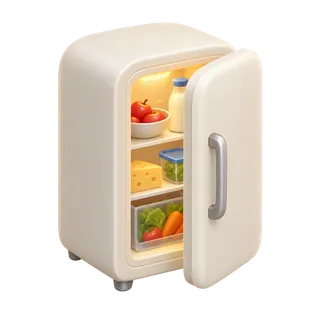
The invention I’d like to talk about is the refrigerator. It’s probably not the most exciting choice, but I honestly think it’s one of the inventions that changed ordinary life the most, especially in a hot country like Uzbekistan.
I’m not sure exactly who invented it, but as far as I know, electric fridges for homes appeared in the early twentieth century and only became common in most countries after the Second World War. So it’s a surprisingly recent thing.
What it does is simple: it keeps food cold, so that it stays fresh for days instead of hours. But the effect is huge. I only really understood this when my grandmother told me how her family managed without one in a village near Bukhara. In summer, when it’s over forty degrees, meat had to be cooked on the day it was bought, milk was turned into qatiq, a kind of thick yoghurt, almost immediately, and anything else went down into a cool cellar under the house. Sometimes they even lowered a watermelon into the well to chill it. Cooking was basically a race against the heat.
Today we take all of that for granted. My mother does one big shop a week at the bazaar, freezes meat in portions and keeps leftovers for the next day. That saves her hours, and it also means we throw away much less food. And of course, some medicines, like insulin, have to be kept cold, so for some people a fridge is literally a matter of life and death.
On a personal level, it’s about summer. Without a fridge there’s no cold water after a long walk in the heat and no ice cream. It sounds silly, but in July in Tashkent that feels like a basic human right.
So for me, it’s a perfect example of an invention that became so normal that we completely forget it’s there, until there’s a power cut.
Ixtiro va texnika haqida 12 ta ibora
| Inglizcha | O‘zbekcha | Misol |
|---|---|---|
| keep food fresh | ovqatni yangi saqlamoq | A fridge keeps food fresh for days. |
| go off | aynib qolmoq | Milk goes off quickly in the heat. |
| perishable | tez buziladigan | Meat and milk are perishable. |
| leftovers | ortib qolgan ovqat | We keep the leftovers for the next day. |
| take something for granted | oddiy hol deb qabul qilmoq | We take fridges completely for granted. |
| labour-saving | mehnatni yengillatadigan | A washing machine is a labour-saving device. |
| a game-changer | vaziyatni tubdan o‘zgartirgan narsa | For my grandmother, the fridge was a game-changer. |
| revolutionise | tubdan o‘zgartirmoq | It revolutionised the way people shop. |
| a household appliance | maishiy texnika | The fridge is our most used household appliance. |
| a power cut | elektr o‘chishi | Everything melted during the power cut. |
| a matter of life and death | hayot-mamot masalasi | For some patients, it’s a matter of life and death. |
| can’t imagine life without | …siz hayotni tasavvur qilolmaslik | I can’t imagine summer without a fridge. |




Lexical resource ustunini tekshirish: rejalangan beshta so‘z
Rasmiy Speaking band descriptors ning Lexical resource ustunida band 7 uchun kam uchraydigan va idiomatik birliklardan ma’lum darajada foydalana olish, uslub va so‘z birikmalarini his qilish aytilgan, garchi ba’zan noo‘rin tanlovlar bo‘lsa ham. Band 8 da bunday birliklar mohirona ishlatiladi. Ya’ni gap qiyin so‘z sonida emas, uni o‘z joyida ishlata olishda.
Tekshiruv tartibi:
- 2 daqiqa. Qayd yozing va qaydning pastiga yuqoridagi jadvaldan ixtirongizga mos 5 ta birlik yozing (masalan: perishable, go off, take for granted, game-changer, labour-saving).
- 2 daqiqa. Taymer bilan gapirib, yozib oling. Ro‘yxatga qaramaslikka harakat qiling.
- 3 daqiqa. Tinglang va har bir birlik uchun uchta savolga javob bering: ishlatdimi? o‘z joyidami? shakli to‘g‘rimi? Masalan, a game-changer invention g‘alati eshitiladi; tabiiysi it was a game-changer.
- 2 daqiqa. Uslubni tekshiring: yozma nutqqa xos so‘zlar (moreover, furthermore, utilise, henceforth) og‘zaki javobda sun’iy eshitiladi. Ularni also, and, use, from then on bilan almashtiring.
- 2 daqiqa. Qayta yozib oling. Maqsad: beshtadan kamida to‘rttasi tabiiy o‘rinda va to‘g‘ri shaklda.
So‘z boyligini band 7 darajasida ishlatish haqida to‘liq qo‘llanma lexical resource band 7 sahifasida.
Ixtiro haqida gapirganda: invent, discover va “technic”
- Invent yoki discover? Mavjud bo‘lmagan narsani yaratish invent: the fridge was invented. Tabiatda bor narsani topish discover: penicillin was discovered, a new planet was discovered.
- “Fridge was invented by … in …” Aniq bilsangiz, majhul nisbat shu shaklda. Bilmasangiz, by va yilni tashlab, ehtiyotkor ibora qo‘shing.
- “Who did invent it?” Ega haqida so‘ralganda did kerak emas: Who invented it?
- “Technic”, “technika”. Inglizchada technique “usul” degani. Uy texnikasi household appliances, umuman texnologiya technology.
- “It makes easier our life.” So‘z tartibi: It makes our lives easier.
- “Fridge is very useful thing.” Artikllar: The fridge is a very useful thing, yaxshisi an extremely useful appliance.
Band 6 → band 7: beshta gap
| Band 6 atrofida | Band 7 uslubida | Farqi |
|---|---|---|
| Fridge is very useful thing for people. | The fridge is one of the inventions that changed ordinary life the most. | Artikl, ergash gap, aniq baho |
| I don’t know who invented it. | I’m not sure exactly who invented it, but as far as I know, it became common after the Second World War. | Ehtiyotkor ibora bilan fakt |
| Before, people had big problems with food in summer. | In summer, meat had to be cooked on the day it was bought, and everything else went down into a cool cellar. | Aniq misol, majhul nisbat |
| Now it makes easier our life. | Today we take all of that for granted. | So‘z tartibi xatosi o‘rniga ibora |
| I can’t live without fridge. | In July in Tashkent, cold water feels like a basic human right. | Mubolag‘a, shaxsiy tafsilot |
Part 3: texnologiya va taraqqiyot haqida 4 savol
Mashq savollari; kursivdagi g‘oyalar yo‘nalish uchun.
- Which invention of the last hundred years has had the biggest impact? Probably the internet, although I’d argue antibiotics saved more lives. It depends on whether we mean comfort or survival.
- Do new inventions always make life better? Mostly, but there are side effects. Cars gave us freedom, and also traffic and pollution.
- Why do some older people find new technology difficult? Not because they can’t learn, but because interfaces change so fast. Simple, user-friendly design helps everyone.
- Should governments pay for scientific research? Yes, especially long-term research that private companies won’t fund because it doesn’t make money quickly.
Bu mavzudagi keng Part 3 savollari Part 3: technology sahifasida. Kundalik texnologiya haqidagi Part 2 kartasi uchun describe an app namunasini ko‘ring.
Mashq: bo‘sh joylarni to‘ldiring
So‘zlar: off, granted, leftovers, perishable, game-changer, appliance, cut, labour-saving
- In summer, milk goes ___ in a few hours without a fridge.
- We take hot water for ___ until it stops.
- We usually have the ___ for lunch the next day.
- Meat, fish and milk are ___ foods.
- For my grandmother, the washing machine was a real ___.
- The fridge is the one household ___ we use all day long.
- Everything in the freezer melted during the power ___.
- A dishwasher is a ___ device, but not many families here have one.
Javoblar
- 1. off (go off — aynimoq)
- 2. granted (take for granted)
- 3. leftovers (ortib qolgan ovqat)
- 4. perishable (tez buziladigan)
- 5. game-changer (a real game-changer)
- 6. appliance (household appliance)
- 7. cut (a power cut)
- 8. labour-saving (mehnatni yengillatadigan)
Tanlagan ixtirongizni Bandi bilan tushuntiring
BandMate da Bandi bilan ovozli suhbatda ixtirongiz haqida gapirib, rejalagan so‘zlaringizni ishlatib ko‘rishingiz mumkin. IELTS Speaking mock testi esa Part 2 kartasini tayyorgarlik va gapirish taymeri bilan beradi, keyin Part 3 savollariga o‘tadi. Ilova izohi mashq uchun, rasmiy IELTS bandi emas.