
Shahar mavzusidagi Part 3 savollari sizning ko‘changiz haqida emas: imtihonchi shaharlar nega o‘sayotgani, bu o‘sish kimga foyda va kimga zarar keltirishi, kelajakda shahar qanday bo‘lishini so‘raydi. Band 7 ga yaqin javobda aniq pozitsiya, uning sababi, Toshkent yoki o‘z viloyatingizdan bitta misol va fikringiz qayerda ishlamasligi bo‘ladi.
Rasmiy formatga ko‘ra Part 3 taxminan 4–5 daqiqa davom etadi va Part 2 mavzusini umumiyroq, mavhumroq darajada muhokama qiladi. Shahar savollari odatda Part 2 dagi “Describe a city” kartochkasidan keyin keladi. Savollar mashq uchun tuzilgan, haqiqiy imtihon savollari emas. “Band 6” va “Band 7+” belgilari esa tahririyatning taxminiy bahosi.
Savollar to‘rt turga bo‘lingan
| Tur | Savol belgisi | Sizdan nima kutiladi |
|---|---|---|
| Taqqoslash | How is… different from…? How has… changed? | Ikki narsa yoki ikki davr orasidagi asosiy farq |
| Bashorat | What will…? Do you think… in the future? | Ehtiyotkor taxmin va uning asosi |
| Baholash | Is it a good idea…? Should…? | Pozitsiya, shart va cheklov |
| Sabab-oqibat | Why do…? What problems does… cause? | Mexanizm: nima nimaga olib keladi |
Taqqoslash savollari
1. How is life in cities different from life in the countryside?
Band 6:
I think life in the city is more busy. There are more jobs and more shops, but it is also more noisy. In the village people know each other and life is more calm.
Band 7+:
The biggest difference, I’d say, is the pace. In a city like Tashkent you’re constantly rushing between the metro, work and errands, whereas in a village the day is shaped by the seasons and by the neighbours. Cities obviously offer far more in terms of jobs, universities and healthcare, but people there can feel surprisingly isolated: you might not even know the family across the landing. In the countryside, by contrast, the mahalla is still a real support network, although the lack of well-paid work pushes many young people out.
Farq: birinchi javobda more busy, more noisy xato (to‘g‘risi busier, noisier) va farq faqat sanab chiqiladi. Ikkinchisida bitta asosiy farq (pace) tanlanib, ikki tomoni ham tushuntiriladi.
2. How have cities in your country changed in the last twenty years?
Band 6:
Cities in Uzbekistan changed a lot. There are many new buildings and new roads. Also the metro is bigger now. I think it is good changes.
Band 7+:
They’ve changed almost beyond recognition, at least in Tashkent. Whole areas of low-rise houses have been replaced by apartment blocks and business centres, and the metro now reaches districts that used to depend entirely on minibuses. On the whole I see this as progress, but it has come at a price: some old neighbourhoods with courtyards and big trees have disappeared, and green space hasn’t always kept up with new housing.
Farq: have changed (Present Perfect) davrni to‘g‘ri beradi; it is good changes o‘rniga baho aniq aytiladi va narxi ham qo‘shiladi.
Bashorat savollari
3. What will cities look like in the future?
Band 6:
In the future cities will be more modern. Maybe there will be flying cars and robots. People will use more technology.
Band 7+:
Nobody can say for sure, but I suspect the real changes will be less dramatic than flying cars. Cities will probably have to adapt to hotter summers, so we may see more shade, trees and water features rather than just glass towers. I’d also expect public transport to become more connected, so you can plan a whole journey in one app. In Central Asia, where summers are already very hot, planning for heat may matter more than any gadget.
Farq: fantastika o‘rniga hozirgi muammodan kelib chiqqan taxmin, I suspect, probably, may kabi ehtiyotkor so‘zlar bilan.
4. Do you think more people will move to cities in the coming decades?
Band 6:
Yes, I think more people will move to cities because there are more jobs. In villages there is not enough work. So cities will become bigger.
Band 7+:
Probably yes, at least for the next few decades, because universities, investment and well-paid jobs are still concentrated in big cities. You can already see young people from the regions renting flats in Tashkent to study or work in IT. That said, remote work might slow the trend a little. If a programmer in Namangan can earn a capital-city salary from home, there’s less reason to pay high rent in Tashkent.
Farq: kuchli javob tendensiyani sekinlashtiradigan omilni ham ko‘rsatadi.
Baholash savollari
5. Is it a good idea to build more high-rise apartment blocks?
Band 6:
I think it is good and bad. High buildings can have many flats for people. But they can be not comfortable for old people and children.
Band 7+:
It depends on how they’re built. High-rise blocks make sense in a growing city, because they house a lot of people on limited land and stop the city spreading endlessly outwards. The problem starts when developers put up tower after tower without schools, parking or playgrounds nearby, so thousands of new residents compete for the same services. So I’d support them, but only as part of a proper plan, not as a way to squeeze maximum profit out of every plot.
Farq: good and bad — pozitsiya emas. It depends on how they’re built esa shartli, lekin aniq pozitsiya. Can be not comfortable o‘rniga may not be comfortable deyiladi.
6. Should city centres be closed to private cars?
Band 6:
Yes, because there is too much traffic in the centre. Cars make pollution. People can use metro or bus.
Band 7+:
Closing the centre completely seems too extreme to me, at least for now. It works in cities with dense, reliable public transport, but many people here still depend on cars, especially families with small children or elderly relatives. A more realistic step would be to make driving into the centre less attractive, for example through paid parking and more pedestrian streets, while improving buses and the metro. Once the alternatives are genuinely convenient, restrictions become much easier to accept.
Farq: kuchli javob “ha/yo‘q” o‘rniga uchinchi yo‘l taklif qiladi va uni asoslaydi.
Sabab-oqibat savollari
7. Why do so many young people move to the capital?
Band 6:
Because in the capital there are more opportunities. Young people want good job and good salary. Also there are good universities.
Band 7+:
Mainly because opportunities are unevenly spread. Most major universities, international companies and tech firms are based in the capital, so for an ambitious school leaver from, say, Surkhandarya, moving to Tashkent can feel like the only way forward. There’s a social side too: a big city offers a kind of independence that’s hard to find in a small town where everyone knows your family. Of course, not everyone stays; some go back once they have savings or experience.
Farq: opportunities so‘zi tushuntiriladi (qanday imkoniyatlar, qayerda) va ijtimoiy sabab qo‘shiladi. Good job emas, a good job.
8. What problems does rapid city growth cause?
Band 6:
The city becomes very crowded. There are traffic jams and prices for flats go up. Also the air is dirty.
Band 7+:
The most visible effect is on housing: when demand grows faster than supply, rents rise and students or young families get pushed to the outskirts, which means longer commutes. That in turn adds to traffic and air pollution, particularly in winter. A less obvious problem is pressure on schools and clinics in new districts, where classes can become overcrowded. So the real challenge isn’t growth itself but making sure infrastructure grows at the same speed.
Farq: muammolar ro‘yxat emas, zanjir: ijara → chekka → uzoq yo‘l → tirbandlik. Zanjirni that in turn bog‘laydi.
Shahar mavzusi uchun fikrlar banki
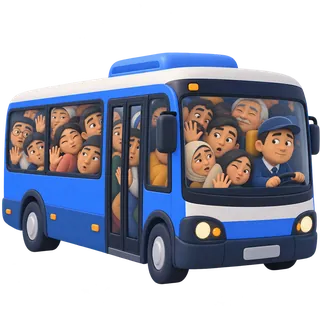
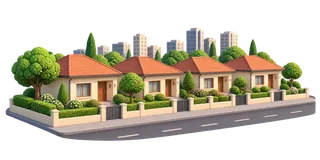
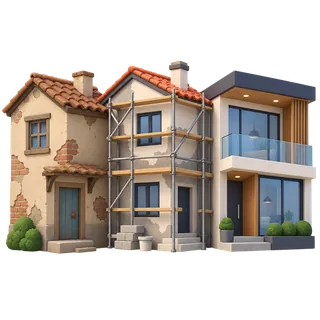
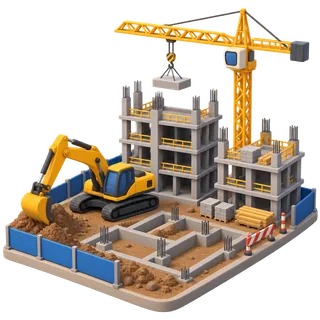
- Shahar foydasiga: ish va o‘qish imkoniyati, shifoxonalar, madaniy hayot, mustaqillik.
- Shahar zarariga: ijara narxi, tirbandlik, havo ifloslanishi, qo‘shnilarni tanimaslik.
- Qishloq foydasiga: mahalla va qarindoshlar yaqinligi, toza havo, arzonroq hayot.
- Qishloq zarariga: ish kam, yoshlar ketadi, xizmatlar uzoq.
12 ta ibora tarjimasi va misoli bilan
| Ibora | Tarjima | Misol |
|---|---|---|
| urban sprawl | shaharning tartibsiz kengayishi | Urban sprawl means longer journeys to work. |
| high-rise blocks | ko‘p qavatli binolar | New high-rise blocks are going up everywhere. |
| the outskirts | shahar chekkasi | Many students rent flats on the outskirts. |
| to commute | har kuni qatnamoq | She commutes an hour each way. |
| traffic congestion | tirbandlik | Traffic congestion is worst in the morning. |
| green spaces | yashil hududlar | Green spaces make a city more liveable. |
| affordable housing | hamyonbop uy-joy | Affordable housing is hard to find in the capital. |
| pedestrian streets | piyodalar ko‘chasi | Pedestrian streets attract cafés and tourists. |
| the cost of living | turmush xarajatlari | The cost of living is higher in big cities. |
| infrastructure | infratuzilma (yo‘l, maktab, suv) | Infrastructure hasn’t kept up with growth. |
| a sense of community | qo‘shnichilik, jamoa hissi | Old mahallas still have a strong sense of community. |
| to be pushed out | siqib chiqarilmoq | Young families are being pushed out by high rents. |
Javobni uzaytirish: o‘tmish – hozir – keyin
Shahar savollari ko‘pincha o‘zgarish haqida, shuning uchun bitta fikrni uch nuqtada ko‘rsating:
- O‘tmish (1 gap): Ten years ago, most people in my area got around by minibus.
- Hozir (1–2 gap): Now there’s a metro station nearby, so the journey to the centre takes half the time.
- Keyin (1 gap, ehtiyotkor): If the network keeps growing, I think fewer families will feel they need a car.
Umumiy qolip (fikr, sabab, misol, cheklov) haqida Part 3 opinion structure sahifasida batafsil yozilgan. Transport savollari Part 1 da ham tez-tez keladi: Part 1 traffic savollari.
Shahar haqida gapirganda o‘zbekcha qolipdan kelgan xatolar
| Xato | To‘g‘ri | Izoh |
|---|---|---|
| Life in city is more busy. | Life in the city is busier. | Artikl va qisqa sifatning qiyosiy darajasi |
| There is many cars. | There are a lot of cars. | Ko‘plikda there are |
| I live in a microdistrict. | I live in a residential area. | “Mikrorayon” inglizcha emas |
Mashq: iborani vaziyatga moslang
Har bir gapni bo‘sh joyga mos ibora bilan to‘ldiring: the outskirts, commute, green spaces, affordable housing, sense of community, urban sprawl, pushed out, congestion.
- 1. Rents in the centre are so high that many students live on ___.
- 2. My brother has to ___ for ninety minutes every day.
- 3. Parks and tree-lined streets are the ___ a city needs in summer.
- 4. The government should build more ___ for young families.
- 5. In old mahallas there is still a strong ___.
- 6. When a city keeps spreading outwards, we call it ___.
- 7. Small shops are being ___ by big shopping centres.
- 8. Traffic ___ is worst between eight and nine in the morning.
Javoblar
1 — the outskirts; 2 — commute; 3 — green spaces; 4 — affordable housing; 5 — sense of community; 6 — urban sprawl; 7 — pushed out; 8 — congestion. Keyin 8-savolga shu iboralardan uchtasini ishlatib o‘zingiz javob bering.
Shahar savollarini Bandi bilan ovoz chiqarib sinash
BandMate ilovasida Bandi bilan shahar mavzusida suhbatlashishingiz mumkin: u sizning javobingizdan kelib chiqib qo‘shimcha savol beradi, grammatika va so‘z tanlovi bo‘yicha izoh qoldiradi. IELTS Speaking mock testi ham bor. AI bahosi yo‘nalish beradi, rasmiy IELTS bali emas. Atrof-muhit bilan bog‘liq shahar savollari uchun keyingi qadam: Part 3 environment.