IELTS Speaking rarely asks "Tell me about Uzbekistan", but many of its usual topics (your hometown, food, festivals, a place to visit, a traditional product, old people and young people) are a natural invitation to use a local example. The rule that makes those examples work: name it, explain it in one short clause, then say something personal about it. "Sumalak, a sweet paste made from sprouted wheat, which my grandmother stirs all night" scores better than a list of famous names.
Below: which topics suit local examples, the "name + explain + personal" formula, sample answers for all three parts, the traps that make local answers sound like a tourist brochure, and a rewrite task with answers. All questions here are practice examples written by our editors, not official IELTS questions.
How the Speaking test gives you room for local examples
According to ielts.org, the Speaking test is a face-to-face, recorded interview of 11–14 minutes in three parts: Part 1 (4–5 minutes) on familiar topics, Part 2 (3–4 minutes) where you get a task card, one minute to prepare and then speak for up to two minutes, and Part 3 (4–5 minutes), a discussion connected to the Part 2 topic. You are marked on fluency and coherence, lexical resource, grammatical range and accuracy, and pronunciation.
A local example helps in every part, but differently:
| Part | What a local example does | Length |
|---|---|---|
| 1 | Makes a short answer concrete: one detail, one reason | 2–4 sentences |
| 2 | Gives you a real story, so you don't run out of things to say | about 2 minutes |
| 3 | Supports a general opinion with evidence you actually know | 4–6 sentences |
Topics where Uzbekistan fits naturally
| Common topic | Local example | Explain it in one clause |
|---|---|---|
| Hometown | Chilonzor, Tashkent; old city of Bukhara | a big residential district in the south-west of Tashkent |
| Food / cooking | osh (plov), somsa | a rice dish cooked with meat, carrots and onions in a big pot |
| Festivals | Navruz | the spring New Year on 21 March |
| Weddings / celebrations | to‘y | a wedding party that can have hundreds of guests |
| Traditional products | Margilan silk, Rishtan ceramics | hand-dyed silk with bright, blurred patterns |
| Neighbours / community | mahalla | a neighbourhood community with its own committee |
| Old and young people | respect for elders | younger people stand up when an older person enters |
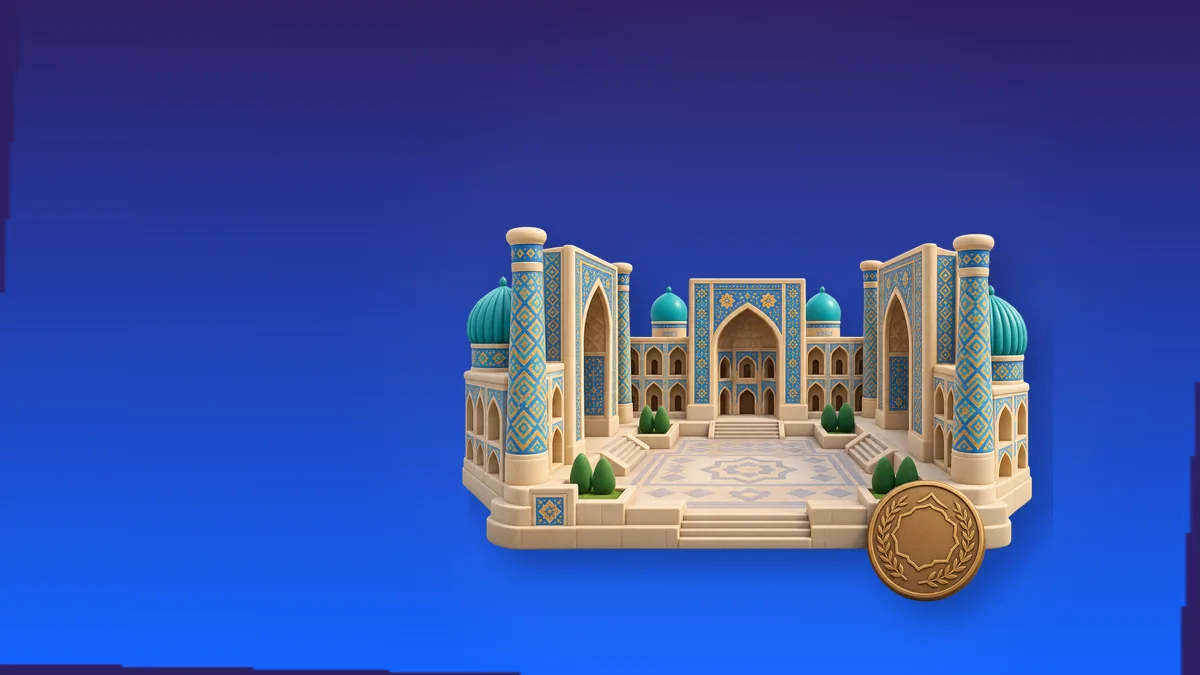
| Tourism / historical places | Registan, Samarkand | a square surrounded by three old madrasas |




The formula: name, explain, make it personal
- Name it in Uzbek, once, clearly: osh, to‘y, mahalla.
- Explain it in English in one relative clause or apposition: …which is…, …, a kind of….
- Make it personal: a memory, a habit, a feeling, a comparison.
| Weak | Strong |
|---|---|
| We have osh. It is very tasty. | Our signature dish is osh, rice cooked with lamb and yellow carrots. My dad only cooks it on Fridays, and he won't let anyone else touch the kazan. |
| In Uzbekistan we celebrate Navruz. | The festival I enjoy most is Navruz, our spring New Year. What I like is the night before, when the neighbours take turns stirring sumalak. |
For the words themselves, see Uzbek food in English and Navruz in English. This page is about using them under exam conditions.
Part 1 sample answers
Q: Where is your hometown?
I'm from Namangan, a city in the Fergana Valley in the east of the country. It's surrounded by mountains, so the summers are hot but the evenings are pleasant. It's famous for its flowers; there's a big flower festival every year, and the whole centre smells of roses.
Q: What kind of food do you usually eat?
Mostly home-cooked Uzbek food. My mum makes soups like mastava, a thick rice and meat soup, during the week, and at the weekend we often have osh. To be honest, I eat too much bread; non, our round flatbread, is on the table at every meal.
Q: Do you like festivals?
Yes, especially Navruz, because it's the one festival that everyone celebrates, not just families. People clean the streets together, and neighbours share food. It feels like the whole mahalla is one big family for a day.
Q: Do young people in your country still wear traditional clothes?
Not every day. Young people wear jeans like everywhere else. But at weddings you see a lot of atlas, a bright silk fabric, especially on brides and older women. Actually, some designers now use those patterns in modern jackets, and they're quite popular.
More hometown practice, with four Uzbek cities, is in IELTS hometown questions (Uzbek explanations).
Part 2 sample: a traditional product
Describe a traditional product from your country. You should say: what it is; how it is made; where people buy it; and explain why it is important to your country.
I'd like to talk about atlas, a traditional silk fabric from Margilan, a town in the Fergana Valley. You can recognise it immediately: bright colours like red, yellow and purple, and patterns that look slightly blurred, as if the colours are melting into each other.
The interesting part is how it's made. The threads are tied in small bunches and dyed before the fabric is woven, and that's why the pattern edges look soft. I visited a workshop in Margilan on a school trip, and I remember watching a woman at a wooden loom. She was working so fast that I couldn't follow her hands.
People buy it at bazaars, and also in small shops near the workshops. It isn't cheap if it's handmade, so for most families it's something for special occasions. Brides often wear a dress made of atlas, and mothers keep pieces of fabric for their daughters' weddings.
Why is it important? I think because it connects us with the Silk Road period, when this region was famous for trade. And it's not only history: young designers are now putting atlas patterns on modern clothes, so it's still alive. Every time I see a tourist carrying an atlas scarf, I feel quietly proud.
Notice the structure: name + look → process + personal memory → where bought → why it matters. For a celebration story, see our to‘y cue card sample.
Part 3 sample answers
Q: Is it important to preserve traditional crafts?
I think so, but not by putting them in a museum. A craft survives when people can earn a living from it. In Rishtan, for example, families have made ceramics for generations, and the workshops that do well are the ones selling to tourists and online. So I'd say the best way to preserve a craft is to create demand for it, not just to protect it.
Q: How has tourism changed cities in your country?
In places like Samarkand the change is very visible: new hotels, cafés with English menus, and more young people working as guides. That's mostly positive, because it brings jobs. The downside is that the old centre can start to feel like a stage set for visitors rather than a place where people live. The challenge is to keep both.
Q: Do older people and younger people have different values?
In some ways, yes. My grandparents believe the family should decide big things together, like who you marry or where you work, while many people my age want more independence. But I'd say respect for elders hasn't really changed; it's just expressed differently. My generation might not follow all the advice, but we still ask for it.
Traps that make local answers sound like a brochure
| Trap | Example | Better |
|---|---|---|
| Slogan instead of detail | Uzbekistan is a very beautiful and ancient country. | Bukhara's old centre is small enough to cross on foot, and every street has a mosque or a madrasa. |
| Unexplained local words | At the to‘y we had osh and a karnay. | …and a karnay, a very long brass trumpet. |
| Too many local words | Five Uzbek names in one answer | Two or three, each explained |
| Facts you can't support | It's the oldest city in the world. | It's one of the oldest cities in Central Asia. |
| Missing article | We cook plov in big kazan. | We cook it in a big kazan. |
| Direct translation | Navruz is holiday of spring. | Navruz is the spring festival. |
Examiners don't give marks for patriotism or lose them for criticism. They mark language. A balanced sentence (It's beautiful, but in August the heat is unbearable) often shows more range than pure praise.
Rewrite task
Improve each sentence using the name + explain + personal formula, or fix the error.
- 1. In my city there is Chorsu.
- 2. Uzbekistan is the most hospitable country in the world.
- 3. On Navruz we eat sumalak.
- 4. My grandmother lives in mahalla.
- 5. We have very famous dish, osh.
- 6. Samarkand is very old and very beautiful and very famous.
Answers
Sample rewrites; other good versions are possible.
- My favourite place in Tashkent is Chorsu, a huge old bazaar with a blue dome. I go there with my mum on Saturdays for fresh bread and dried fruit.
- People in Uzbekistan take hospitality seriously; even unexpected guests are offered tea and bread straight away. (A claim you can support, not a world ranking.)
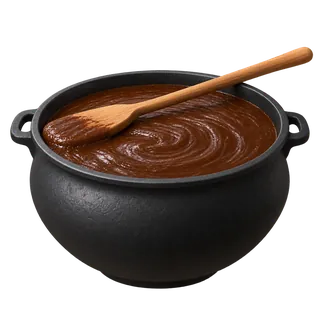
- At Navruz we make sumalak, a sweet paste made from sprouted wheat. It cooks all night, and people take turns stirring it.
- My grandmother lives in a mahalla, a neighbourhood community where everyone knows each other. (Article added, word explained.)
- We have a very famous dish called osh. (Article a, and called joins the name.)
- Samarkand is one of the oldest cities in Central Asia, and the Registan, a square framed by three madrasas, is breathtaking at night. (One precise adjective instead of three verys.)
For a wider guide to describing the country in any situation, not only exams, see how to describe Uzbekistan in English.
Rehearse your local answers aloud
Knowing what to say about atlas or Navruz is half the job; saying it smoothly at exam speed is the other half. In BandMate you can take an IELTS Speaking mock with Bandi, including a Part 2 card with a one-minute preparation timer, then get feedback on fluency, vocabulary, grammar and pronunciation. The band it shows is an estimate for practice, not an official IELTS result.