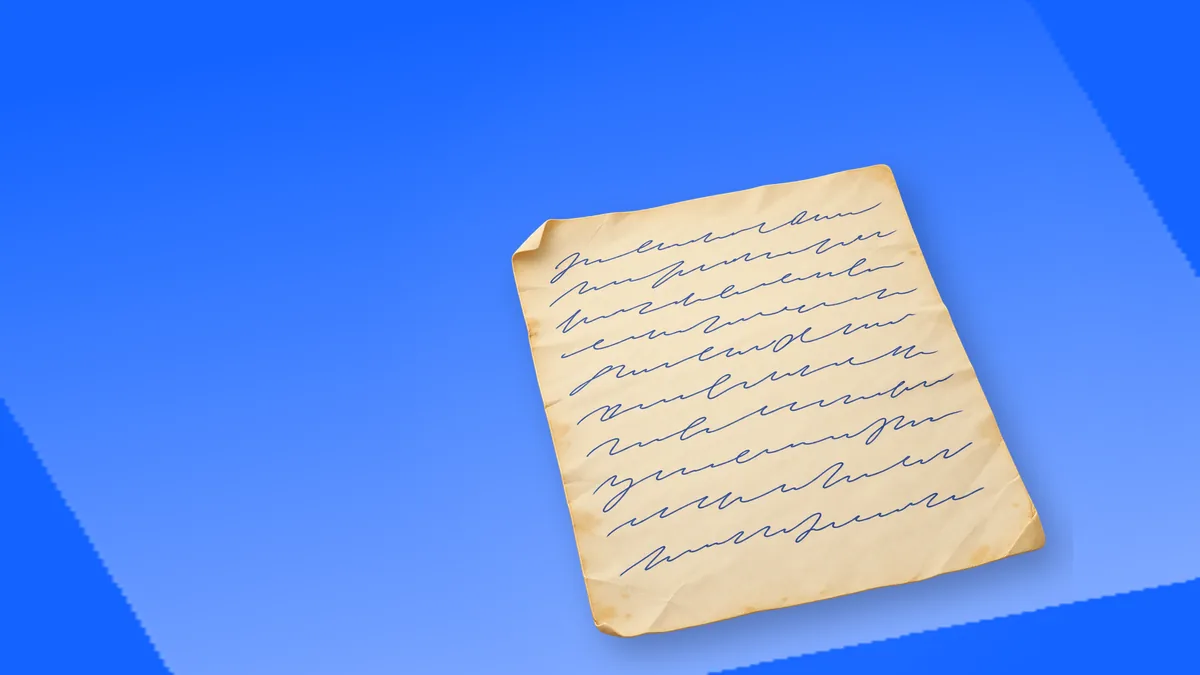
Handwriting savollari ikki narsani so‘raydi: yozuvingiz qanday (chiroyli, tushunarsiz, bolalikdan o‘zgarganmi) va hozir qo‘lda qancha yozasiz. Ikkalasi ham taqqoslashni talab qiladi: o‘tmish va hozir, qo‘l va klaviatura, siz va boshqalar. Shu sababli bu mavzu grammatikani ko‘rsatish uchun qulay: qiyosiy daraja (neater than, much messier), used to, passive (we were taught to…) tabiiy ravishda kerak bo‘ladi. Band 6 va band 7+ javob orasidagi farq ko‘pincha aynan shu tuzilmalarda.
Rasmiy Speaking formati bo‘yicha Part 1 da imtihonchi kundalik mavzularda savol beradi. Quyidagi savollarni tahririyat mashq uchun tuzgan, ular real imtihondan olinmagan.
Handwriting yoki writing: savol nimani so‘rayapti
- Handwriting — harflarni qanday yozishingiz, yozuv ko‘rinishi: My handwriting is quite messy.
- Writing — yozish faoliyati: xat, eslatma, kundalik, xabar: I don’t write much by hand any more.
- Typing — klaviaturada yozish: I type most of my assignments.
“Do you write much?” savoliga yozuv ko‘rinishini tasvirlash, “Is your handwriting good?” savoliga esa telefonda qancha xabar yozishingizni aytish savoldan chetga chiqish bo‘ladi.
9 ta mashq savoli va ikki darajadagi javob
“Band 6 atrofida” va “band 7+ uslubida” belgilari faqat taqqoslash uchun, rasmiy baho emas. Har javob ostida band 7+ javobdagi asosiy tuzilma ko‘rsatilgan.
1. Is your handwriting easy to read?
Band 6 atrofida: Not very. My handwriting is not beautiful, sometimes my teachers could not read it.
Band 7+ uslubida: It depends how fast I’m writing. When I take my time, it’s perfectly readable, but in lectures it gets so messy that even I can’t read it a week later.
Tuzilma: so messy that even I can’t… (natija ergash gapi).
2. How did you learn to write at school?
Band 6 atrofida: In first grade we wrote letters in special notebooks many times. The teacher checked every day.
Band 7+ uslubida: We were taught to write in notebooks with slanted lines, and we had to copy the same letter again and again until it fitted the lines exactly. Any blots and the whole page had to be done again.
Tuzilma: passive (we were taught, had to be done). Band 6 javob ham to‘g‘ri, lekin faqat active zamonda.
3. Do you write by hand much these days?
Band 6 atrofida: No, not much. Now I write on my phone and computer, only sometimes I write by hand.
Band 7+ uslubida: Far less than I used to. Apart from shopping lists and the odd form at the bank, almost everything I write is typed. I actually noticed the other day that my hand ached after one page.
Tuzilma: far less than I used to (qiyos + used to).
4. Do you prefer typing or writing by hand?
Band 6 atrofida: I prefer typing, because it is faster and I can correct mistakes easily.
Band 7+ uslubida: Typing for anything long, because it’s quicker and much easier to edit. But when I’m trying to learn something, I remember it far better if I’ve written it out by hand, so I still revise with a pen.
Tuzilma: much easier, far better — qiyosiy darajani kuchaytiruvchi so‘zlar.
5. Has your handwriting changed since you were a child?
Band 6 atrofida: Yes, when I was a child my handwriting was more beautiful. Now it is worse.
Band 7+ uslubida: Quite a lot. At primary school it used to be really neat and round, because the teacher was so strict about it. Now it’s smaller, faster and a lot less tidy, a bit like my dad’s, which my mum finds very funny.
Tuzilma: used to be, a lot less tidy, a bit like my dad’s.
6. Do you ever write cards or letters by hand?
Band 6 atrofida: Sometimes on birthdays I write a card to my friends. Letters I never write.
Band 7+ uslubida: Only birthday cards, and only for people I’m close to. A handwritten card feels more personal than a message, even if it just says “Happy birthday” and a couple of lines.
Tuzilma: more personal than a message, even if… (to‘siqsiz ergash gap).
7. Is good handwriting important for children?
Band 6 atrofida: Yes, it is important, because in school they write a lot and teachers must read it.
Band 7+ uslubida: Up to a point. They need to write clearly enough for others to read it, but I don’t think it’s worth spending hours on perfect letters. My younger brother’s school still gives marks for neatness, which seems a bit old-fashioned to me.
Tuzilma: clearly enough for others to read it (enough + to), worth + -ing.
8. Do you take notes by hand in class?
Band 6 atrofida: Yes, I write notes in my notebook, because laptop is not allowed in some lessons.
Band 7+ uslubida: In most classes, yes. I’ve tried taking notes on my laptop, but I ended up copying the lecturer word for word without thinking. With a pen, I’m forced to pick out what really matters.
Tuzilma: present perfect tajriba (I’ve tried), passive (I’m forced to).
9. Would you like to learn calligraphy?
Band 6 atrofida: Maybe. It is beautiful, but I think it is very difficult and needs a lot of time.
Band 7+ uslubida: I’d love to, actually. My grandfather learnt to write in the Arabic script when he was young, and the few pages of his that we’ve kept are beautiful. If I had more free time, I’d take a course.
Tuzilma: ikkinchi tur shart gap (If I had…, I’d…), aniqlovchi ergash gap (the few pages of his that we’ve kept).
Handwriting javoblaridagi beshta tuzilma
| Tuzilma | Nima uchun kerak | Misol |
|---|---|---|
| qiyosiy daraja + much / far / a lot / a bit | farqni kuchaytirish yoki yumshatish | My handwriting is much messier than it used to be. |
| used to + fe’l | hozir yo‘q o‘tmish odati | I used to write a diary every night. |
| passive | kim o‘rgatgani muhim emas | We were taught to write with a fountain pen. |
| so … that / too … to | natija yoki imkonsizlik | It’s too messy to read. / It’s so small that I need glasses. |
| enough + to | yetarli daraja | Write clearly enough for the examiner to read. |
Qiyosiy darajalar qoidalari va istisnolari sifat darajalari sahifasida, used to va be used to farqi used to, would, be used to sahifasida. Passive’ni takrorlash uchun passive voice qo‘llanmasi bor.
“My handwriting is more better”: yozuv mavzusidagi xatolar
- “My handwriting is more better now.” Ikki qiyosiy belgi: My handwriting is better now yoki much better now.
- “I write with hand.” → I write by hand. Qalam bilan: I write with a pen.
- “My handwrite is ugly.” Handwrite degan ot yo‘q: My handwriting is messy. Ugly odatda yozuvga nisbatan qo‘pol eshitiladi.
- “I was learned to write in first class.” → I was taught to write in the first grade yoki I learnt to write in the first grade.
- “Nobody writes letters now.” Mutlaq umumlashtirish. Tabiiyrog‘i: Hardly anyone I know writes letters now.
- “I have beautiful handwriting since childhood.” Hozirgacha davom etgan holat: I’ve had neat handwriting since I was a child.
Yozuv so‘zlari: rasmlarda
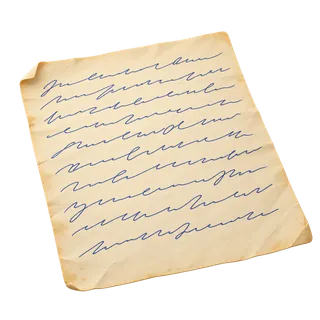


Grammatical range and accuracy ustuni bo‘yicha o‘zini tekshirish
Rasmiy Speaking band descriptors ning uchinchi ustuni grammatikani baholaydi. Band 6 da qisqa va murakkab gap shakllari aralash, turli tuzilmalar bor, ammo erkinligi cheklangan; murakkab tuzilmalardagi xatolar tez-tez, lekin muloqotga kamdan-kam xalaqit beradi. Band 7 da tuzilmalar doirasi moslashuvchan ishlatiladi, xatosiz gaplar ko‘p, oddiy va murakkab gaplar ba’zi xatolarga qaramay samarali.
- Taqqoslash savollarini tanlang. 4-, 5- va 8-savol, har biriga 30 soniya. Telefonga yozing.
- Tuzilmalarni ro‘yxatlang. Yozuvni tinglab, jadvaldagi beshta tuzilmadan qaysilari chiqqanini belgilang. Faqat more va better bo‘lsa, doira tor.
- Kuchaytiruvchini qo‘shing. Har qiyosiy sifat oldida much, far, a lot, a bit bormi? Ular ma’noni aniqlashtiradi va band 6 bilan band 7+ javob orasidagi eng arzon farqlardan biri.
- Qo‘sh qiyosni ushlang. More better, more easier kabi xatolar oddiy xato hisoblanadi. Band 7 ta’rifida ham “a few basic errors persist” deyilgan, lekin ular ko‘p bo‘lmasligi kerak.
- Bitta passive gap. Ikkinchi yozuvda 2-savolga We were taught… bilan javob bering. Grammatika qanday baholanishi haqida batafsil: grammatika qanday baholanadi.
Mashq: qavsdagi so‘zdan to‘g‘ri shakl yasang
- My handwriting is ___ (much / messy) than my sister’s.
- I ___ (use to / write) a diary, but I stopped at university.
- We ___ (teach) to write with a fountain pen in primary school.
- His notes are ___ (too / small) to read without glasses.
- Typing is ___ (far / quick) than writing by hand.
- I’ve ___ (have) the same handwriting since I was twelve.
- Write ___ (clear / enough) for the teacher to read it.
- My signature has got ___ (a bit / short) over the years.
- A handwritten card feels ___ (personal) than a text message.
Javoblar
- 1. much messier
- 2. used to write
- 3. were taught
- 4. too small
- 5. far quicker
- 6. had
- 7. clearly enough
- 8. a bit shorter
- 9. more personal
Qo‘lda yozish bilan yaqin mavzu kitob o‘qish: u haqidagi savollar reading savollari sahifasida.
Bandi bilan yozuv odatlaringizni solishtiring
BandMate ilovasidagi ovozli suhbatda Bandi Part 1 uslubida qo‘lda yozish, eslatmalar va o‘qish haqida savol beradi, keyin javobingizga qarab davom ettiradi. “Oldin” va “hozir”ni solishtiradigan javoblarni shu yerda gapirib ko‘ring. Talaffuz bo‘yicha fikr va IELTS Speaking mock testi ham bor; AI fikri rasmiy IELTS bahosi o‘rnini bosmaydi.