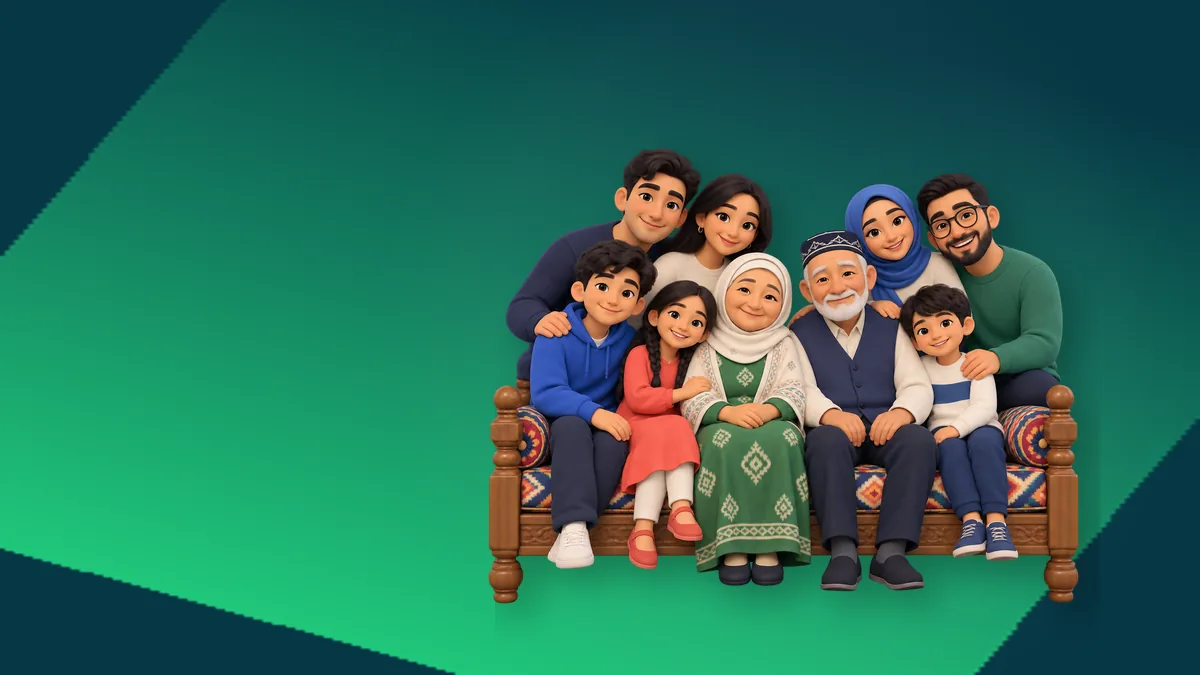
Oila haqidagi Part 3 savollarining deyarli hammasi aslida vaqt haqida: oila qanday edi, hozir qanday va qayoqqa ketyapti. Shuning uchun eng tabiiy javob vaqt chizig‘i: o‘tmish, hozir, o‘zgarish sababi va qisqa bashorat. Band 6 javob odatda “Before families were big, now they are small” bilan tugaydi. Band 7+ javob o‘zgarish nima uchun bo‘lganini va kimga ta’sir qilganini tushuntiradi.
Rasmiy formatga ko‘ra Part 3 taxminan 4–5 daqiqalik muhokama. Quyidagi savollar mashq uchun tuzilgan. Band 6 va band 7+ javoblar farqni ko‘rsatish uchun tahririyat yozgan misollar, imtihonchi bahosi emas. Part 1 dagi shaxsiy savollar Part 1 family sahifasida.
Javobni uzaytirish: vaqt chizig‘i
| Qadam | Vazifasi | Ibora |
|---|---|---|
| O‘tmish | Qanday edi | When my parents were growing up, families used to… |
| Hozir | Qanday bo‘ldi | These days, though,… |
| Sabab | Nega o‘zgardi | This is mainly because… |
| Keyin | Ehtiyotkor bashorat yoki baho | I suspect that… / Whether that’s good or bad depends on… |
Hamma savolga to‘rt qadam kerak emas. Baholash savolida “o‘tmish” bitta gap bo‘lishi mumkin, bashorat savolida esa “keyin” asosiy qism bo‘ladi.
Taqqoslash savollari
1. How have families in Uzbekistan changed over the last thirty years?
Band 6 atrofida: Before, families were very big and lived together. Now young people want to live separately.
Band 7+ uslubida: When my parents were growing up, it was normal for three generations to share one house, with the youngest son staying at home with his parents. These days, especially in cities, many young couples rent a flat of their own. That’s mainly because people move for work and study, and flats in new districts are designed for smaller families. The family ties are still strong, though; they’re just spread across a few addresses.
2. What are the advantages and disadvantages of living with grandparents?
Band 6 atrofida: Grandparents help with children, it is good. But sometimes there are arguments.
Band 7+ uslubida: The biggest advantage is practical: grandparents can look after the children while both parents work, and children grow up hearing stories nobody else can tell them. The downside is privacy. When three generations share a kitchen, small disagreements about cooking or raising kids can build up. I think it works best when everyone has at least one room they can call their own.
3. Do parents today raise their children differently from the past?
Band 6 atrofida: Yes, now parents are more soft. Before, they were very strict.
Band 7+ uslubida: In many families, yes. My grandfather would never discuss a decision with his children; he simply announced it. Parents now are more likely to explain their reasons and ask what the child thinks. On the other hand, they’re also more anxious, partly because they know every danger from social media, so children today have more say but less freedom to play outside alone.



Bashorat savollari
4. Will extended families still live together in the future?
Band 6 atrofida: I think no. In future everybody will live separately.
Band 7+ uslubida: In villages, I think the traditional model will last a long time, because houses have space and the family often shares land or a business. In Tashkent it’s already changing, and I suspect that will continue. But I don’t think closeness will disappear. My guess is we’ll see more families living in the same building or the same mahalla rather than under one roof.
5. How might the role of grandparents change?
Band 6 atrofida: Grandparents will use more technology. They will also work longer.
Band 7+ uslubida: They might become less of a daily presence and more of a long-distance one. My grandmother already reads bedtime stories to my cousin in Kazan over video calls. At the same time, people are staying active for longer, so a lot of grandparents may still be working when their grandchildren are born, which means they’ll have less time for childcare than previous generations did.
Baholash savollari
6. Should adult children look after their elderly parents, or is it the government’s job?
Band 6 atrofida: Children must look after parents. It is our tradition.
Band 7+ uslubida: In Uzbekistan most people would say it’s the children’s duty, and I agree that the family should come first. But I don’t think it should be only the family’s job. When an elderly person needs medical care every day, a son or daughter who also works full-time can’t do everything. So I’d say families should provide the care and love, while the state should help with things like home nurses and pensions.
7. Should young married couples live separately from their parents?
Band 6 atrofida: It is better to live separately, because they can be independent. But it is expensive.
Band 7+ uslubida: Ideally, I think a couple benefits from a year or two on their own, because they learn to make decisions together without anyone else deciding for them. The reality, though, is money: rent in Tashkent takes a big part of a young salary, so many couples live with parents to save up. Whether it works depends less on the house and more on how much space the parents give them.
Sabab va oqibat savollari
8. Why is there often a gap between teenagers and their parents?
Band 6 atrofida: Because they have different interests. Teenagers like phones, parents don’t understand.
Band 7+ uslubida: Partly it’s just the age: teenagers are supposed to test limits. But I think technology has widened the gap, because a lot of teenage life now happens online, in a world parents can’t see. So parents feel shut out and react by being stricter, and that pushes teenagers further away. Honestly, the families I know that avoid this are the ones where parents ask questions instead of banning things.
9. How has technology affected relationships between generations?
Band 6 atrofida: Now we can call relatives every day. But young people sit in phone at family events.
Band 7+ uslubida: It’s brought distant relatives closer and sometimes pushed people in the same room apart. Family group chats mean my aunt in Moscow knows everything happening at home. But at a family dinner, you often see teenagers on their phones while the older people talk. I think the effect depends on whether families agree on some simple rules, like no phones at the table.
G‘oyalar banki: oila va avlodlar
- Urbanizatsiya: ish va o‘qish uchun shaharga ko‘chish, kichik kvartiralar.
- Iqtisod: ijara qimmat, shuning uchun ko‘pchilik ota-ona bilan qoladi.
- Tarbiya: buyruqdan tushuntirishga; ko‘proq muhokama, lekin ko‘proq xavotir.
- Texnologiya: uzoqdagilar yaqinlashdi; bir xonadagilar uzoqlashishi mumkin.
- Keksalar: oilaviy burch va davlat yordami birga.
Oila va avlodlar uchun 12 ta ibora
| Inglizcha | O‘zbekcha | Misol |
|---|---|---|
| an extended family | katta oila (bir necha avlod) | I grew up in an extended family. |
| the nuclear family | ota-ona va bolalardan iborat oila | The nuclear family is more common in cities. |
| the generation gap | avlodlar orasidagi tafovut | Technology has widened the generation gap. |
| bring up / raise children | bola tarbiyalamoq | It’s hard to bring up children without help. |
| look after | qaramoq, g‘amxo‘rlik qilmoq | My aunt looks after my grandmother. |
| close-knit | bir-biriga yaqin, ahil | Our mahalla is very close-knit. |
| family ties | oilaviy rishtalar | Family ties are still strong in Uzbekistan. |
| respect for elders | kattalarga hurmat | Respect for elders is taught very early. |
| take after | …ga o‘xshamoq (fe’l-atvorda) | I take after my father; we’re both stubborn. |
| get on well with | …bilan chiqishmoq | I get on well with my in-laws. |
| a sense of duty | burch hissi | Children care for parents out of a sense of duty. |
| have a say | fikri inobatga olinmoq | Teenagers want to have a say in family decisions. |
Qarindoshlar nomlari (in-laws, cousin, nephew) uchun English family vocabulary sahifasiga qarang. Oila a’zosi haqidagi Part 2 kartasi esa describe a family member sahifasida.
Mashq: used to, would yoki past simple
Qavsdagi to‘g‘ri variantni tanlang.
- 1. My grandparents ___ in a house with twelve people. (used to live / would live)
- 2. Every Friday, my grandmother ___ somsa for the whole street. (would bake / was used to bake)
- 3. In 1998 my parents ___ to Tashkent. (used to move / moved)
- 4. Children ___ their parents’ decisions without asking why. (used to accept / were used to accept)
- 5. My father ___ a strict man when I was small. (would be / used to be)
- 6. Did you ___ visit your grandparents every summer? (used to / use to)
- 7. I’m ___ sharing a room with my brother, so it doesn’t bother me. (used to / use to)
- 8. Last year my cousin ___ married and moved out. (got / used to get)
Javoblar
- 1. used to live — holat (live) bilan would ishlatilmaydi.
- 2. would bake — takrorlanadigan harakat, would mumkin.
- 3. moved — bir martalik voqea, aniq yil.
- 4. used to accept — o‘tmishdagi odat.
- 5. used to be — holat fe’li (be) bilan faqat used to.
- 6. use to — did dan keyin -d siz.
- 7. used to — be used to + -ing = ko‘nikkan.
- 8. got — bir martalik voqea.
Qoidaning to‘liq tushuntirishi used to, would va be used to sahifasida. Mavhum savolga fikr topish usullari esa Part 3 abstrakt savollar qo‘llanmasida.
Oila mavzusini Bandi bilan gapirib ko‘ring
BandMate ilovasida Bandi bilan ovozli suhbatda oila va avlodlar haqida gaplashishingiz mumkin: u “nega shunday o‘zgardi?” deb qo‘shimcha savol berib, vaqt chizig‘ini to‘ldirishga undaydi. IELTS Speaking mock testi va talaffuz bo‘yicha izoh ham bor. Ilovadagi baho mashq uchun, rasmiy IELTS bandi emas.