Jamiyat inglizcha society, mahalla yoki bir joyda yashovchi odamlar esa community. Bu mavzuning to‘rt tayanch so‘zi: community (jamoa, mahalla ahli), generation gap (avlodlar o‘rtasidagi tafovut), volunteer (ko‘ngilli) va equality (tenglik). Mahallani inglizcha bitta gap bilan tushuntirish mumkin: A mahalla is a close-knit neighbourhood community where people help each other.
Quyida 46 ta so‘z to‘rt guruhda: jamoa, avlodlar, ko‘ngillilik va tenglik. Har biri tarjima, birikma va misol bilan. Keyin mahalla va hasharni chet ellikka tushuntirish, qisqa yangilik matni, dialog va mashq.
Jamoa va qo‘shnilar: 12 so‘z
| So‘z | Tarjima | Birikmalar | Misol |
|---|---|---|---|
| society | jamiyat | modern society, in our society | In our society, family comes first. |
| community | jamoa, mahalla ahli | the local community, a sense of community | There is a strong sense of community in our street. |
| close-knit | ahil, jips | a close-knit community, close-knit family | Villages are usually more close-knit than big cities. |
| neighbourhood | mahalla, tuman qismi | a quiet neighbourhood | I grew up in a quiet neighbourhood in Andijan. |
| neighbour | qo‘shni | next-door neighbour, get on with neighbours | Our next-door neighbour lends us his ladder. |
| belong | tegishli bo‘lmoq | a sense of belonging, belong to | Sport gives teenagers a sense of belonging. |
| get together | yig‘ilmoq | get together for, a get-together | The whole street gets together for Navruz. |
| custom | odat, rasm-rusum | a local custom, follow a custom | It’s a local custom to bring food to new neighbours. |
| tradition | an’ana | keep a tradition alive, a long-standing tradition | Cooking sumalak together is a long-standing tradition. |
| support network | yordam doirasi | a strong support network | Relatives and neighbours are her support network. |
| isolated | yolg‘izlangan | feel isolated, socially isolated | Some older people in big cities feel isolated. |
| urban / rural | shahar / qishloq | urban areas, rural life | Rural communities often keep old customs. |
Avlodlar: 12 so‘z


| So‘z | Tarjima | Birikmalar | Misol |
|---|---|---|---|
| generation | avlod | the older generation, the younger generation | The younger generation grew up with smartphones. |
| generation gap | avlodlar tafovuti | bridge the generation gap | Music is a common cause of the generation gap. |
| elderly | keksa | elderly people, an elderly relative | We visit our elderly relatives every Friday. |
| teenager | o‘smir | a typical teenager | As a teenager, I argued with my parents a lot. |
| bring up | tarbiyalamoq | be brought up by | I was brought up by my grandparents. |
| look after | qaramoq, g‘amxo‘rlik qilmoq | look after parents | In many families, the youngest son looks after his parents. |
| extended family | katta oila | live with the extended family | We live with my extended family in one yard. |
| respect | hurmat | respect for elders, show respect | Children learn respect for elders at home. |
| values | qadriyatlar | family values, share values | My grandfather and I share the same values. |
| old-fashioned | eskicha | old-fashioned ideas | My parents still have an old-fashioned landline phone. |
| outlook | dunyoqarash | a modern outlook, outlook on life | Young people often have a more modern outlook. |
| role model | ibrat oladigan odam | a good role model | My aunt, a doctor, is my role model. |
Ko‘ngillilik va xayriya: 10 so‘z
| So‘z | Tarjima | Birikmalar | Misol |
|---|---|---|---|
| volunteer | ko‘ngilli; ko‘ngilli bo‘lmoq | volunteer at, a volunteer project | I volunteer at a children’s library on Saturdays. |
| charity | xayriya tashkiloti | give to charity, a charity event | The school held a charity concert. |
| donate | ehson qilmoq | donate money, donate blood, donate clothes | We donated winter clothes to a charity. |
| raise money | pul yig‘moq | raise money for | The students raised money for a sick classmate. |
| fundraiser | xayriya tadbiri | organise a fundraiser | The bake sale was a successful fundraiser. |
| help out | yordamlashmoq | help out at, help out with | My brother helps out at the local mosque’s kitchen. |
| sign up for | ro‘yxatdan o‘tmoq | sign up for a project | Twenty students signed up for the clean-up. |
| make a difference | o‘zgarish yasamoq | make a real difference | Even small donations make a difference. |
| community service | jamoat ishi | do community service | Some schools ask pupils to do community service. |
| NGO | nodavlat tashkilot | work for an NGO | She works for an NGO that helps women start businesses. |
Tenglik va xilma-xillik: 12 so‘z
| So‘z | Tarjima | Birikmalar | Misol |
|---|---|---|---|
| equality | tenglik | gender equality, equality of opportunity | Gender equality is often discussed in the media. |
| inequality | tengsizlik | income inequality, reduce inequality | Education can reduce inequality. |
| equal opportunities | teng imkoniyatlar | give everyone equal opportunities | Girls and boys should have equal opportunities in sport. |
| discrimination | kamsitish | face discrimination, discrimination against | Discrimination against older job seekers is still common in some places. |
| rights | huquqlar | human rights, workers’ rights | Everyone should know their basic rights. |
| disability | nogironlik | people with disabilities | Buildings should be accessible to people with disabilities. |
| access to | … ga ega bo‘lish imkoni | access to education, access to healthcare | Rural children need better access to education. |
| the gap between rich and poor | boy va kambag‘al o‘rtasidagi farq | widen, narrow | Some economists say the gap between rich and poor is widening. |
| diversity | xilma-xillik | cultural diversity | Tashkent has a lot of cultural diversity. |
| tolerant | bag‘rikeng | a tolerant society | A tolerant society accepts different views. |
| open-minded | ochiq fikrli | be open-minded about | Travel makes people more open-minded. |
| stereotype | qolip fikr, stereotip | a common stereotype, challenge a stereotype | It’s a stereotype that all Uzbeks cook plov every day. |
Mahalla va hasharni inglizcha tushuntirish
Chet ellikka mahalla so‘zini tarjima qilmang, o‘zini ishlating va izoh bering. Quyidagi gaplar tayyor:
- A mahalla is a neighbourhood community in Uzbekistan. Everybody knows everybody.
- Neighbours help each other with weddings, funerals and big family events.
- Older people are very respected; young people greet them first.
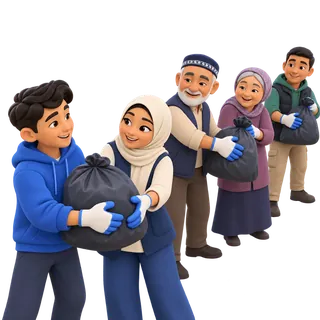
- We have a tradition called hashar: neighbours work together for free, for example to clean the streets, plant trees or help build a house.
- The closest English words are “community clean-up” or “voluntary community work”, but hashar is more than that — it’s also a social event with food.
Diqqat: mahalla ni district deb tarjima qilish xato, district — tuman (Chilonzor, Yunusobod). Oddiy tarjima kerak bo‘lsa, neighbourhood yoki local community deng.
Yangilik uslubidagi namuna matn
O‘quv uchun to‘qilgan matn.
Teenagers teach grandparents to use smartphones
A group of volunteers in Fergana has found a simple way to bridge the generation gap. Every Sunday, school pupils meet elderly residents of their mahalla and teach them how to make video calls, pay bills and read the news on a phone. The idea began when one teenager saw how isolated her grandmother felt after her children moved abroad. “They teach us technology, and we learn their stories and values,” said one pupil. The project is run with the help of a local charity, and more than twenty families have signed up. Organisers say it makes a real difference to people who were afraid of the internet.
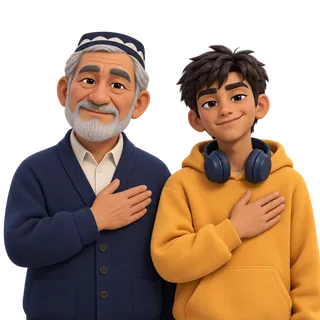
Dialog: bobo va nabira
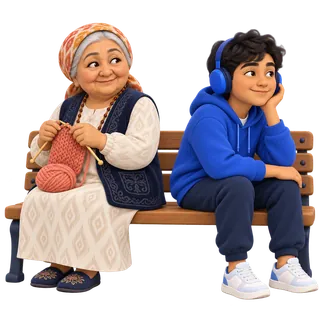
Grandfather: You’re always on your phone, Sherzod. In my day, we talked to our neighbours.
Sherzod: I do talk to them, Grandpa! I’m organising a hashar for Saturday on Telegram.
Grandfather: A hashar on the phone? That’s new.
Sherzod: The phone is only for the invitations. The work is real — we’re cleaning the canal and planting trees.
Grandfather: Good. When I was young, the whole mahalla came, even without phones.
Sherzod: Then come and show us how it’s done. The younger generation needs a role model.
Grandfather: Ha! Maybe the generation gap isn’t so big after all.
Mashq
A. So‘zni toping.
- 1. People of about the same age: a ______.
- 2. Very friendly, everyone knows and helps each other: a ______ community.
- 3. Give money or things to people in need: ______.
- 4. Work without pay to help others: ______.
- 5. Unfair treatment because of age, gender or background: ______.
B. Birikmani tugating.
- 6. bridge the generation ______
- 7. raise money ______ a hospital
- 8. access ______ education
- 9. respect ______ elders
- 10. Mahalla ni district deb tarjima qilish mumkinmi? Nima deysiz?
Javoblar
1 — generation; 2 — close-knit; 3 — donate; 4 — volunteer; 5 — discrimination; 6 — gap; 7 — for; 8 — to; 9 — for; 10 — yo‘q: district — tuman; neighbourhood yoki local community deng, yaxshisi mahalla ni o‘zini izoh bilan ishlating.
Mahallangiz haqida Bandiga gapirib bering
BandMate ilovasida Bandi Tell me about your neighbourhood. Do young and old people get on well? kabi savollar beradi. Mahalla va hashar haqidagi gaplarni o‘z hayotingizdan misol bilan ayting: ilova talaffuz va so‘z tanlovi bo‘yicha izoh beradi. Oila a’zolari so‘zlari English family vocabulary sahifasida, avlodlar haqidagi IELTS savollari IELTS Speaking Part 3 family sahifasida. Fikringizni asoslab aytish uchun fikr bildirish iboralari kerak bo‘ladi.
BandMate’ni Google’da afzal manba qiling