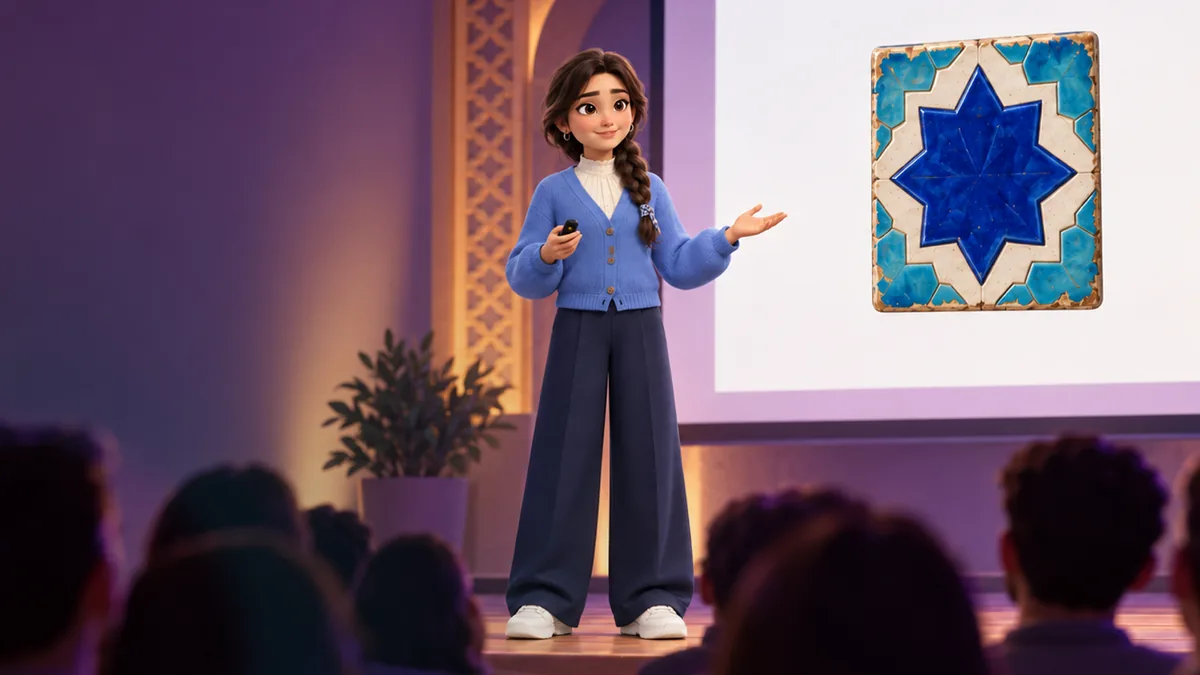
O‘zbek milliy kiyimlarining nomi inglizchaga tarjima qilinmaydi: doppi, chapan, atlas, adras deb o‘zimizcha aytiladi, birinchi marta esa yoniga qisqa izoh qo‘shiladi. Masalan: A doppi is a small square cap with embroidery. A chapan is a long quilted robe. Umumiy so‘zlar ham kerak bo‘ladi: bosh kiyim — headwear, milliy kiyim — traditional clothes yoki national dress.
Hozir bitta gapni ovoz chiqarib ayting: At weddings, my grandfather wears a doppi and a chapan. Mehmonga to‘y haqida gapirganda shu bitta gap yetarli.
Bosh kiyimlar: 14 ta so‘z
| Inglizcha | Talaffuz | O‘zbekcha | Misol |
|---|---|---|---|
| hat | [het] | shlyapa, qalpoq (umumiy) | Take a hat, the sun is strong today. |
| cap | [kep] | kepka | He wears his cap backwards. |
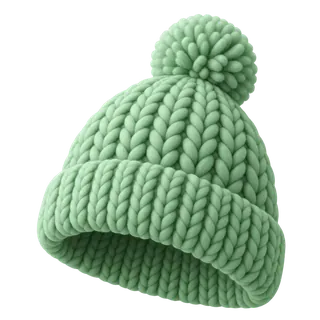
| beanie | [BI-ni] | to‘qilgan qishki shapka | My mum knitted me a green beanie. |
| fur hat | [fyor het] | mo‘ynali telpak | In Karakalpakstan winters, a fur hat is a must. |
| straw hat | [stro het] | somon shlyapa | Farmers in the field wear straw hats. |
| headscarf | [HED-skarf] | ro‘mol | She tied her headscarf at the back. |
| veil | [veyl] | yuzga tushadigan parda; kelin pardasi | The bride lifted her veil. |
| turban | [TYOR-bn] | salla | The old man in the miniature is wearing a white turban. |
| skullcap | [SKAL-kep] | do‘ppi (umumiy so‘z) | A doppi is a type of skullcap. |
| hood | [hud] | kapyushon | Put your hood up, it’s raining. |
| helmet | [HEL-mit] | dubulg‘a, kaska | Always wear a helmet on a scooter. |
| beret | [BE-rey] | beret | The girl in the photo is wearing a red beret. |
| headband | [HED-bend] | soch bog‘ichi | She wears a headband when she runs. |
| crown | [kraun] | toj | The bride wore a small gold crown. |
Hat va cap farqi: cap — oldida soyabon bor yumshoq bosh kiyim, hat — qolgan hammasi. Rus tilidagi “шапка”ni hat yoki beanie deysiz, “shapka” deb emas. Beret oxiridagi t o‘qilmaydi: [BE-rey].


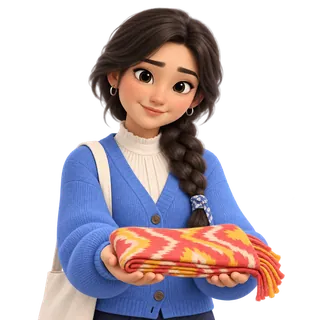
Do‘ppi: nomini saqlab, uch gap bilan tushuntiring
Xorijlik do‘ppini birinchi ko‘rganda Is that a hat? deb so‘raydi. Javob uch bosqichda quriladi: nima, qanday, qachon.
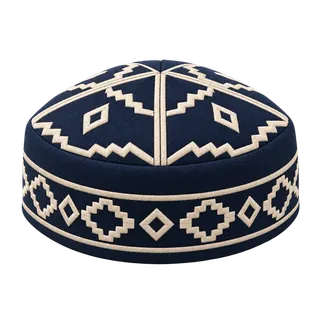
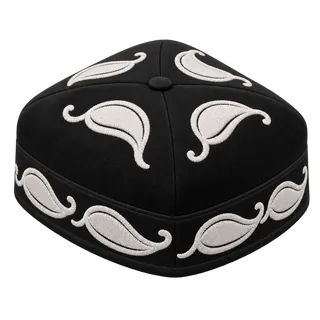
What: A doppi is a small, four-cornered cap that sits on top of the head.
How: It is usually embroidered. The best-known type, from Chust, is black with four white patterns that look like peppers.
When: Men and boys wear it every day in villages and on special days in cities: weddings, holidays, funerals.
Four-cornered so‘zini eslab qoling: do‘ppi odatda to‘rt burchakli, shuning uchun uni round cap deb aytish noto‘g‘ri. Qalampirsimon naqsh haqida ehtiyot bo‘ling: xalq orasida bu naqshni qalampir deb ham, bodom deb ham atashadi. People say the pattern shows peppers desangiz, xato qilmaysiz.
Do‘ppini kiyish fe’li — wear, boshga qo‘yish — put on, boshdan olish — take off: He took off his doppi and put it on the table. Qizlar ham do‘ppi kiyadi; ularnikiga ko‘pincha munchoq yoki zar tikiladi: Girls’ doppis are often decorated with beads or gold thread.
Chopon, atlas, adras va boshqalar: tavsif jadvali
Quyidagi jadvalda o‘ng ustundagi gap — xorijlikka birinchi marta aytadigan tayyor izoh. Keyin shunchaki nomini ishlatasiz.
| O‘zbekcha | Inglizcha yozilishi | Tayyor izoh |
|---|---|---|
| chopon | chapan | a long robe, padded with cotton and stitched in lines, worn open or tied with a sash |
| to‘n | robe | an older word for a long robe; “to‘n kiydirish” means giving a robe as a mark of honour |
| belbog‘ | sash | a long cloth tied around the waist over a chapan |
| nimcha | waistcoat, vest | a short sleeveless jacket, often worn by women and dancers |
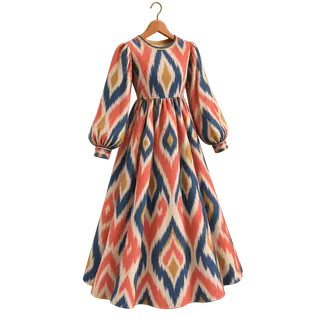
| ko‘ylak | dress | a long, loose dress, often made of atlas |
| lozim | trousers | loose trousers worn under a dress, with an embroidered hem |
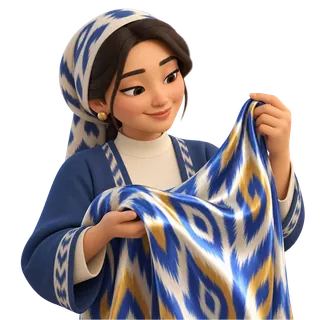
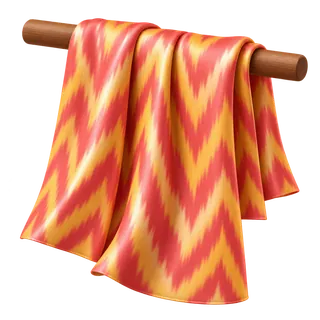
| atlas | atlas silk, ikat silk | a shiny silk fabric with a blurred, bright pattern |
| adras | adras | a fabric with a silk surface and cotton inside, heavier than atlas |
| beqasam | striped fabric | a striped fabric often used for chapans |
| zardo‘zi | gold embroidery | embroidery with gold thread, famous in Bukhara |
| kavush / mahsi | leather overshoes / soft boots | soft leather boots (mahsi) with overshoes (kavush) on top |
Chopon ingliz tilida ko‘pincha chapan deb yoziladi, chunki bu so‘z Markaziy Osiyo va Afg‘oniston kiyimlari haqidagi matnlardan o‘tgan. Ikat — atlas va adrasdagi abr naqshining xalqaro nomi. Uning nimasi o‘ziga xos? Ip to‘qilishidan oldin bo‘yaladi, shuning uchun naqsh chekkalari xira, “oqib turgandek” ko‘rinadi. Inglizcha: The threads are dyed before weaving, so the edges of the pattern look soft and blurred.
Mato nomlari va made of silk tuzilmasi materiallar nomi inglizcha sahifasida, Marg‘ilon hunarmandlari haqida gapirish esa hunarmandchilik inglizcha sahifasida.


Paranji: tarixni xolis tushuntirish
Paranji haqida savol ko‘pincha muzeyda yoki eski surat oldida chiqadi. Bu mavzuda baho bermay, faktni aytgan ma’qul: nima edi, kim kiyardi, qachon kiymay qo‘yildi.
The paranji was a long robe that women in the towns of Central Asia wore over their clothes when they went outside. It covered the head and body, and the sleeves hung down the back and were not used. A net veil made of horsehair, called a chachvon, covered the face. In the late 1920s the Soviet government started a campaign against it, and within a few decades it almost disappeared. Today you can see paranjis in museums and in old photographs.
Matndagi foydali so‘zlar: over their clothes — kiyim ustidan, hung down the back — orqaga osilib turardi, horsehair — ot qili, campaign — kampaniya, disappeared — yo‘qolib ketdi. Kampaniya tarixda hujum nomi bilan qolgan; u haqda aniq sana va raqamlarni ensiklopediya yoki muzey manbasidan tekshirib keyin ayting.
O‘tgan zamon uchun used to qulay: Women used to wear a paranji in the street. Bu “avval shunday edi, endi yo‘q” degan ma’noni beradi.
Tayyor tavsif: to‘ydagi kiyimlar
IELTS Speaking yoki mehmon bilan suhbatda milliy kiyimni to‘liq tasvirlash uchun namuna (mashq uchun yozilgan matn):
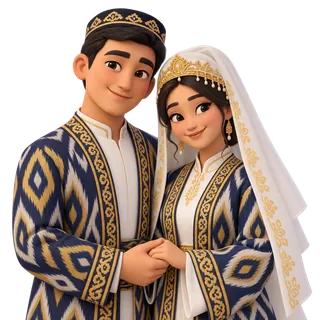
At my cousin’s wedding last summer, most of the older men wore a doppi and a dark blue chapan with a sash. The bride changed her clothes three times. For the morning ceremony she wore a white dress and a long veil, and in the evening she came out in an atlas dress with a gold crown. My grandmother wore a velvet waistcoat over her dress and a silk headscarf. I wore a suit, but I put on a doppi for the photos.
Tuzilishiga e’tibor bering: kim → nima kiygan → rangi va materiali. Wore — wear ning o‘tgan zamoni; came out in — “... kiyib chiqdi”. To‘y urf-odatlarini to‘liq tushuntirish uchun Uzbek traditions in English sahifasiga o‘ting.
Chapan yoki gown: milliy kiyimni tasvirlashdagi chalkashliklar
| Noto‘g‘ri | To‘g‘ri | Izoh |
|---|---|---|
| He dressed doppi. | He wore / put on a doppi. | dress — “kiyintirmoq”, bosh kiyim bilan ishlatilmaydi. |
| Chapan is national our clothes. | The chapan is our national robe. | Sifat otdan oldin, our boshida. |
| a round hat doppi | a four-cornered cap called a doppi | Do‘ppining shakli to‘rt burchakli. |
| Atlas is a dress. | Atlas is a fabric; the dress is made of atlas. | Atlas — mato, kiyim emas. |
| women were forced to wear (tekshirmasdan) | women in towns wore | Tarixiy baho o‘rniga fakt ayting. |
| a gown (chopon uchun) | a robe | gown — ko‘pincha kechki ko‘ylak yoki xalat. |
Umumiy kiyim nomlari va wear / put on / try on farqi kiyimlar nomi inglizcha sahifasida batafsil.
Mashq: izohni to‘ldiring
A. Bo‘sh joyga mos so‘zni qo‘ying: sash, veil, skullcap, fabric, robe, trousers
- 1. A doppi is a type of ______.
- 2. A chapan is a long quilted ______.
- 3. A belbog‘ is a ______ tied around the waist.
- 4. Lozim are loose ______ worn under a dress.
- 5. Adras is a ______ with silk and cotton.
- 6. The chachvon was a horsehair ______ that covered the face.
B. Tuzating.
- 7. My grandfather dresses doppi every day.
- 8. Atlas is a traditional Uzbek dress.
C. Tarjima qiling.
- 9. Kuyov do‘ppi va chopon kiygan edi.
- 10. Ilgari shaharlarda ayollar ko‘chaga paranji kiyib chiqishardi.
Javoblar
1 — skullcap; 2 — robe; 3 — sash; 4 — trousers; 5 — fabric; 6 — veil; 7 — My grandfather wears a doppi every day.; 8 — Atlas is a traditional Uzbek fabric. yoki An atlas dress is a traditional Uzbek dress.; 9 — The groom wore a doppi and a chapan.; 10 — In the past, women in towns used to wear a paranji when they went out.
Oilangizdagi kiyimni Bandiga tasvirlab bering
BandMate ilovasida Bandiga oilangizdagi bitta milliy kiyim haqida gapirib bering: kim kiyadi, qachon, nimadan tikilgan. Masalan: My grandmother has an old atlas dress. She wears it only at weddings. Bandi What colour is it?, Who made it? kabi savollar bilan suhbatni davom ettiradi, ilova esa chapan, embroidered, veil so‘zlarining talaffuzini tekshiradi. Keyingi qadam sifatida IELTS’dagi urf-odat savollariga IELTS Speaking Part 3: culture and traditions sahifasida tayyorlaning.
BandMate’ni Google’da afzal manba qiling