
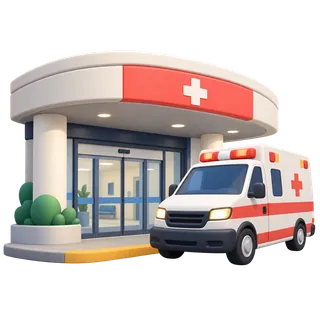
Favqulodda vaziyat inglizcha an emergency, favqulodda xizmatlar esa the emergency services. Eng kerakli beshta so‘z: ambulance (tez yordam), fire service (yong‘in xizmati), police (politsiya), injured (jarohatlangan) va evacuate (binoni tark etish). O‘zbekistonda yagona favqulodda raqam 112; alohida raqamlar: 101 yong‘in, 102 politsiya, 103 tez yordam, 104 gaz xizmati.
Bu sahifa — lug‘at: xizmatlar, belgilar, jarohat va ofatlar nomi. Qo‘ng‘iroq qilish tartibi, dispetcher savollari va dialoglar yordam so‘rash inglizcha sahifasida.
Hozir bir marta ayting: In Uzbekistan, the emergency number is one-one-two. Toshkentga kelgan chet ellik mehmonga birinchi kuni shuni aytib qo‘yish foydali.
Talaffuz belgilari: katta harflar urg‘uli bo‘g‘in, ə — urg‘usiz, xira tovush.
Xizmatlar va odamlar: 12 so‘z
| Inglizcha | Talaffuz | O‘zbekcha | Misol |
|---|---|---|---|
| the emergency services | i-MƏ:-jən-si SƏ:-vi-siz | favqulodda xizmatlar | The emergency services arrived in ten minutes. |
| ambulance | AM-byu-ləns | tez yordam mashinasi | The ambulance took her to hospital. |
| paramedic | pa-rə-ME-dik | tez yordam feldsheri | The paramedic checked his breathing. |
| fire service (UK) / fire department (US) | FAYə SƏ:-vis | yong‘in xizmati | Call the fire service if you see smoke. |
| firefighter | FAYə-fay-tə | o‘t o‘chiruvchi | Two firefighters carried the old man out. |
| fire engine (UK) / fire truck (US) | FAYə en-jin | o‘t o‘chirish mashinasi | Move your car, the fire engine can’t get through. |
| police officer | pə-LI:S o-fi-sə | politsiyachi | A police officer wrote down our names. |
| rescuers / rescue team | RES-kyu:-əz | qutqaruvchilar | Rescuers searched the mountain all night. |
| A&E (UK) / the ER (US) | ey-ənd-I: / i:-A: | shoshilinch qabul bo‘limi | We waited three hours in A&E. |
| first aider | fə:st EY-də | birinchi yordam ko‘rsatuvchi | Is there a first aider in the building? |
| operator / dispatcher | O-pə-rey-tə | dispetcher | The operator asked for the exact address. |
| witness | WIT-nis | guvoh | A witness saw the car drive away. |
Ambulance so‘zida urg‘u boshida: AM-byu-ləns. O‘zbekchadagi “skoraya” so‘zi ingliz tilida tushunilmaydi, Call an ambulance deng.





Yong‘in va uy xavfsizligi: 14 so‘z
| Inglizcha | O‘zbekcha | Misol |
|---|---|---|
| fire | yong‘in, olov | There’s a fire in the kitchen. |
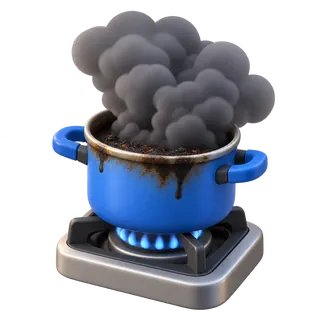
| smoke | tutun | The room filled with smoke. |
| flames | alanga | We could see flames from the window. |
| fire alarm | yong‘in signalizatsiyasi | The fire alarm went off at 3 a.m. |
| smoke detector (smoke alarm) | tutun sezgichi | The smoke detector started beeping in the night. |
| fire extinguisher | o‘t o‘chirgich | There’s a fire extinguisher next to the lift. |
| fire exit / emergency exit | favqulodda chiqish | Keep the fire exit clear. |
| evacuate | evakuatsiya qilmoq, binodan chiqarmoq | Everyone had to evacuate the building. |
| assembly point | yig‘ilish joyi | Go to the assembly point in the car park. |
| gas leak | gaz sizishi | Don’t switch on the light if you think there’s a gas leak. |
| short circuit | qisqa tutashuv | The fire started because of a short circuit. |
| power cut (UK) / power outage (US) | elektr o‘chishi | There was a power cut in the whole mahalla. |
| burn (n, v) | kuyish, kuydirmoq | She burnt her hand on the pan. |
| stuck | qamalib qolgan | Two people are stuck in the lift. |
Binolarda uchraydigan belgilar (mehmonxona, aeroport, universitetda):
- FIRE EXIT — KEEP CLEAR — Favqulodda chiqish, to‘sib qo‘ymang.
- IN CASE OF FIRE, DO NOT USE THE LIFT — Yong‘in bo‘lsa, liftdan foydalanmang.
- BREAK GLASS — PRESS HERE — Oynani sindiring, tugmani bosing (signal tugmasi).
- FIRE DOOR — KEEP SHUT — Yong‘indan himoya eshigi, yopiq tursin.
- ASSEMBLY POINT — Yig‘ilish joyi.
- EMERGENCY USE ONLY — Faqat favqulodda holatda.
Mehmonxonada yong‘in signali chalinsa, xodimlar odatda Please leave the building by the nearest exit deydi. Bu ibora sizdan narsalaringizni yig‘ishni emas, darhol chiqishni so‘rayapti.


Jarohat va holat: 12 so‘z
Kasallik alomatlari (isitma, yo‘tal, og‘riq turlari) kasalliklar nomi inglizcha sahifasida. Bu yerda faqat favqulodda holatda kerak bo‘ladiganlari.
| Inglizcha | O‘zbekcha | Misol |
|---|---|---|
| injury / injured | jarohat / jarohatlangan | Three people were injured. |
| bleeding | qon ketishi | His hand is bleeding badly. |
| a fracture / a broken bone | suyak sinishi | The doctor thinks it’s a fracture. |
| a sprain | lat yeyish, cho‘zilish | It’s only a sprain, not a break. |
| a burn | kuyik | Cool the burn under running water. |
| unconscious | hushsiz | She’s unconscious but breathing. |
| choking | bo‘g‘ilib qolish | The child is choking on a sweet. |
| an allergic reaction | allergik reaksiya | He’s having an allergic reaction to nuts. |
| heatstroke | issiq urishi | Drink water and stay in the shade to avoid heatstroke. |
| dizzy / faint | boshi aylangan / hushidan ketmoq | I feel dizzy. I think I’m going to faint. |
| shock | shok, qattiq qo‘rquv | She wasn’t hurt, but she was in shock. |
| a first aid kit | birinchi yordam qutichasi | There’s a first aid kit in the car. |
Bu so‘zlar tibbiy ko‘rsatma emas: haqiqiy holatda dispetcher yoki shifokorning aytganini bajaring.
Tabiiy ofatlar va yo‘l hodisalari: 12 so‘z
| Inglizcha | O‘zbekcha | Misol |
|---|---|---|
| a natural disaster | tabiiy ofat | A natural disaster can happen without any warning. |
| an earthquake | zilzila | Tashkent was badly damaged by an earthquake in 1966. |
| an aftershock | takroriy silkinish | There were several aftershocks during the night. |
| a flood | suv toshqini | The flood destroyed the bridge. |
| a mudflow | sel | Mudflows can happen in the mountains after heavy rain. |
| a landslide | ko‘chki | A landslide blocked the road to the village. |
| an avalanche | qor ko‘chkisi | Skiers must check the avalanche warning. |
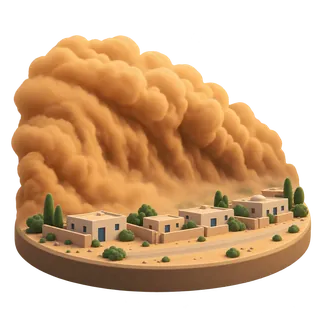
| a dust storm | chang bo‘roni | Close the windows, a dust storm is coming. |
| a heatwave | jazirama | The heatwave lasted two weeks. |
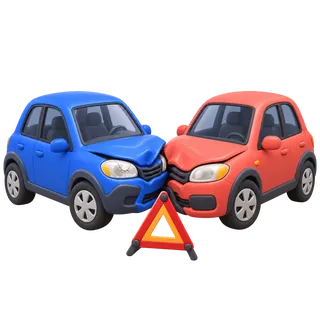
| a crash / a collision | to‘qnashuv | There was a crash at the crossroads. |
| a hit-and-run | urib qochish | The police are looking for witnesses to a hit-and-run. |
| a road closure | yo‘l yopilishi | There’s a road closure because of the accident. |
Zilzila paytidagi rasmiy ko‘rsatmalarni (qayerga yashirinish, nima qilish) Favqulodda vaziyatlar vazirligining rasmiy manbalaridan o‘qing; bu sahifa faqat so‘zlarni beradi. Ob-havo ogohlantirishlari so‘zlari (warning, storm, heavy rain) ob-havo inglizcha sahifasida.
So‘z oilalari: fe’l, ot, sifat
Favqulodda gapda so‘z shakli ko‘p adashtiriladi. Jadvalni gorizontal o‘qing:
| Fe’l | Ot | Sifat / holat | Misol |
|---|---|---|---|
| injure | injury | injured | He injured his leg. The injury is serious. He’s injured. |
| bleed | blood | bleeding | She’s bleeding. There’s blood on the floor. |
| breathe | breath | breathing | Is he breathing? Take a deep breath. |
| burn | burn | burnt / burned | I burnt my finger. It’s a small burn. |
| evacuate | evacuation | evacuated | The evacuation took ten minutes. |
| rescue | rescue | rescued | The rescued climbers are safe. |
Breathe va breath talaffuzi farq qiladi: breathe — [bri:ð], cho‘ziq “i:” va jarangli TH; breath — [breθ], qisqa “e” va jarangsiz TH. O‘zbek o‘quvchilari ko‘pincha TH ni “z” yoki “s” deb aytadi: tilning uchini tishlar orasiga qo‘yib mashq qiling. Bleed fe’lining o‘tgan zamoni bled: His nose bled for ten minutes.
Favqulodda so‘zlarda tipik xatolar
| Xato | To‘g‘ri | Izoh |
|---|---|---|
| Call the skoraya! | Call an ambulance! | “Skoraya” ruscha so‘z. |
| He is injury. | He is injured. | Holat — sifat shakli. |
| There is a fire in the kitchen, it is burn. | There’s a fire in the kitchen. Something is burning. | Davom etayotgan holat: is burning. |
| Firemans came. | The firefighters came. | Fireman ko‘pligi firemen; neytral so‘z — firefighter. |
| The light is gone. | There’s a power cut. | Elektr o‘chishi uchun tayyor ibora. |
| He can’t breath. | He can’t breathe. | Fe’l — breathe, ot — breath. |
Mashq: so‘zni toping
A. Ta’rifga mos so‘z:
- 1. Yong‘in paytida hamma yig‘iladigan joy.
- 2. Kichik yong‘inni o‘chiradigan qizil ballon.
- 3. Tog‘da kuchli yomg‘irdan keyin tushadigan loy oqimi.
- 4. Hodisani ko‘rgan odam.
- 5. Britaniyada shoshilinch qabul bo‘limi (ikki harf va belgi).
- 6. Elektr butun mahallada o‘chdi.
B. To‘g‘ri shaklni tanlang:
- 7. Two people were (injury / injured) in the crash.
- 8. Is she (breath / breathing)?
- 9. The (evacuate / evacuation) took fifteen minutes.
- 10. Don’t use the (lift / fire exit) in case of fire.
Javoblar
1 — assembly point; 2 — fire extinguisher; 3 — mudflow; 4 — witness; 5 — A&E; 6 — There was a power cut in the whole mahalla.
7 — injured; 8 — breathing; 9 — evacuation; 10 — lift.
So‘zlarni vaziyat ichida Bandi bilan takrorlang
So‘z ro‘yxatini yodlash yetmaydi: vahimada ular gap ichida kelishi kerak. BandMate ilovasida Bandidan “Mehmonxonada yong‘in signali chalindi” yoki “Yo‘lda to‘qnashuv ko‘rdim” kabi vaziyatni boshlashni so‘rang va nima ko‘rganingizni shu sahifadagi so‘zlar bilan tasvirlang. Ilova so‘z shakli (injured, breathing) va talaffuzdagi xatolarni ko‘rsatadi. Manzilni aniq aytishni esa manzil va telefon raqamini inglizcha aytish sahifasida mashq qiling.
Manbalar
- O‘zbekiston haqida umumiy ma’lumotlar: favqulodda xizmatlar raqamlari — gov.uz
- “112” yagona dispetcherlik xizmati — gov.uz
- Vazirlar Mahkamasining 29.05.2024 yildagi 304-son qarori — lex.uz