Inglizcha buyruq gap fe’lning lug‘atdagi shakli bilan boshlanadi, ega aytilmaydi: Sit down. Open your books. Turn left. Taqiqlash uchun oldiga Don’t qo‘yiladi: Don’t touch it. Birgalikda qilinadigan ish uchun Let’s ishlatiladi: Let’s go.
Muloyimlik esa fe’l shakli bilan emas, qo‘shimcha so‘zlar bilan beriladi: please, could you…?, ohang. Quyida buyruqning qayerda odatiy, qayerda qo‘pol eshitilishi, retsept, ko‘rsatma va yozuvlardagi misollar, 12 ta mashq bor.
Sen, siz, sizlar: inglizchada bitta shakl
O‘zbekchada buyruqning bir nechta shakli bor: o‘tir, o‘tiring, o‘tiringlar, o‘tirsinlar. Hurmat fe’lning o‘zida ko‘rinadi. Inglizchada esa bitta shakl hammaga yetadi: Sit down — bolaga ham, professorga ham, butun sinfga ham.
Shuning uchun o‘zbek o‘quvchisi ko‘pincha ikki xatodan biriga tushadi. Birinchisi, Sit down ni o‘tiring deb tarjima qilib, uni muloyim deb o‘ylaydi. Aslida notanish odamga yalang‘och buyruq keskin eshitiladi. Ikkinchisi, hurmatni ko‘rsatish uchun You sit down, please kabi ortiqcha you qo‘shadi. Hurmatni boshqa yo‘l bilan bering.
Muloyimlik zinapoyasi
Quyidagi gaplar bir xil iltimosni aytadi, lekin ohangi pastdan yuqoriga qarab yumshayadi:
| Gap | Qachon ishlatiladi |
|---|---|
| Close the window. | yaqin odamga, shoshilinch holatda, ko‘rsatmada |
| Close the window, please. | oila, hamkasb, xizmat ko‘rsatuvchi xodim |
| Can you close the window? | kundalik iltimos, do‘stona |
| Could you close the window, please? | notanish odam, ishxona, xat |
| Would you mind closing the window? | juda muloyim, noqulay iltimos |
| I was wondering if you could close the window. | rasmiy, biroz uzoqdan |
Please odatda gap oxirida yumshoqroq eshitiladi. Gap boshida esa (Please, close the window!) u ko‘pincha iltijo yoki asabiylikni bildiradi. Bu savol shaklidagi iltimoslarning so‘z tartibi haqida indirect questions sahifasida yozilgan.
Buyruq qo‘pol emas: retsept, yo‘l, ko‘rsatma
Ko‘p holatlarda yalang‘och buyruq mutlaqo odatiy va muloyim:
- Retsept va yo‘riqnoma: Heat the oil. Add the onions.
- Yo‘l ko‘rsatish: Go straight on and take the second left.
- Ogohlantirish: Watch out! Be careful, the floor is wet.
- Mehmondo‘stlik va taklif: Come in! Have a seat. Help yourself to some fruit.
- Tilaklar: Have a nice day. Enjoy your meal. Get well soon.
Dasturxonda Have some more plov! deyish mutlaqo tabiiy — bu buyruq emas, mehmondo‘stlik.
Osh retsepti: buyruq gaplar zanjiri
Retseptda har bir qadam fe’l bilan boshlanadi. Osh uchun qisqa ko‘rsatma:
- 1. Heat the oil in a kazan until it starts to smoke.
- 2. Cut the onions into rings and fry them until golden.
- 3. Add the meat and fry it for ten minutes.
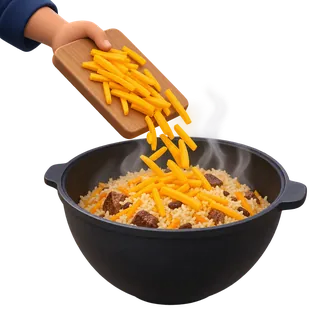
- 4. Cut the carrots into long thin strips and put them on top of the meat.
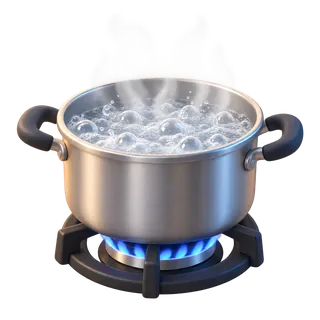
- 5. Pour in boiling water, add salt, cumin and a whole head of garlic.
- 6. Wash the rice several times and spread it evenly over the carrots.
- 7. Don’t stir the rice! Cover the kazan and cook on low heat for 25 minutes.


Oshxona fe’llarining to‘liq ro‘yxati ovqat pishirish fe’llari sahifasida.
Yozuvlar va belgilardagi buyruqlar
Aeroport, metro, mehmonxona va ko‘chada buyruq shaklidagi yozuvlar juda ko‘p:
| Yozuv | Ma’nosi |
|---|---|
| Mind the gap. | Vagon va platforma orasidagi bo‘shliqqa ehtiyot bo‘ling. |
| Mind your head. | Boshingizni ehtiyot qiling (past eshik). |
| Keep off the grass. | Maysaga kirmang. |
| Do not disturb. | Bezovta qilmang (mehmonxona eshigida). |
| Push / Pull | Itaring / Torting |
| Keep left. | Chap tomondan yuring. |
| Stand on the right. | Eskalatorda o‘ng tomonda turing. |
| Please queue here. | Shu yerda navbatga turing. |
| Switch off your mobile phone. | Telefoningizni o‘chiring. |
| Do not lean on the doors. | Eshiklarga suyanmang. |
| Keep out. | Kirish taqiqlanadi. |
Yozuvlarda to‘liq Do not ko‘p uchraydi, chunki u qat’iyroq va rasmiyroq. Og‘zaki nutqda esa Don’t aytiladi. No smoking, No parking kabi yozuvlar buyruq emas, lekin vazifasi bir xil: No + -ing.
Don’t, never va be
Inkor buyruq har doim Don’t + V1:
- Don’t worry. — Xavotir olmang.
- Don’t be late. — Kechikmang. (be bilan ham don’t!)
- Don’t forget your umbrella.
- Never touch a hot kazan with bare hands. — Never kuchliroq, “hech qachon”.
Tipik xatolar: Not touch!, No be late, Don’t to go, Don’t worrying. Inkorning boshqa turlari (zamonlar, nobody, never) haqida ingliz tilida inkor gaplar sahifasida o‘qing.
Let’s va let me: “qani” va “ruxsat bering”
Let’s + V1 — “keling, …ylik”: Let’s have lunch. Let’s take the metro. Inkori: Let’s not argue. Britaniyada Don’t let’s… ham eshitiladi, lekin Let’s not hamma joyda tushuniladi.
Let me + V1 — “menga ruxsat bering, men …ay”: Let me help you. Let me think. Farq katta:
- Let’s help him. — Keling, unga yordam beraylik (ikkalamiz).
- Let me help you. — Men sizga yordam beray.
Let’s to go va Let’s going xato: let dan keyin doim yalang‘och V1. Taklif qilish va unga javob berishning boshqa usullari taklif qilish va rad etish sahifasida.
Buyruqqa ta’kid va dum qo‘shish
- Do + buyruq — iliq, qat’iy taklif: Do sit down! (Qani, o‘tiring-o‘tiring!)
- Ega bilan buyruq — vazifalarni taqsimlash yoki kuchli ta’kid: You wait here, and I’ll get the car.
- Dum savol — yumshatish: Pass me the salt, will you? Let’s start, shall we? Bu dumlar qoidasi tag questions sahifasida.
Toshkent metrosida: qisqa dialog
Mehmon birinchi marta metroga tushyapti. Aziz unga yo‘l ko‘rsatyapti.
Aziz: Let’s take the metro, it’s faster. Follow me.
Emma: How do I pay?
Aziz: Tap your card here. Don’t tap it twice, or you’ll pay again.
Emma: OK. Which platform?
Aziz: Go down the stairs and turn right. Wait, stand behind the yellow line!
Emma: Sorry! And where do we get off?
Aziz: Count three stops. Get off at Kosmonavtlar and look at the ceiling. Don’t miss it, it’s beautiful.
Emma: Let me take a photo when we get there.
Mashq: 12 ta topshiriq
A. Buyruq gapga aylantiring.
- 1. You should turn off your phone. → ______ your phone.
- 2. You mustn’t be late for the interview. → ______ late for the interview.
- 3. I suggest we eat at the café. → ______ at the café.
- 4. I will carry your bag for you. → ______ carry your bag.
B. Xatoni tuzating.
- 5. Not open the window, please.
- 6. Let’s to meet at six.
- 7. Don’t worrying about the exam.
- 8. Let’s don’t argue about it.
C. Muloyimroq qiling (bitta variant yetarli).
- 9. Give me the menu.
- 10. Repeat that.
D. Yozuv ma’nosini tanlang.
- 11. Keep off the grass. a) Maysani o‘rib turing. b) Maysaga kirmang.
- 12. Mind your head. a) Boshingizga ehtiyot bo‘ling. b) Yaxshilab o‘ylang.
Javoblar
- 1. Turn off your phone.
- 2. Don’t be late for the interview. — be bilan ham don’t.
- 3. Let’s eat at the café.
- 4. Let me carry your bag.
- 5. Don’t open the window, please.
- 6. Let’s meet at six. — let’s dan keyin to yo‘q.
- 7. Don’t worry about the exam. — don’t dan keyin V1.
- 8. Let’s not argue about it.
- 9. Could you give me the menu, please? / Can I have the menu, please?
- 10. Could you repeat that, please? / Sorry, could you say that again?
- 11. b
- 12. a
Buyruq va iltimosni gapirib mashq qilish
Buyruqning shakli oson, qiyini — vaziyatga mos muloyimlikni tanlash. BandMate ilovasida Bandi bilan restoran, mehmonxona va yo‘l so‘rash vaziyatlarini gapirib mashq qilasiz. Siz iltimos qilasiz, u javob beradi va ohangingiz haqida fikr aytadi. Bugunoq sinab ko‘ring: sevimli taomingiz retseptini besh qadamda, har qadamni fe’l bilan boshlab, ovoz chiqarib ayting.
BandMate’ni Google’da afzal manba qiling