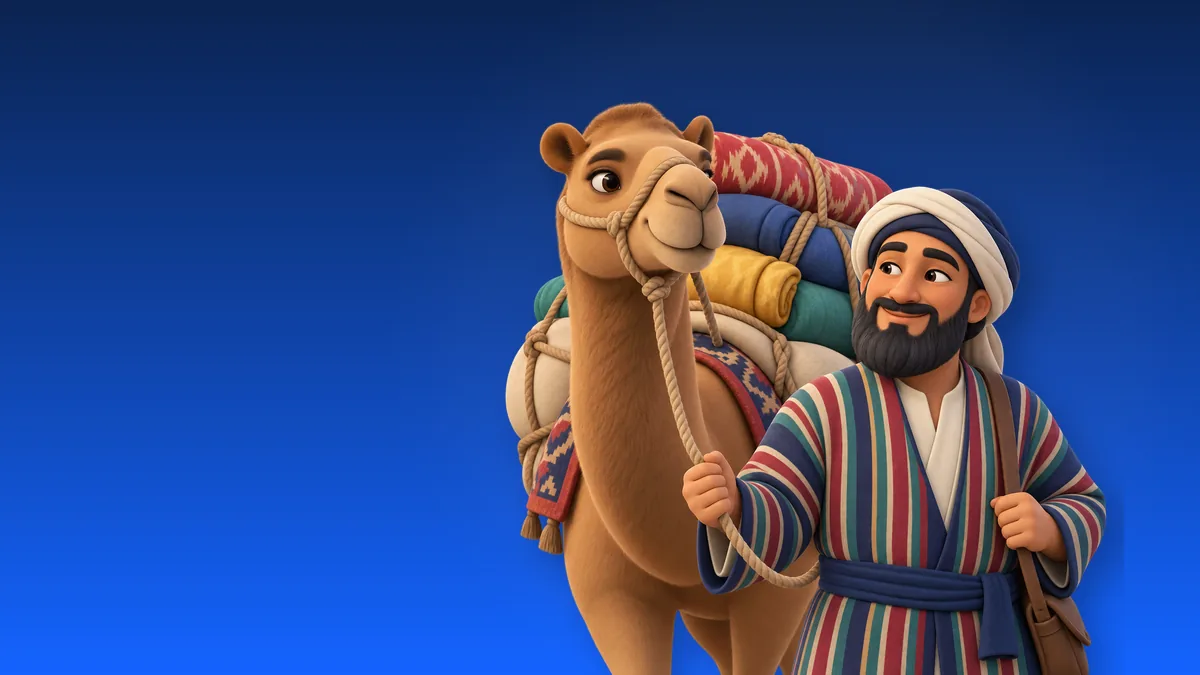
Buyuk Ipak yo‘li inglizcha the Silk Road yoki, tarixchilar tilida, the Silk Roads (ko‘plikda) deyiladi, chunki bu bitta yo‘l emas, ko‘plab savdo yo‘llaridan iborat tarmoq bo‘lgan. Asosiy gapni shunday tuzing: The Silk Road was a network of trade routes between China and the Mediterranean, and Samarkand, Bukhara and Khiva were important stops on it. Undan keyin uch so‘z hikoyani davom ettiradi: merchant (savdogar), caravan (karvon), caravanserai (karvonsaroy).
Hozir ovoz chiqarib ayting: Merchants used to stop here with their caravans. Bu gap Registonda ham, Buxorodagi savdo gumbazlari yonida ham ishlaydi.
Talaffuz belgilari: katta harflar urg‘uli bo‘g‘inni ko‘rsatadi, ə esa urg‘usiz, qisqa va xira tovush (a bilan e oralig‘ida).
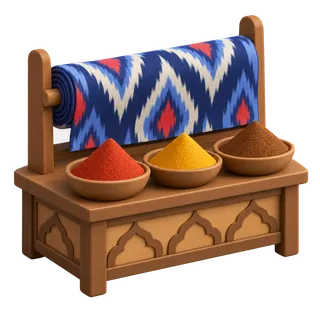

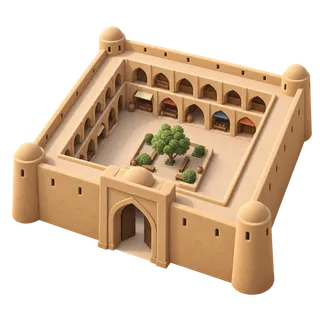
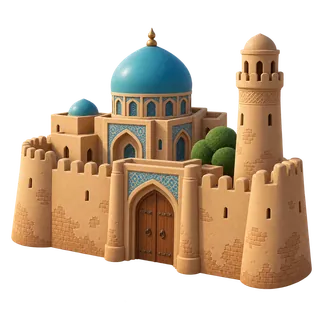
Savdo va karvon: 16 so‘z
| Inglizcha | Talaffuz | O‘zbekcha | Misol |
|---|---|---|---|
| trade route | TREYD ruut | savdo yo‘li | The trade route crossed deserts and mountains. |
| merchant | MƏ:-chənt | savdogar | Merchants from many countries met in Samarkand. |
| caravan | KA-rə-van | karvon | A caravan could have dozens of camels. |
| caravanserai | ka-rə-VAN-sə-ray | karvonsaroy | Travellers slept in a caravanserai for the night. |
| goods | gudz | mollar, tovarlar | Camels carried goods from one city to the next. |
| silk | silk | ipak | Chinese silk was very valuable in the West. |
| spices | SPAY-siz | ziravorlar | Spices were cheap in India but expensive in Europe. |
| paper | PEY-pə | qog‘oz | Samarkand became famous for its paper. |
| ceramics | sə-RA-miks | kulolchilik buyumlari | Blue ceramics travelled along the same roads. |
| oasis | əu-EY-sis | voha | Bukhara grew up in a green oasis. |
| desert | DE-zət | cho‘l, sahro | Caravans crossed the desert at night when it was cooler. |
| camel | KA-məl | tuya | The two-humped camel is called a Bactrian camel. |
| bazaar | bə-ZA: | bozor | The bazaar was the heart of the city. |
| craftsman | KRAFTS-mən | usta, hunarmand | Craftsmen sold their work to merchants. |
| exchange | iks-CHEYNJ | almashinuv | It was an exchange of ideas, not only goods. |
| crossroads | KROS-rəudz | chorraha, kesishgan joy | Samarkand stood at a crossroads of cultures. |
Crossroads doim -s bilan yoziladi, hatto bitta joy haqida gapirsangiz ham: a crossroads. Desert (cho‘l) va dessert (shirinlik) talaffuzi farq qiladi: DE-zət va di-ZƏ:T.
Shahar va obidalar: 14 so‘z
| Inglizcha | Talaffuz | O‘zbekcha | Misol |
|---|---|---|---|
| madrasa | mə-DRA-sə | madrasa | A madrasa was a place of study. |
| minaret | mi-nə-RET | minora | You can see the minaret from far away. |
| mausoleum | mo:-sə-LI:-əm | maqbara | This mausoleum is over a thousand years old. |
| mosque | mosk | masjid | The mosque is still used for prayer. |
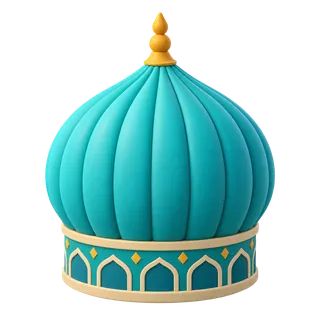
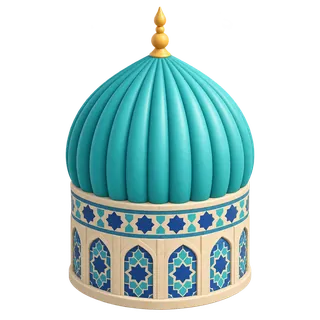
| dome | dəum | gumbaz | The turquoise dome shines in the sun. |
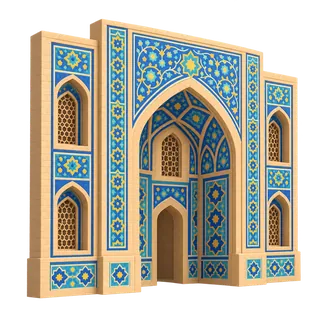
| portal | PO:-təl | peshtoq | The portal is covered with tiles. |
| tilework | TAYL-wə:k | koshinkorlik | Look at the tilework: every piece was made by hand. |
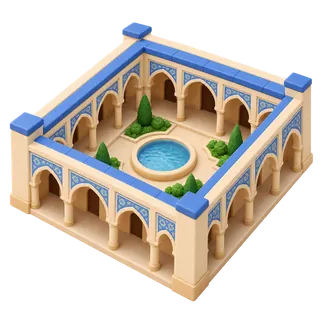
| courtyard | KO:T-ya:d | hovli | Students lived in small rooms around the courtyard. |
| citadel | SI-tə-del | ark, qal’a | The emir lived in the citadel. |
| city walls | SI-ti wo:lz | shahar devorlari | Khiva’s inner town is surrounded by city walls. |
| trading dome | TREY-ding dəum | savdo gumbazi (toqi) | Jewellers once worked under this trading dome. |
| square | skweə | maydon | The Registan is a square with three madrasas. |
| carved | ka:vd | o‘ymakor | The carved wooden door is very old. |
| restored | ri-STO:D | ta’mirlangan | Part of the building was restored in the last century. |

O‘qish uchun matn: The Silk Road and three cities (B1)
Matnni avval to‘liq o‘qing, keyin pastdagi savollarga javob bering.
For more than a thousand years, the Silk Road connected China with Central Asia, India, the Middle East and Europe. It was not one road but many routes, and very few merchants travelled the whole way. Most of them carried goods from one city to the next and sold them there.
Silk was the most famous product, but it was not the only one. Caravans also carried spices, paper, glass, ceramics, horses and precious stones. Ideas travelled too: religions, languages, music and new ways of building.
Samarkand was one of the richest cities on the route. In the 14th century, Amir Temur made it his capital, and his builders covered it with blue domes and tiled portals. Today visitors come to see the Registan, a square with three madrasas.
Bukhara grew up in an oasis. Its old centre still has trading domes, where merchants once changed money and sold hats, books and jewellery. Khiva is smaller: its inner town, Itchan Kala, is surrounded by thick clay walls, and walking through it feels like walking through a museum.
When sea routes became more important, the old caravan roads slowly lost their business. But the cities stayed, and so did their stories.
Matndagi sana va ma’lumotlarni ehtiyotkorlik bilan tanladik: umumiy qabul qilingan faktlar. Aniq yillar (masalan, qaysi madrasa qachon qurilgani) kerak bo‘lsa, ularni muzey yoki rasmiy turizm manbalaridan tekshiring. Registon haqida batafsil gapirish describe a historical place sahifasida, Buxoro haqida namuna javob esa describe a city sahifasida.
Mehmonga shaharni ko‘rsatganda: gid kabi 10 ibora
Chet ellik do‘stingizni yoki hamkasbingizni Samarqandga olib bordingiz. Professional gid bo‘lish shart emas, ammo bir necha qolip suhbatni jonli qiladi.
- We’re standing in front of… — Biz … oldida turibmiz.
- This was built in the … century. — Bu … asrda qurilgan.
- It used to be a…, but now it’s a… — Ilgari … edi, hozir esa …
- Merchants used to… — Savdogarlar … edi (odat bo‘lgan).
- If you look up, you’ll see… — Tepaga qarasangiz, … ko‘rasiz.
- Legend has it that… — Rivoyatga ko‘ra…
- Historians aren’t sure, but… — Tarixchilar aniq bilishmaydi, lekin…
- Photos are allowed here, but not inside. — Bu yerda suratga olish mumkin, ichkarida emas.
- Take your time. Let’s meet here in twenty minutes. — Shoshilmang, yigirma daqiqadan keyin shu yerda uchrashamiz.
- Any questions before we move on? — Keyingi joyga o‘tishdan oldin savollar bormi?
Ikki qolipga alohida e’tibor bering. Was built (passiv) — binoni kim qurgani muhim bo‘lmaganda ishlatiladi. Legend has it that… esa rivoyatni faktdan ajratadi: Ipak yo‘li haqida ko‘p chiroyli hikoya bor, ularni legend deb aytsangiz, sizga ishonch ortadi.
Ishlaydigan gidlar uchun guruh bilan ishlash iboralari va Xiva, Buxoro bo‘yicha to‘liq namuna nutqlar English for tourism jobs sahifasida.
Dialog: Buxorodagi savdo gumbazi ostida
A — Buxorolik talaba Sardor, B — Germaniyadan kelgan kursdoshi Lena.
A: This is one of the old trading domes. Merchants used to sell hats here.
B: Only hats? Under one dome?
A: Yes, each dome had its own trade. Another one was for money changers, and another one for jewellers.
B: That’s clever. How old is it?
A: It was built in the 16th century, I think, but I’d check a guidebook to be sure.
B: And did the merchants come from China?
A: Some did, but most of them didn’t travel the whole route. They bought goods here and sold them further west.
B: So Bukhara was like a big warehouse.
A: A warehouse and a market. And a place to rest: there were caravanserais near the gates, where the camels stayed.
B: Can we go inside the shops?
A: Of course. They sell ceramics and suzani now. Just don’t buy the first thing you see, the prices are higher near the entrance.
Sardor ishonchi komil bo‘lmagan sanani I think… I’d check a guidebook bilan yumshatdi. Bu to‘qib chiqarilgan aniq raqamdan ancha yaxshi.
YuNESKO ro‘yxatida: tekshirilgan faktlar
YuNESKO Butunjahon merosi ro‘yxatida O‘zbekistondan quyidagi madaniy obyektlar bor (rasmiy sahifa bo‘yicha, kiritilgan yili bilan):
| Inglizcha nomi | Kiritilgan yili |
|---|---|
| Itchan Kala (Xiva) | 1990 |
| Historic Centre of Bukhara | 1993 |
| Historic Centre of Shakhrisyabz | 2000 |
| Samarkand – Crossroad of Cultures | 2001 |
| Silk Roads: Zarafshan-Karakum Corridor | 2023 |
Oxirgisini Tojikiston, Turkmaniston va O‘zbekiston birgalikda taqdim etgan: bu Zarafshon vodiysi bo‘ylab va Qoraqum cho‘li orqali o‘tgan qadimiy karvon yo‘li. Inglizcha shunday aytish mumkin: In 2023, part of the Silk Roads that runs along the Zarafshan valley was added to the UNESCO World Heritage List. It is shared by three countries. Mamlakat haqida umumiy tavsif uchun describe Uzbekistan in English sahifasiga qarang.
Ipak yo‘li haqida gapirganda chalkashadigan joylar
| Xato | To‘g‘ri | Izoh |
|---|---|---|
| Silk Road was one big road. | The Silk Road was a network of routes. | Nomdan oldin the; bu bitta yo‘l emas. |
| It was builded in 15 century. | It was built in the 15th century. | Build — built; asr tartib soni bilan. |
| Karavans was stop here. | Caravans used to stop here. | O‘tmishdagi odat — used to. |
| This is very ancient old building. | This is a very old building. / It’s an ancient building. | Ancient allaqachon “juda qadimiy”. |
| Merchants sold silk and spice. | Merchants sold silk and spices. | Ziravorlar haqida umumiy gapda spices. |
| Samarkand is 3000 years for sure. | Samarkand is one of the oldest cities in Central Asia. | Aniq raqamni tekshirmasdan aytmang. |
Mashq: matn va iboralar
A. Matn bo‘yicha savollar (qisqa inglizcha javob bering):
- 1. Was the Silk Road a single road?
- 2. Name three things that caravans carried, apart from silk.
- 3. Who made Samarkand his capital, and in which century?
- 4. What is Itchan Kala?
- 5. Why did the caravan roads lose their business?
B. Bo‘sh joyni to‘ldiring: used to, legend, caravanserai, was built, crossroads, merchants.
- 6. Travellers spent the night in a ___.
- 7. This madrasa ___ in the 17th century.
- 8. ___ has it that the builder fell in love with the queen.
- 9. Camels ___ rest near the city gate.
- 10. Samarkand stood at a ___ of cultures.
- 11. ___ from India brought spices to Bukhara.
Javoblar
1 — No, it was a network of many routes.
2 — Spices, paper, glass, ceramics, horses or precious stones (istalgan uchtasi).
3 — Amir Temur, in the 14th century.
4 — It’s the walled inner town of Khiva.
5 — Because sea routes became more important.
6 — caravanserai; 7 — was built; 8 — Legend; 9 — used to; 10 — crossroads; 11 — Merchants.
Registon oldida gapirishni Bandi bilan sinang
Matnni o‘qish bir narsa, uni do‘stingizga yoddan, savollarga javob berib aytib berish boshqa. BandMate ilovasida Bandiga Samarqand yoki Buxorodagi sevimli joyingizni ikki daqiqada tushuntiring: u gid kabi aniqlashtiruvchi savollar beradi va was built, used to kabi qoliplardagi xatolarni ko‘rsatadi. Birinchi urinish uchun shu gapdan boshlang: We’re standing in front of the Registan. It used to be the main square of the city. Mahalliy odatlarni tushuntirish uchun Uzbek traditions in English sahifasi ham asqotadi.
Manbalar
- UNESCO World Heritage Centre: Uzbekistan — inscribed properties
- UNESCO: Silk Roads heritage corridors in Central Asia