
Navro‘z inglizcha Navruz yoki Nowruz deb yoziladi va bitta gap bilan shunday tushuntiriladi: Navruz is the spring New Year. We celebrate it on 21 March, when day and night are almost equal. Tabrik uchun eng oddiy ibora — Happy Navruz! Bayramning asosiy so‘zlari: sumalak, sprouted wheat (ko‘kartirilgan bug‘doy), visit relatives (qarindoshlarni yo‘qlash) va spring cleaning (bahorgi tozalash).
Hozir shu ikki gapni ovoz chiqarib ayting, keyin qo‘shing: My grandmother cooks sumalak every year. Quyida bayram lug‘ati misollar bilan, bayramni tushuntirish qoliplari, qisqa matn, tabriklar, dialog va mashq.





Navro‘z dasturxoni: 10 ta so‘z
| Inglizcha | O‘zbekcha | Misol |
|---|---|---|
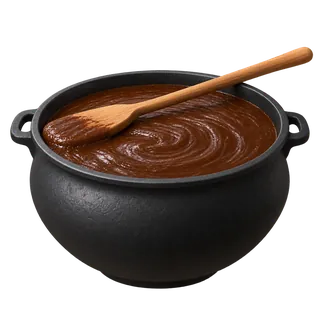
| sumalak | sumalak | Sumalak is made from sprouted wheat, flour and oil. |
| sprouted wheat /ˈspraʊtɪd wiːt/ | ko‘kartirilgan bug‘doy, maysa | We grow sprouted wheat on a plate at home. |
| halim | halim | Halim is a thick porridge of wheat and meat. |
| green somsa / herb somsa | ko‘k somsa | In spring my mum makes green somsa with fresh herbs. |
| green chuchvara | ko‘k chuchvara | Green chuchvara are small dumplings with herbs. |
| fresh herbs /hɜːbz/ | ko‘katlar | We buy fresh herbs at the bazaar in March. |
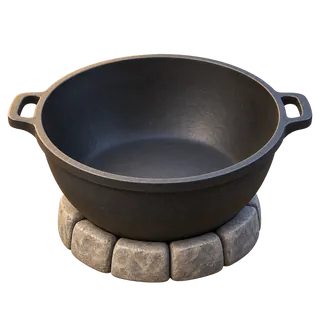
| kazan | qozon | Sumalak is cooked in a huge kazan. |
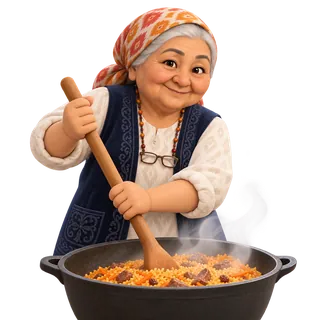
| stir | kavlamoq | Women take turns to stir the pot. |
| take turns | navbatma-navbat qilmoq | We take turns so nobody gets too tired. |
| a wish | niyat, tilak | Everyone makes a wish while stirring. |
Talaffuz: wheat — “uiit”, w lablar yumaloq, “vit” emas. Herbs Britaniyada “höbz”, Amerikada h o‘qilmaydi: “örbz”. Stir — “stö”, “stir” emas. Taomlarning o‘zini chet ellikka batafsil tushuntirish qoliplari o‘zbek taomlari inglizcha sahifasida.
An’analar: 12 ta ibora
| Inglizcha | O‘zbekcha | Misol |
|---|---|---|
| celebrate | nishonlamoq | We celebrate Navruz with the whole mahalla. |
| the first day of spring | bahorning birinchi kuni | For us, Navruz is the first day of spring. |
| spring cleaning | bahorgi tozalash | Before Navruz we do a big spring cleaning. |
| hashar (community work day) | hashar | On the hashar day neighbours clean the streets together. |
| plant trees | daraxt ekmoq | Our class planted trees near the school. |
| visit relatives | qarindoshlarni yo‘qlamoq | During the holiday we visit relatives. |
| visit the elderly | keksalarni yo‘qlamoq | Young people visit the elderly and bring them sumalak. |
| forgive | kechirmoq | Navruz is a time to forgive old arguments. |
| share | ulashmoq | We share sumalak with our neighbours. |
| a fair / a festival | sayil, bayram tadbiri | There’s a big fair in the park with music and food. |
| kurash | kurash | Kurash is traditional Uzbek wrestling. |
| wear new clothes | yangi kiyim kiymoq | Children wear new clothes for the holiday. |
Hashar va mahalla so‘zlarini tarjima qilmang, bir marta izoh bering: Hashar is when neighbours work together for free, for example to clean the streets. Keyin so‘zni o‘zbekcha ishlatavering.

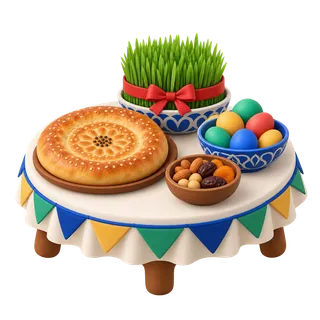





Navro‘zni qanday tushuntirish kerak: 5 ta qolip
- Sana: Navruz is celebrated on 21 March. Majhul nisbat (is celebrated) va sana bilan on.
- Ma’no: It marks the beginning of spring and a new year in nature. — mark “belgilamoq”.
- Odat: People cook sumalak, visit relatives and plant trees. — Present Simple, uchta fe’l vergul bilan.
- Shaxsiy detal: In my family, we always… — tinglovchiga eng qiziq qism.
- Umumiy fakt: Navruz is on UNESCO’s list of intangible cultural heritage. — YuNESKO ro‘yxatiga 2009-yilda kiritilgan, 2016-yilda O‘zbekiston ham qo‘shilgan.
Bu besh qolipni tartib bilan aytsangiz, 40–50 soniyalik to‘liq javob chiqadi.
Qisqa matn: “Navruz in my family” (A2)
Navruz is my favourite holiday. We celebrate it on 21 March, at the beginning of spring. A week before the holiday, we clean the whole house and the street in front of it. My grandmother grows sprouted wheat on a big plate, and then the women in our mahalla cook sumalak. They cook it all night in a huge kazan and take turns to stir it. Children try to stay awake, but we usually fall asleep. In the morning everyone gets a bowl of sumalak and makes a wish. On the holiday we wear new clothes, visit our relatives and go to the fair in the park. For me, Navruz means family, spring and a fresh start.
Matndan nimani olish mumkin:
- A week before the holiday — vaqtni oldindan aytish.
- They cook it all night… and take turns to stir it — bir egaga ikki fe’l.
- try to stay awake — “uxlamaslikka harakat qilmoq”.
- For me, Navruz means… — yakunlovchi gap, shaxsiy fikr.
B1 va B2 darajadagi uzunroq nutq namunalari inglizcha Navruz in English sahifasida.
Navro‘z tabriklari: 6 ta namuna
- Do‘stga: Happy Navruz! I hope this spring brings you lots of joy and good news.
- O‘qituvchiga: Happy Navruz, dear teacher! Thank you for your patience. Wishing you health and a wonderful spring.
- Hamkasbga: Happy Navruz to you and your family! Enjoy the holiday.
- Chet ellik do‘stga: Happy Navruz! It’s our spring New Year. Today we eat sumalak and visit family. I’ll save you a bowl!
- Oila chatiga: Happy Navruz, everyone! Grandma, thank you for the sumalak. See you all tonight!
- Rasmiy (kompaniya nomidan): Dear partners, we warmly congratulate you on Navruz and wish you a successful and prosperous spring.
Javob berish: Thank you! Happy Navruz to you too! yoki Same to you! Boshqa bayramlar uchun tayyor matnlar ingliz tilida tabriklar sahifasida.
Dialog: mahallada sumalak kechasi
Emma: What’s happening here? Why is everyone outside so late?
Nigora: We’re cooking sumalak for Navruz. It takes the whole night.
Emma: The whole night? What’s in it?
Nigora: Just sprouted wheat, flour, oil and water. No sugar, but it tastes sweet.
Emma: Really? Can I help?
Nigora: Of course. Take the spoon and stir slowly. Don’t forget to make a wish!
Emma: OK… done. When will it be ready?
Nigora: Early in the morning. Come back at seven and you’ll get the first bowl.
Navro‘z haqida gapirganda 6 ta tipik xato
| Xato | To‘g‘ri | Nega |
|---|---|---|
| Navruz is celebrating on 21 March. | Navruz is celebrated on 21 March. | Bayram o‘zi nishonlamaydi: majhul nisbat |
| in 21 March | on 21 March | Sana bilan on |
| Congratulations with Navruz! | Happy Navruz! | Ruscha “поздравляю с” kalkasi |
| The Navruz is a spring holiday. | Navruz is a spring holiday. | Bayram nomi artiklsiz |
| We cook sumalak all the night. | We cook sumalak all night. | All night — artiklsiz ibora |
| Sumalak is very tasty sweet. | Sumalak tastes sweet, but it has no sugar. | A sweet — konfet |
Mashq: so‘z va grammatika
A. So‘zni qo‘ying: stir, visit, sprouted, fair, share, wish
- 1. Sumalak is made from ___ wheat.
- 2. Women take turns to ___ the kazan.
- 3. Before you eat sumalak, make a ___.
- 4. On the holiday we ___ our grandparents.
- 5. We always ___ sumalak with our neighbours.
- 6. There’s a big ___ in the park with music and games.
B. Xatoni tuzating.
- 7. Navruz is celebrating in 21 March.
- 8. Congratulations with Navruz, my friend!
C. Chet ellik do‘stingizga ikki gapli tabrik yozing.
- 9. ___
Javoblar
1 — sprouted; 2 — stir; 3 — wish; 4 — visit; 5 — share; 6 — fair. 7 — Navruz is celebrated on 21 March. 8 — Happy Navruz, my friend! 9 — namuna: Happy Navruz! It’s our spring New Year, and I’d love you to try sumalak with my family.
Bayram haqidagi hikoyangizni Bandiga aytib bering
BandMate ilovasida Bandiga Navro‘zni hech ko‘rmagan odamga tushuntirgandek gapirib bering: sana, ma’no, oilangizdagi odat. Bandi What does sumalak taste like? kabi savollar bilan davom ettiradi. Is celebrating yoki in 21 March kabi xatolarni ilova ko‘rsatadi. Boshqa bayramlar lug‘ati bayramlar nomi inglizcha sahifasida, O‘zbekistonni umumiy tanishtirish esa O‘zbekiston haqida inglizcha sahifasida.